
By Steve Conley, Founder, Academy of Life Planning
Most people do not wake up wanting financial advice.
They wake up wondering whether they can afford to leave a job. Whether retirement is possible. How to help their children without putting their own future at risk. What to do when an institution they trusted lets them down.
They want to understand where they stand and what they can do next.
That is where planning should begin.
For fourteen years, the Academy of Life Planning has worked towards a model that helps people become more capable of shaping their own lives. Artificial intelligence gives us new ways to put that principle into practice.
It also makes the question of agency more urgent.
What do we mean by agency?
Agency is your ability to understand your circumstances, make meaningful choices and act on them.
In financial planning, it means being able to explain what your plan assumes, recognise the choices it presents and change direction when your life changes.
A plan can carry your name without feeling like yours.
If someone else understands every assumption, controls every update and decides which questions deserve attention, you may possess the document while remaining dependent on its author.
Ownership becomes more meaningful when you can work with the plan yourself.
That does not require knowing everything. It requires enough understanding to participate, question and recognise when help would be useful.
AI changes what people can do for themselves
Consider someone preparing for retirement.
They may have pension statements, household spending figures, a mortgage, family responsibilities and several competing ideas about their future.
Tools can help them bring that information together, explore different possibilities and prepare questions.
What happens if I work fewer days?
What changes if we move house?
Which assumptions make the biggest difference?
What have I overlooked?
The value lies in what happens through that process. The person begins to understand the structure of the decision.
They can arrive at a professional meeting with a clearer brief. They can explain what matters, challenge an assumption and distinguish a question they can investigate themselves from one that needs specialist expertise.
That changes the relationship.
The professional meets someone who is better prepared to participate.
Capability needs a purpose
AI can produce a confident answer to a poorly framed question.
It can work from incomplete information, follow an unsuitable assumption or offer an explanation that sounds more reliable than it is.
That is why access to AI alone is insufficient.
People need a method for connecting information with their own circumstances and priorities. They need ways to check the source, test the reasoning and recognise the consequences of acting.
A useful question is:
After using this tool or service, am I better able to understand and manage my situation?
That is the test we apply to agency-led planning.
A helpful explanation should leave you with something you can use again: a clearer question, an understood assumption, an organised record or a practical next step.
The human role becomes more specific
There are moments when human involvement matters greatly.
A decision may be emotionally difficult. Family members may want different things. The information may be contradictory. Someone may be under pressure, exhausted or struggling to see the situation clearly.
Experience can help establish what deserves attention.
A practitioner can question the brief, notice a missing consideration, help someone organise competing priorities and identify where specialist involvement is needed.
The contribution should have a purpose the person can understand.
Sometimes that will require a substantial piece of work. Sometimes a focused conversation will be enough to move things forward.
The planner of the future will help the client operate their own planning system.
Continuous capability. Expertise when it matters.
Why practitioners should prepare now
For financial advisers, this raises a commercial question.
What would your service look like if clients could organise more of their own information, explore more possibilities and arrive with better questions?
Which parts of your work would they still value?
How would you describe those parts clearly? How would you charge for them? What skills would you need to develop?
Those questions deserve practical experiments.
You can begin with a defined service for a specific problem. Observe what clients can do independently, where they become stuck and which human interventions help them progress.
Then examine the economics: what people purchase, how much support delivery requires and whether the service provides a sustainable livelihood.
Preparation gives you evidence on which to build.
Waiting until your existing model becomes uncomfortable leaves less room to learn.
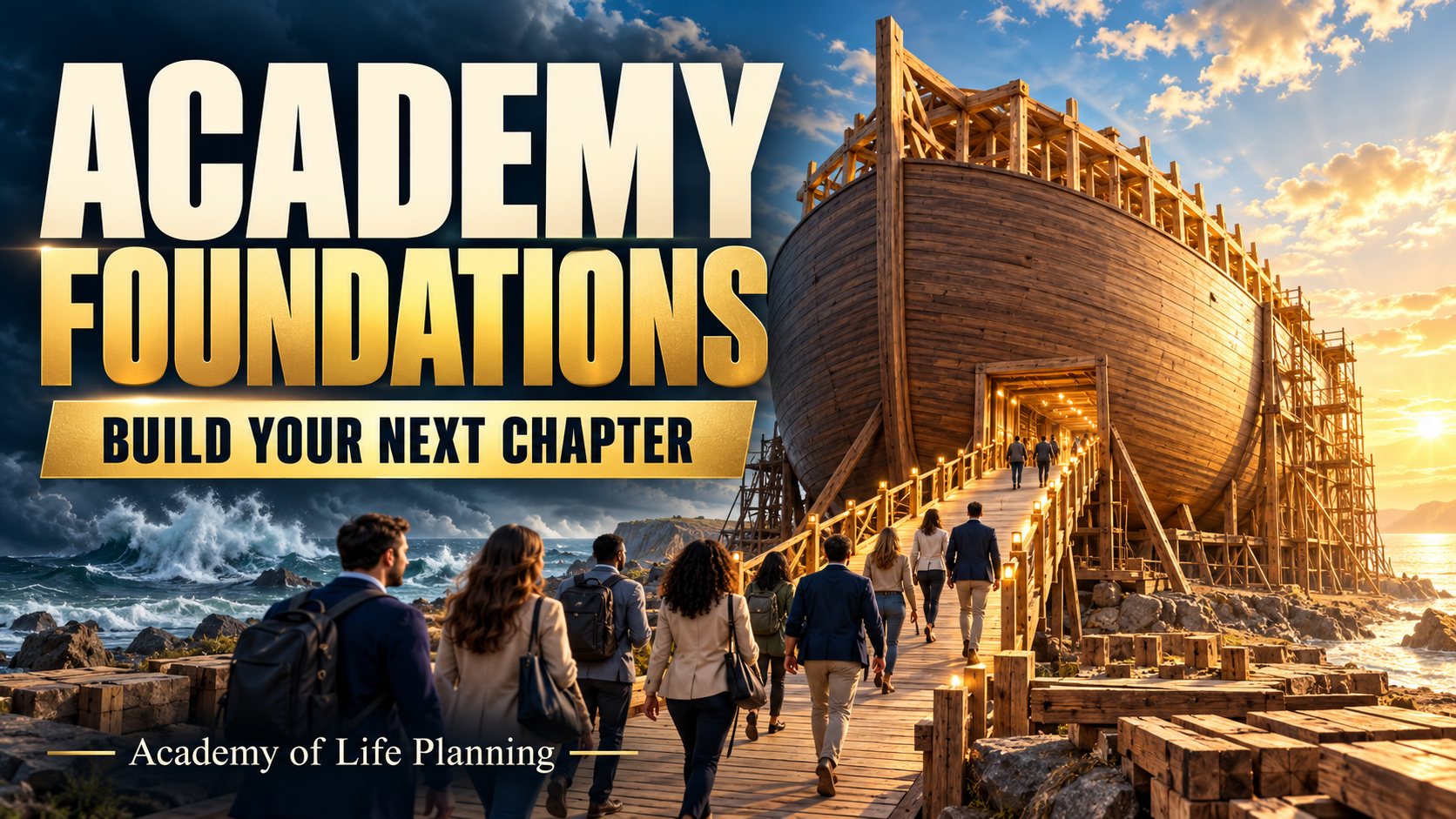
Build the ark before the rain
An ark takes time to build.
So does a different professional practice.
You need a method, competence, tools, a clear proposition and enough experience to know how they work together. You also need people around you who can challenge your thinking and help you improve.
That is the purpose of the Academy.
The GAME Plan connects goals, actions, means and execution.
Academy OS provides practical tools for organising information and exploring choices.
Our professional development pathways and community help practitioners learn how to support people responsibly.
The ambition is a useful service for the public and a viable livelihood for the practitioner.
Both matter. People need support they can afford, and practitioners need a business they can sustain.
The next chapter is coming
On 10 November, I’ll share the Academy’s next step—and an invitation to help shape it.
It brings together fourteen years of work on a question that matters more with every advance in AI: how do we help people become more capable of directing their own lives?
If that question matters to you, watch this space.
For now, consider what you want to build—and whose future it could help change.
Build the capability before the moment demands it.

