
People are taking back control of their money and lives. The Academy is where planners learn to help them do it.
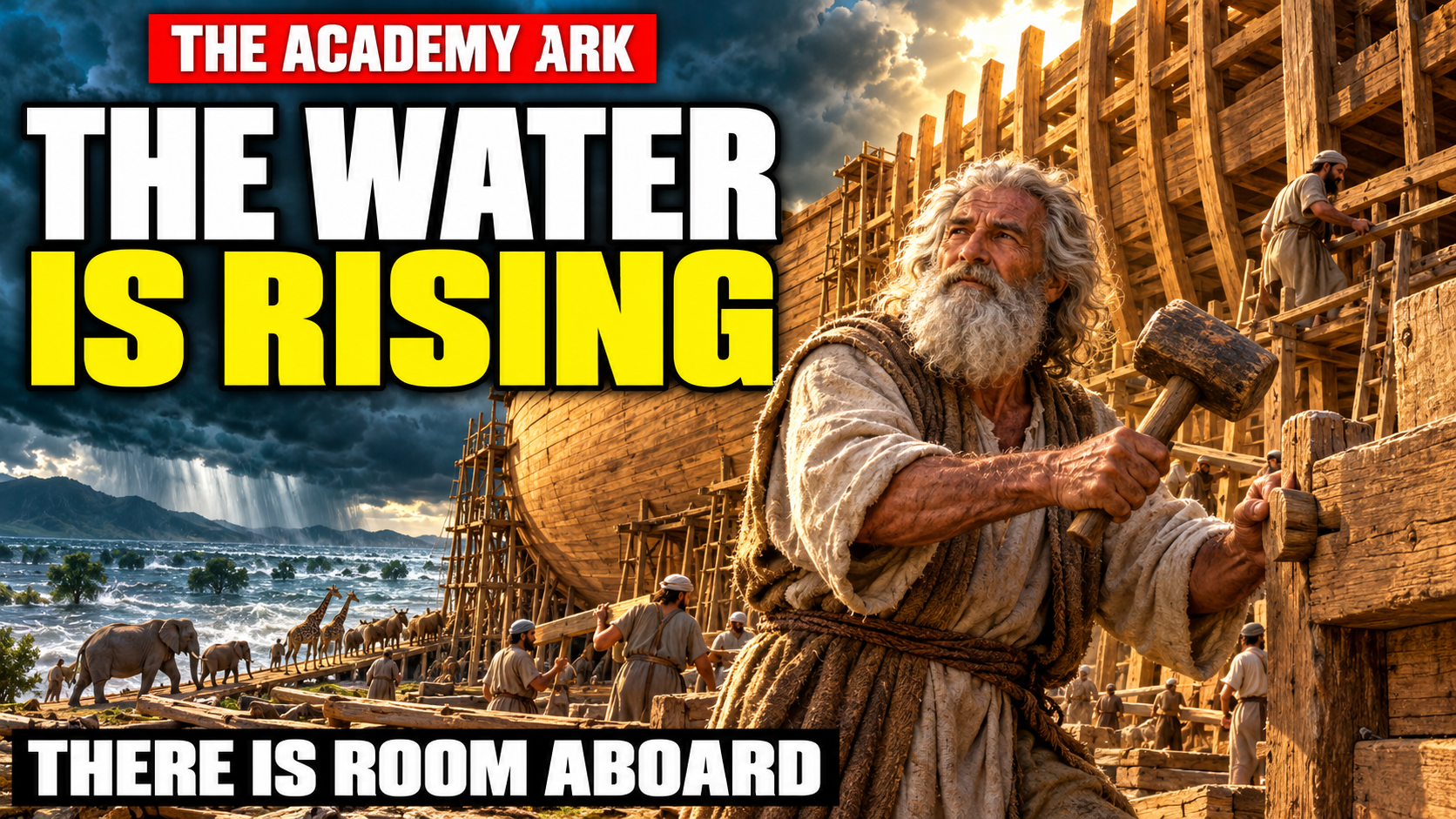
An ark looks like an unnecessary expense while the ground is dry.
There is timber to buy, work to do and no immediate evidence that any of it is needed. Meanwhile, the people around you are carrying on quite comfortably.
Why build something different when the existing model is still making money?
For years, that has been a familiar conversation at the Academy of Life Planning.
We have argued that people would become more capable, better informed and less willing to surrender control of their money and lives. That planners would need a livelihood built around increasing that capability. That selling intermediation and calling it financial planning would face increasingly difficult questions.
Some people laughed. Others told us our commercial model was hollow and destined to fail. Their assets under management models were doing just fine.
But today’s revenue tells you how a model performs in today’s conditions. It cannot tell you whether the model is ready for tomorrow’s conversation.
The rising water is consumer capability
In our Ark story, the rising water is the growing ability of ordinary people to understand, question, compare and act.
AI is putting increasingly powerful analytical support within their reach. Consumers can bring a second pair of eyes to a fee statement, ask for jargon to be explained, compare different approaches and prepare questions before a meeting.
The change is already visible. In research published in August 2026, the FCA reported that four in five less experienced investors surveyed had used AI for help with investing. The study focused on people aged 18–40 who held investments or were considering them. It also exposed misunderstandings about accuracy and consumer protection. More access to intelligence does not automatically produce sound judgement.[1]
When I say that superintelligence is making consumers superintelligent, I mean a practical shift in what people can bring to a conversation. They can draw on analytical capabilities that were previously beyond their reach. They still need to check evidence, recognise uncertainty and exercise judgement.
My expectation is that, over the next six to twelve months, this rising capability will put growing pressure on traditional financial advice models. That is my forecast, rather than a settled timetable.
The pressure will arrive through better questions.
What happens when the client can interrogate the model?
Imagine a client arriving with these:
- What exactly did you do for the ongoing fee I paid last year?
- Which parts of this service do I actually need?
- Could I pay for help with this decision without committing to an ongoing portfolio service?
- How does the way you are paid influence the options you put before me?
- What are you helping me become capable of doing for myself?
These are reasonable questions. They become commercially uncomfortable wherever income depends on the client being unable, or unlikely, to ask them.
Information asymmetry has long supported parts of the industry’s economics: the professional understands the system; the customer must trust the explanation. AI can narrow that gap. It can also introduce new errors and dependencies, which makes independent judgement more valuable.
As scrutiny increases, weak explanations, unclear value and conflicts between client independence and provider revenue become easier to expose.
A model that needs the client to know less becomes vulnerable when the client can ask more.
We built for this conversation
At the Academy, our proposition starts with a person taking control of their own life.
What matters to them? What resources do they have, including their skills, relationships, time and capacity to earn? What would enough look like? What can they do next?
The Academy teaches the method. Total Wealth Plans provides the AI tools and continuing support. The Total Wealth Planner provides human help when complexity, stress or change makes another thinking partner valuable.
Our shorthand is simple:
Continuous agency. Episodic expertise.
People have continuing support to understand their circumstances, organise their lives and activate their resources. They can seek experienced human help for a difficult decision, a transition or a problem that needs careful thought.
Bring me the problem, not the portfolio.
This changes the answers we can give. If someone asks whether they need continuing human support, the honest answer may be: “You can manage this yourself now. Come back when something changes.”
That is a successful outcome in a model designed to build capability.
I believe this is the strongest response to the conversation now emerging. We have built a proposition in which better questions help reveal its value. Our responsibility is to demonstrate that through people’s experience and results.
There is already a community aboard
The Academy has 69 accredited Total Wealth Planners today.
They represent an established foundation for the next chapter: a community preparing to help people exercise greater agency in the AI age.
The Ark is a place to build a livelihood suited to those conditions. Planners bring their experience, judgement and care. They learn to apply those strengths in ways that leave the person more capable and in control.
The professional’s value becomes clearer when the client can understand it, question it and choose when to use it.
Ten more across the bridge
This November, we begin the founding phase of our next stage of growth.
Our aim is to help another 10 planners cross the bridge from advice to agency by January 2027, taking our accredited community from 69 to 79. Our next ambition is to welcome 50 more during the first quarter of 2027.
For planning purposes, we estimate that enabling each transition takes roughly £1,000 of investment in training, tools and support. This is an approximate assumption across the campaign, rather than a single course price.
Our founding target is therefore £10,000 in additional sales during November and December 2026, helping us support those first ten transitions.
This is a commercial campaign for Academy services, training and support. It is also a practical test: can we help more professionals build livelihoods around restoring human agency, and show that people will pay for that value?
Ten transitions will give us evidence to guide the next fifty.
An invitation aboard
You do not have to share my forecast about the speed of change to recognise the question it raises.
If your clients become much more capable over the next year, how well does your business respond?
Does greater understanding strengthen their trust in what you do? Can you explain your value plainly? Can your business prosper as they become more independent?
If that is the practice you want to build, I would welcome a conversation.
Email steve@academyoflifeplanning.com with “Across the bridge” in the subject line to hear about the November founding campaign.
People are taking back control of their money and lives. The Academy is where planners learn to help them do it.
The water is rising. We have been building. There is room aboard.
— Steve Conley, Founder, Academy of Life Planning
[1] Financial Conduct Authority, “Young investors trust AI more than TV or celebrities”, 27 August 2026. https://www.fca.org.uk/news/press-releases/young-investors-trust-ai-more-tv-or-celebrities

