
Why Parliament’s Latest Debate Exposes a Deeper Structural Failure
“Protection that comes a decade too late is not protection. It is a post-mortem.”
That line, delivered in Westminster Hall this week, captures the essence of a scandal that refuses to die—and perhaps more importantly, refuses to be fully acknowledged.
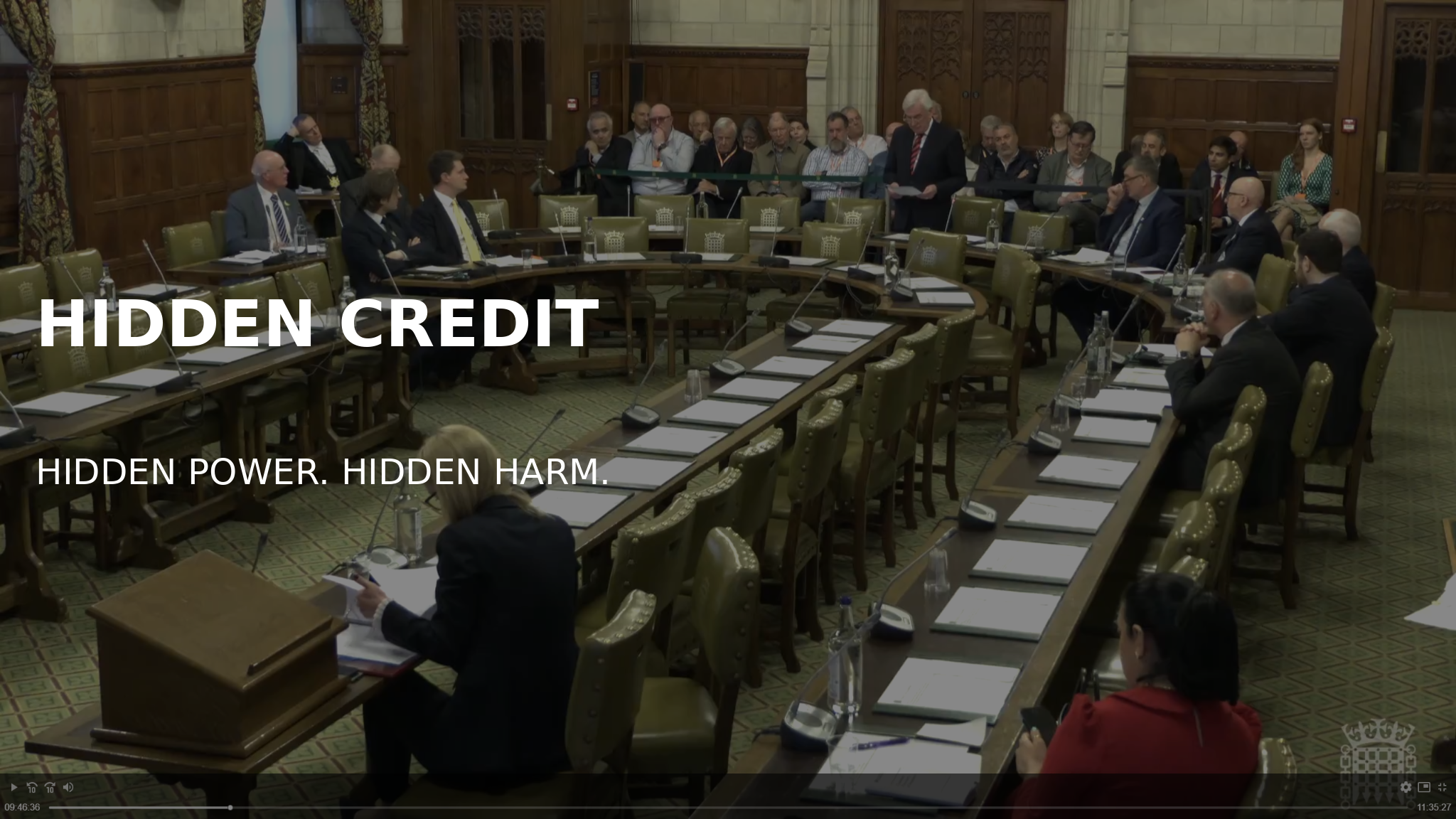
On 14 April 2026, MPs gathered to debate hidden credit liabilities and the role of the Financial Conduct Authority (FCA). What emerged was not simply a technical discussion about derivatives or regulatory scope.
It was something far more profound:
A challenge to the credibility of the UK’s entire financial protection system.
[Watch the video: Parliamentlive.tv | Westminster Hall Tuesday 14 April 2026]
What Are “Hidden Credit Liabilities”?
At the centre of the debate is a mechanism few outside specialist circles fully understand—but whose consequences have been devastating.
In simple terms:
- Businesses took out loans.
- Banks attached derivatives (e.g. interest rate swaps), often presented as “protection.”
- Embedded within those structures were undisclosed credit liabilities—effectively hidden debt.
- These liabilities:
- Reduced creditworthiness immediately
- Triggered covenant breaches
- Enabled banks to transfer businesses into restructuring units
- Often led to insolvency, asset stripping, and collapse
As one expert witness stated:
These products were “deliberately engineered to transfer undisclosed and uncapped risk directly onto the customer.”
This is not mis-selling in the traditional sense.
It is structural asymmetry engineered into the product itself.
From Protection to Predation
What makes this scandal uniquely troubling is not just the harm—but the inversion of intent.
Products sold as protection:
- Increased risk
- Created hidden liabilities from day one
- Generated upfront profits for banks
- Enabled downstream enforcement (often through restructuring units)
In multiple cases cited:
- Viable businesses were pushed into “artificial distress”
- Families lost homes, livelihoods, and in some cases, their lives
- Entrepreneurs were led to believe they had failed—when the system had failed them
This is the uncomfortable truth:
The system didn’t just fail to protect.
It may have actively facilitated harm.
The Regulatory Question No One Can Avoid
The central tension in the debate wasn’t whether harm occurred.
It was this:
Where was the regulator?
MPs repeatedly raised concerns that:
- The FCA failed to investigate properly
- Critical features (like hidden credit lines) were excluded from redress schemes
- Banks were effectively allowed to “mark their own homework”
- Whistleblower evidence was ignored or sidelined
One conclusion from the All-Party Parliamentary Group was stark:
The FCA has “repeatedly and deliberately failed to act.”
Whether one agrees with that wording or not, the perception alone is damaging.
Because regulation relies on one thing above all else:
Trust.
And that trust has been fractured.
Government Response: Stability Over Retrospection
The Minister’s response was measured—but revealing.
Key points:
- Over £2 billion has already been paid in redress
- Many issues fall outside the historical regulatory perimeter
- Courts have ruled the FCA acted lawfully
- Reopening cases could create legal uncertainty and impact SME lending today
- Therefore: No public inquiry (for now)
Instead, the focus is on:
- Improved regulatory frameworks
- Expanded SME access to the Financial Ombudsman Service
- Stronger accountability via the Senior Managers regime
This is, in essence, a forward-looking stance.
But it leaves a difficult question hanging in the air:
Can a system move forward without fully reconciling its past?
The Deeper Issue: Structural Untrustworthiness
From an AoLP perspective, this debate is not an isolated failure.
It is a case study in structural design risk.
When:
- Information asymmetry exists
- Incentives reward complexity
- Accountability is fragmented
- And consumers rely on intermediaries
Then harm is not an accident.
It becomes a predictable outcome.
This is why the conversation must evolve beyond:
- Mis-selling
- Compensation
- Regulatory reform
And move towards a more fundamental shift:
From advice to agency.
The AoLP Lens: Reclaiming Control
At the Academy of Life Planning, we approach this differently.
Not by asking:
- “Was this compliant?”
- “Was this disclosed?”
But:
- Did the client understand the structure?
- Did they retain control over their decision?
- Was their life plan driving the financial architecture—or the other way around?
Because hidden liabilities don’t begin with derivatives.
They begin with disconnected planning.
A System at a Crossroads
This debate signals something important.
Parliament is no longer just questioning outcomes.
It is beginning to question:
- Structures
- Incentives
- Regulatory philosophy
But the response remains cautious.
No inquiry.
No systemic reset.
Incremental reform.
And that creates a gap.
Where AoLP Steps In
This is where the Academy becomes relevant—not as a critic, but as an alternative.
A different model:
- Client as decision-maker, not recipient
- Planner as thinking partner, not intermediary
- Transparency by design, not regulation
- Human and decision capital at the centre
Because in a world where AI can interrogate contracts in seconds:
The real risk is no longer lack of information.
It is lack of agency.
Final Thought
The Westminster debate asked whether the FCA is fit for purpose.
A more important question might be:
Is the system itself fit for the future?
Because if complexity can hide risk…
And institutions can close ranks…
Then regulation alone will never be enough.
What’s needed is something upstream.
Something structural.
Something human.

