
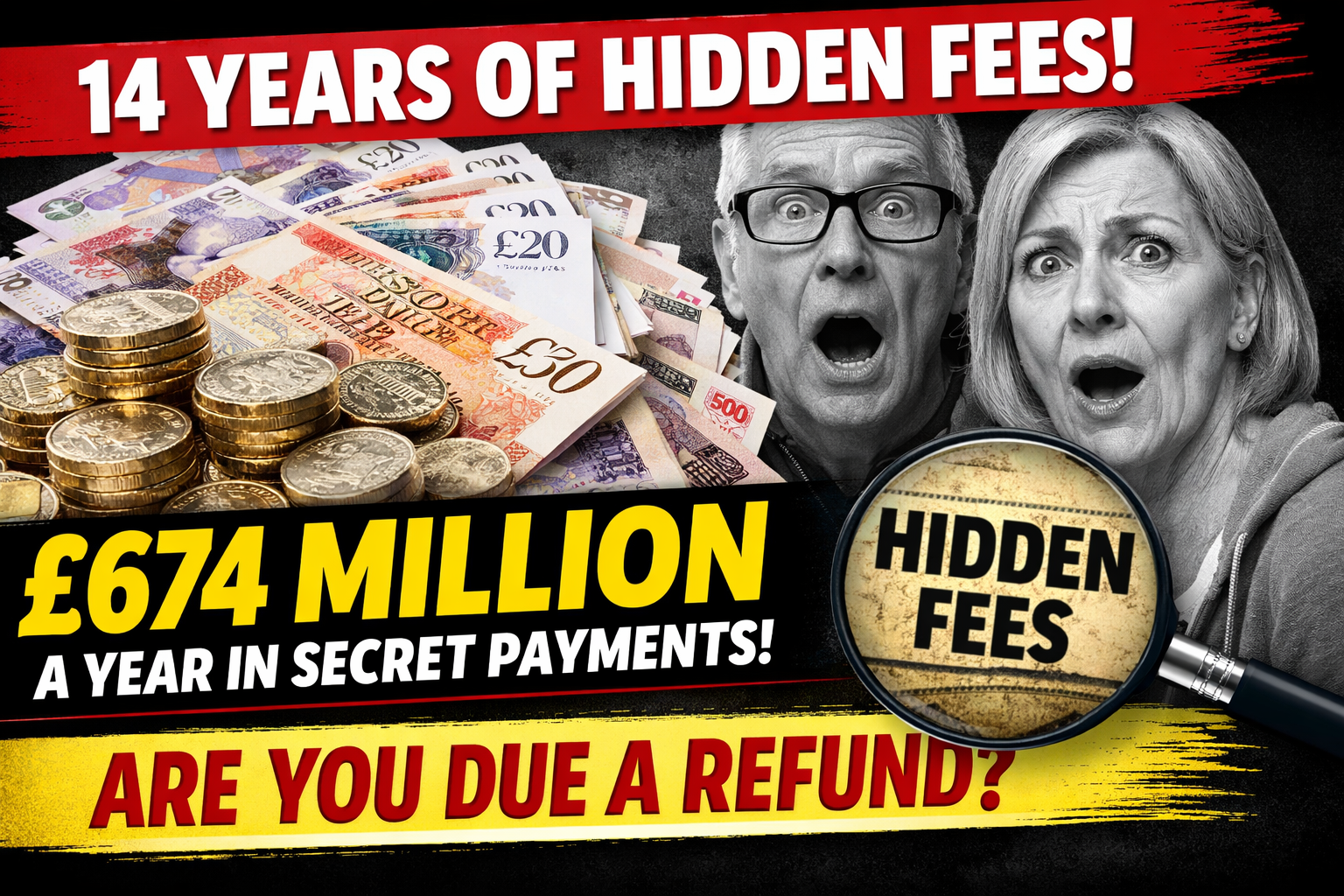
“£674m a year in hidden fees over 14 years. Now ask yourself: what did you receive — and are you due a refund?”
The Financial Conduct Authority has reopened a question many assumed had already been settled:
Should trail commission still exist?
Not for new business—that was addressed in 2012 under the Retail Distribution Review (RDR).
But for millions of consumers, something quietly continued in the background:
👉 Ongoing charges deducted from legacy products
👉 Often without active advice
👉 Often without clear awareness
Now, 14 years later, the regulator is asking whether this should ever have been allowed to continue.
That alone should give us pause.
[Source: Consultation Paper CP26/10 Simplifying the Pensions & Investment Advice Rules March 2026]
What is trail commission—and why does it matter?
Trail commission is an ongoing payment to an adviser or intermediary, taken from your investment or pension.
It was designed to fund ongoing service.
But here’s the issue:
- There is no universal obligation to provide that service
- Many consumers have never heard from their adviser again
- Yet the payments have continued—year after year
This creates a simple, uncomfortable question:
If no service has been provided… what exactly has been paid for?
If it’s questionable now… was it ever acceptable?
The FCA is now exploring whether trail commission causes harm.
But this raises a deeper issue:
If the model is questionable in 2026… was it not equally questionable in 2012?
Because the core structure hasn’t changed:
- Ongoing payments
- Weak service obligations
- Low transparency
- Embedded conflicts of interest
The only thing that’s changed is the lens through which it is being viewed.
A fair question: should consumers be refunded?
This is where things become more complex—but also more important.
There is a legitimate question emerging:
If fees were taken without corresponding service, is there a basis for redress?
In UK law, particularly under principles like “fee for service” and unfair relationship provisions, the argument can be explored where:
- Charges were ongoing
- Service was absent or negligible
- Consumers were not properly informed
This is not a blanket claim.
But it is a question worth asking—especially for those who feel they have paid for something they did not receive.
The bigger issue: this isn’t just about commission
Trail commission is not the root problem.
It is a symptom of a wider system:
- Advice tied to products
- Revenue tied to assets, not outcomes
- Consumers positioned as passive recipients, not active decision-makers
When those conditions exist, opacity becomes normalised.
And over time, so does extraction.
Questions every consumer should now ask
If you entered into an arrangement before 2012, this matters to you.
Here are some simple, direct questions to ask your adviser or provider:
1. Am I still paying trail commission?
- If yes, how much (in £ and % per year)?
2. What service am I receiving in return?
- How often have you reviewed my situation?
- What specific advice or outcomes have you delivered?
3. Can I see a record of service?
- Meeting notes
- Reviews
- Recommendations
4. Can this commission be switched off?
- What happens if I move to a clean (non-commission) share class?
5. What would I pay under a transparent fee model instead?
- Is this better value?
6. Was I clearly informed about this at the outset?
- Would I have understood it at the time?
7. If no service has been provided, what is your position on redress?
This is not about confrontation.
It’s about clarity.
Expect better. You are entitled to it.
The financial system is changing.
- Information is no longer scarce
- Transparency is no longer optional
- Passive acceptance is no longer necessary
Consumers now have the ability—and the right—to ask:
👉 What am I paying?
👉 What am I receiving?
👉 Is this fair?
And increasingly:
👉 Do I want to continue this arrangement at all?
From dependency to agency
At the Academy of Life Planning, we believe this moment represents something bigger than a regulatory review.
It is a shift in mindset.
From:
- Hidden fees → transparent value
- Passive clients → active decision-makers
- Intermediated control → personal agency
Trail commission is not just being questioned.
The entire model of dependency behind it is beginning to unravel.
A final thought
This is not about blaming individuals.
Many advisers have acted in good faith within the system they inherited.
But systems must evolve.
And when they don’t, they must be questioned.
The FCA is now asking the question.
The real opportunity is for consumers to do the same.
If you’ve had a financial product or adviser relationship since before 2012, now is the time to review it.
Not with suspicion.
But with clarity, confidence—and the expectation of something better.
Curious how others see this. Have you ever checked whether you’re still paying trail commission—and what you’re getting in return?

