
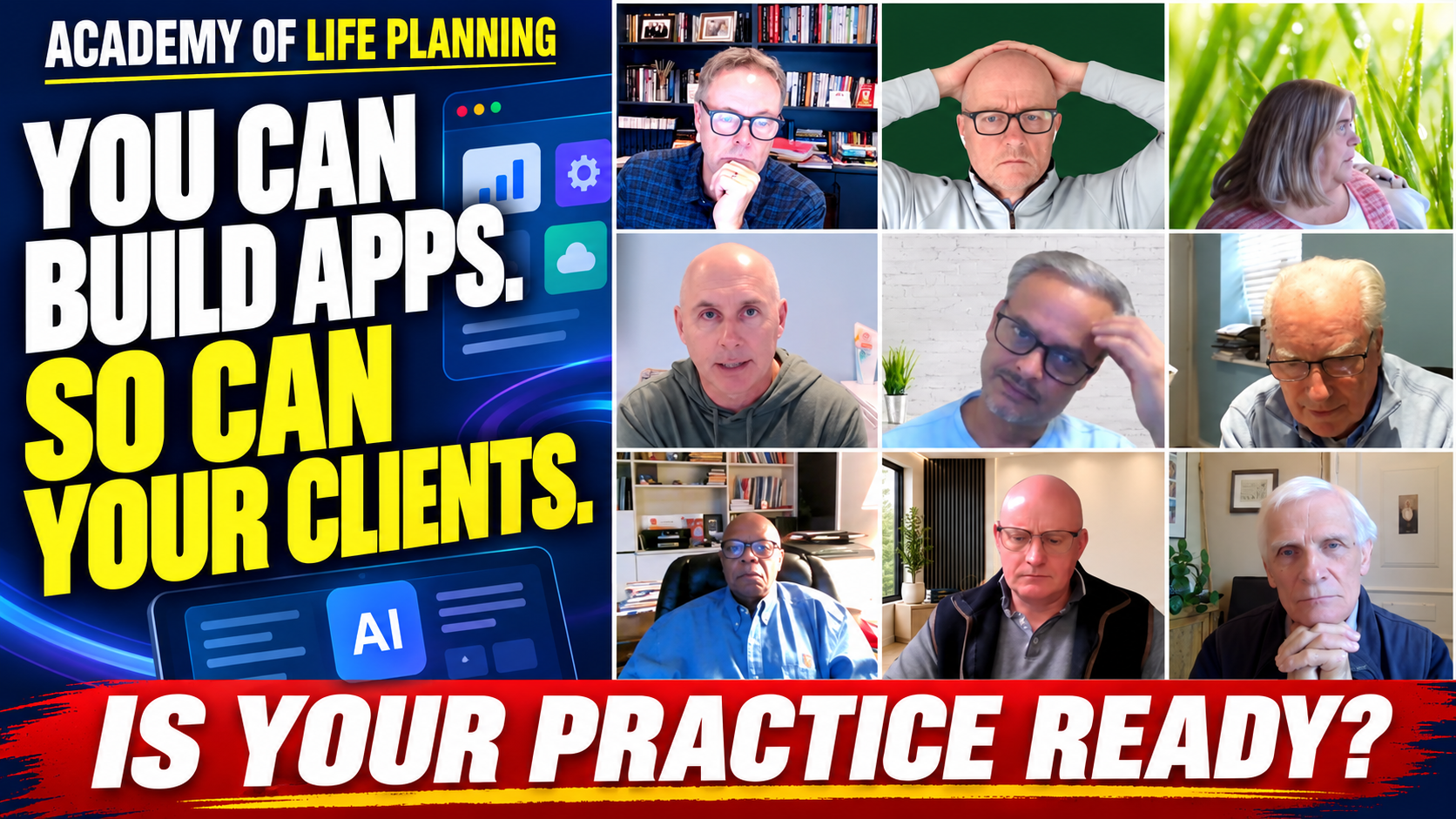
What building Academy OS has taught us about AI, human agency and the future of professional support.
There is a particular excitement in watching an idea become a working tool.
A scorecard you once needed someone else to create. A cashflow model shaped around the questions you actually ask. An everyday task that used to consume an afternoon, now completed through an automated workflow.
Academy members are experimenting with all of these. They are using AI to develop questions and scoring systems, build models and connect parts of their businesses. One member described watching Claude work through their browser to rebuild a scorecard and create tags in their customer relationship management system, while they reviewed and adjusted the wording.
That feeling is familiar. Building Academy OS has given me the same excitement—and plenty of opportunities to discover what still needs work.
But the most important lesson reaches beyond app development.
If we can build tools we previously depended on others to provide, our clients can begin doing the same.
The first version starts the learning
Getting something onto a screen is an achievement. Using it on a real problem begins a different kind of learning.
Does it retain the context it needs? Does an answer finish properly? Does an exported report preserve the evidence? Does the wording distinguish what a document establishes from what we merely suspect?
Recent work on Goliathon, one of the Academy OS apps, illustrates this process. Our development history includes changes to preserve whole-case context, address cut-off AI replies, improve PDF exports and tighten wording that might overstate evidence.
These are practical lessons from developing and using the tools. A deployment record shows that a change has been released; checking whether it resolves the problem remains part of the work.
A working prototype is the beginning of a learning process.
A graph needs more than a good appearance
Cashflow models make this especially clear.
A graph can make a financial future easier to understand. It can also make an incorrect calculation look persuasive.
Before relying on a model, we need to understand its assumptions and check its behaviour. Are figures expressed in today’s money or future money? How are withdrawals handled? What happens when an income stops, an expense rises or returns disappoint?
The useful question is: “Can I explain why this result appears, and check it against an example I understand?”
The same applies to scorecards. AI can help generate questions and assign scores, but we still need to ask what those scores mean. Are we opening a useful conversation, or implying a level of measurement we have not established?
App-building capability includes knowing what deserves scrutiny.
Automation makes permissions part of the work
Watching AI operate a browser can feel extraordinary. It also makes our instructions and boundaries consequential.
An agent drafting wording is doing something different from an agent changing live records or sending communications. We need to decide what it may access, what it may change and where we want to review its work before it acts.
At the Academy, this belongs within the wider principle of agency: people should understand what is happening and retain meaningful control.
The purpose of automation is to release capacity while preserving that control.
Building has costs—and learning has value
There are costs behind the screen: AI usage, hosting, development, testing, maintenance and human attention.
Our own experience has reinforced the need to distinguish the cost of running an existing app from the investment involved in improving it.
Academy OS serves both purposes. It provides tools for users, and its development helps us learn. That learning can improve the tools, our teaching and the support we provide.
Both have value. Both need an affordable commercial basis. Supporting independence does not mean that infrastructure, training or dedicated professional time becomes costless.
Your clients may arrive with their own tools
This is the business-model question beneath the excitement.
A planner can use AI to build a tool that helps them do more for a client. A client can use AI to build a tool that helps them do more for themselves.
Imagine someone arriving with their own cashflow model, a comparison of possible choices and a list of assumptions they want challenged. They may want help understanding whether they have missed something, checking a consequential decision or finding a way forward during a stressful change.
Some clients will enjoy building. Others will prefer a maintained tool. Others will want substantial human help. We should discover their preferences rather than assume everyone wants the same relationship.
The planner of the future will help increasingly capable clients recognise when professional support adds value.
What this means for the Academy
We must apply that lesson to ourselves.
Members choosing to build their own apps are exercising the agency we encourage. Academy OS must earn its place through usefulness, convenience and continued improvement.
The Academy’s wider role is to help people develop capability: to ask better questions, understand assumptions, test what they create and recognise when they need support.
For professionals, that includes developing a proposition that remains useful when clients arrive better equipped.
We are learning alongside our members. Their experiments help us see where enthusiasm is growing, where difficulties arise and what support is worth developing next.
How the Academy can help
Our Practice Management Circle provides paid training, peer learning and professional support for members developing their practices.
On Tuesday 27 October 2026 at 12 noon UK, we will dedicate the session to comparing experiences of building with AI: scorecards, cashflow models, automation and apps—and what these developments mean for the clients we serve.
Bring something you have built, something you are trying or a question you cannot yet resolve. This session is an open peer exchange within the Circle. Dedicated work on a particular app, model or business challenge can be separately scoped and priced.
Existing PMC members can join through their usual session link. Academy members who are not PMC members are invited to upgrade their membership online through the Academy website. If you are new to the Academy, contact us to explore the support that fits your needs.
As you discover what you can do for yourself, ask what your clients will discover next—and how your practice will help them.
Steve Conley, Founder, Academy of Life Planning

