
For years, policymakers, regulators, pension providers, and financial institutions have worried about the “advice gap.”
How do we get more people saving?
How do we encourage better pension outcomes?
How do we help people invest for the future?
These are important questions.
But they overlook a more fundamental reality.
You cannot save money you do not have.
Across the UK, millions of people are living from one pay cheque to the next.
Many are carrying debt.
Many have little financial resilience.
Many have no meaningful surplus at the end of the month.
Yet much of the national conversation continues to focus on encouraging them to save, invest, and prepare for retirement.
It is rather like asking someone to build an extension before they have repaired the foundations.
The problem is not primarily a savings gap.
It is an income security gap.
And beneath that lies something even deeper.
An agency gap.
The Missing Conversation
The financial services industry talks constantly about financial capital.
Savings.
Pensions.
Investments.
Assets.
Far less attention is given to the asset most people possess in abundance:
Human capital.
Their knowledge.
Their skills.
Their experience.
Their relationships.
Their creativity.
Their adaptability.
Their capacity to learn.
For most people under retirement age, human capital is by far their largest asset.
Yet it is rarely measured, rarely developed systematically, and rarely included in mainstream financial planning conversations.
Talking about the Threshold Hypothesis since 2016
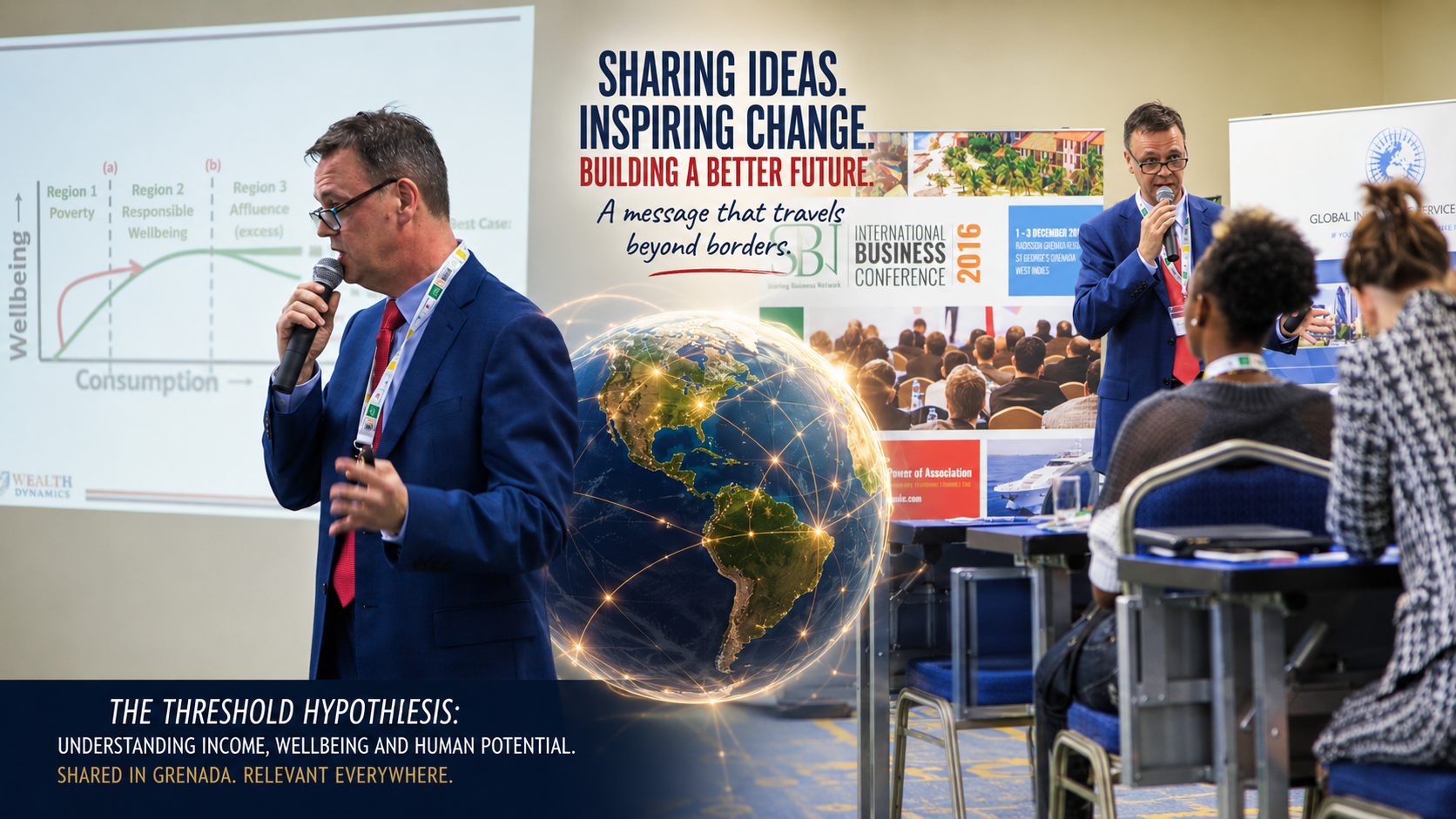
Ten years ago I was standing in a conference room in Grenada talking about something called the Threshold Hypothesis.
Most people in the room were expecting a conversation about money.
What I was really talking about was wellbeing.
The idea was simple:
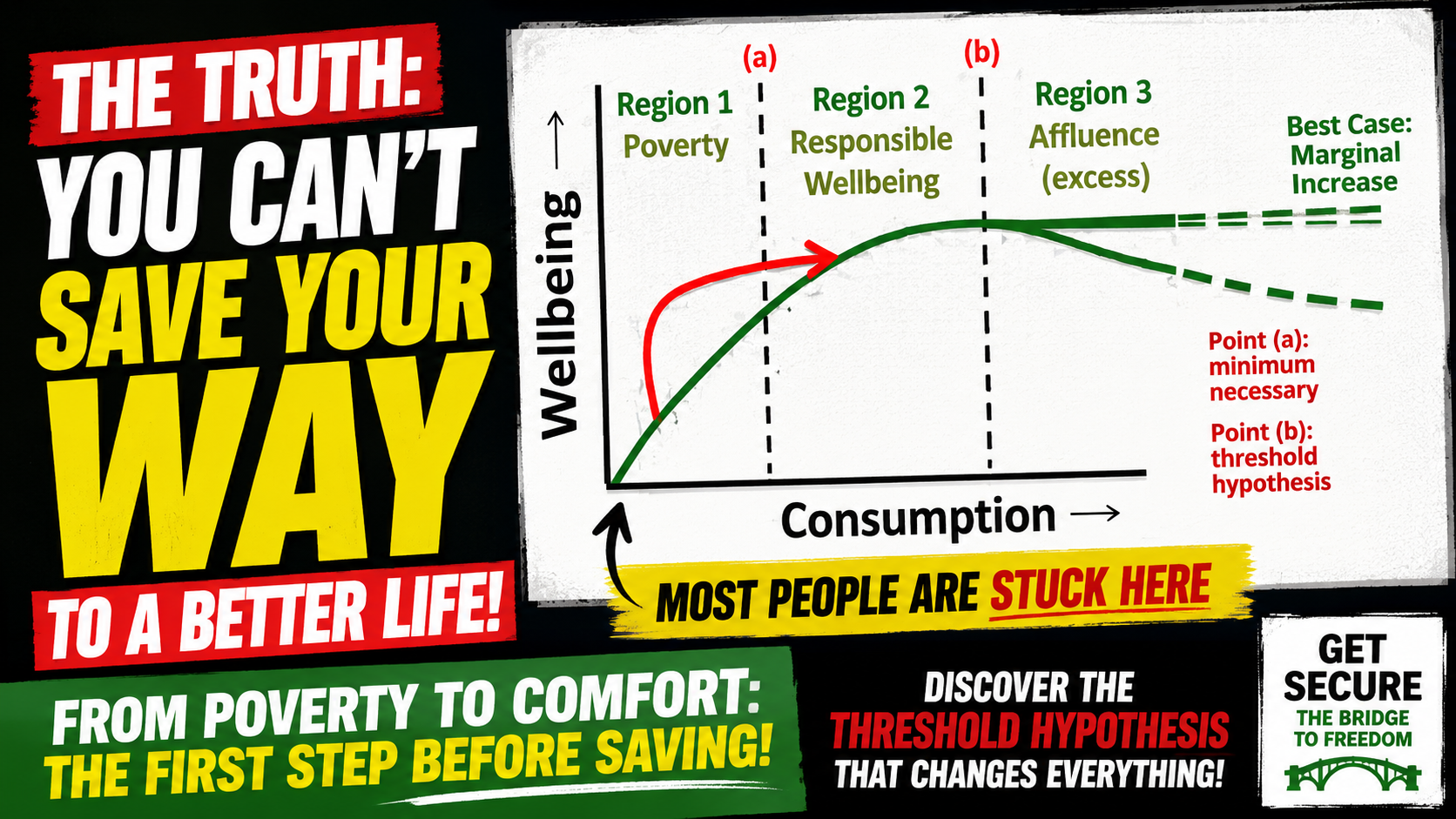
There is a minimum level of income security that people need before they can begin to flourish.
Looking back, I realise I was describing what I now call the Agency Gap.
Because you cannot save money you do not have.
Yet much of the national conversation still focuses on getting people to invest, save more, and prepare for retirement while millions are struggling to get through the month.
Something doesn’t add up.
This week I launched Get Secure.
It grew out of that original Threshold Hypothesis work.
The goal isn’t to help people pick investments.
The goal is to help people move from income insecurity towards income security.
To identify the human capital they already possess.
To use AI as a capability multiplier.
To spot opportunities they may never have considered.
And to build a practical plan for moving from the Poverty Zone into the Comfort Zone.
The image above was taken in Grenada almost a decade ago.
At the time, AI capable of amplifying individual capability at scale didn’t exist.
Today it does.
That changes the conversation.
Particularly when almost one million young people in the UK are classified as NEET and many adults feel trapped between rising costs and limited opportunities.
Perhaps the biggest financial planning challenge of our time is not the advice gap.
Perhaps it’s the agency gap.
By agency, I mean the ability to make and act on your own decisions.
That’s how I’m seeing it right now.
What do you think people need most before they can realistically begin saving and investing for the future?
Why 2026 Is Different
Something profound has changed.
Artificial intelligence has become a human capital multiplier.
Tasks that once required specialist consultants, researchers, marketers, coaches, trainers, programmers, or planners can increasingly be performed by ordinary people working alongside AI.
Not perfectly.
Not automatically.
But dramatically more effectively than before.
The question is no longer:
“What can I do?”
The question is:
“What can I do when my capability is amplified by AI?”
That changes everything.
Particularly for people who have been left behind by traditional systems.
Think About The Million NEETs
Today, nearly one million young people in Britain are classified as NEET — not in education, employment, or training. Projections suggest that number could rise even further.
Most public discussions focus on jobs.
But perhaps the bigger question is capability.
How do we help people:
- Discover what they are good at?
- Recognise the assets they already possess?
- Build confidence?
- Create income opportunities?
- Adapt to a rapidly changing economy?
- Develop a sense of direction and purpose?
In short:
How do we restore human agency?
Because dependency grows when agency shrinks.
Introducing Get Secure
This is why I created Get Secure.
Get Secure is not an investment app.
It is not a budgeting tool.
It is not a pension calculator.
It is a practical pathway designed to help people move from income insecurity towards income security.
Built around Threshold Hypothesis thinking, the aim is simple:
Help people move from the Poverty Zone into the Comfort Zone.
Not temporarily.
For life.
The process starts by identifying:
- Human capital
- Skills and strengths
- Life experience
- Income opportunities
- AI-enabled possibilities
- Practical actions that can improve financial resilience
Only when people have created enough should we expect them to focus on saving enough.
The Bridge To Freedom
At the Academy of Life Planning, we increasingly see life as a progression through four stages:
- Suffering to Wisdom
- Wisdom to Security
- Security to Freedom
- Freedom to Legacy
Get Secure focuses on the most important bridge of all:
The bridge from Wisdom to Security.
Because security changes everything.
Security creates breathing space.
Security creates confidence.
Security creates options.
Security creates freedom.
A Different Kind of Financial Inclusion
Perhaps true financial inclusion is not about giving people better access to investment products.
Perhaps it begins by helping people recognise the productive assets they already possess.
The ability to earn.
The ability to learn.
The ability to adapt.
The ability to create value.
The ability to shape their own future.
That is what human agency looks like.
And in the age of AI, it may be the most important asset class of all.
If you know someone struggling with income insecurity, underemployment, or uncertainty about their future, invite them to explore:
Get Secure – The Bridge to Freedom
A practical framework for identifying human capital, leveraging opportunity, and building sustainable income security in the age of AI.
Curious how others see this.
Get Secure is available at:
Get Secure
[Currently free beta test web app, please feedback your comments]

