
There is a quiet assumption built into many financial and legal systems:
If you signed the document, you understood it.
But real life is rarely that simple.
People sign agreements while tired, stressed, grieving, overwhelmed, intimidated, rushed, hopeful, trusting, distracted, or simply trying to keep life moving.
Sometimes they believe they are agreeing to one thing, only to discover years later they also agreed to consequences they never truly understood.
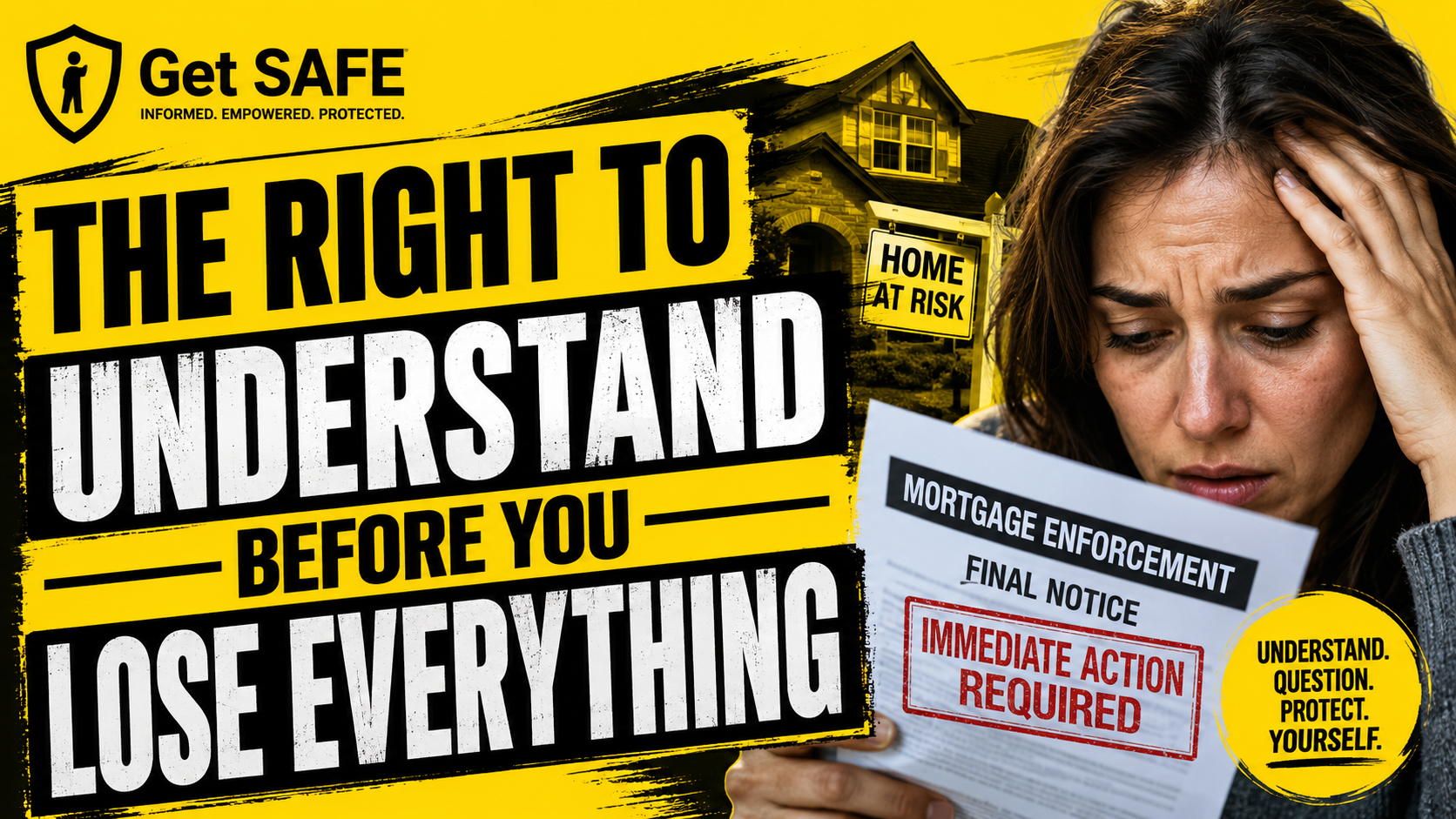
A recent judgment from the Court of Justice of the European Union (CJEU) has brought this issue sharply into focus. The case involved consumers who lost their family home through mortgage enforcement procedures while they were still trying to challenge the fairness of the underlying contract terms in court.
At the heart of the judgment was a simple but profound principle:
People must have a genuine opportunity to understand, question, and challenge life-changing decisions before irreversible harm occurs.
Not afterwards.
Before.
That principle matters far beyond mortgages.
It speaks to a wider issue affecting millions of ordinary people navigating increasingly complex systems.
The problem is not always intelligence
Many people who struggle with contracts, enforcement letters, financial products, or legal processes are not unintelligent.
Often, they are exhausted.
Or frightened.
Or under pressure.
Or dealing with health problems, relationship breakdown, bereavement, caring responsibilities, financial stress, or information overload.
In these moments, complexity becomes dangerous.
Long documents filled with technical language can create the illusion of informed consent without real understanding.
And once enforcement processes begin, the pace can become overwhelming:
- deadlines
- legal notices
- court procedures
- demands for evidence
- escalating costs
- pressure to act quickly
By the time many people realise the seriousness of what is happening, they are already in survival mode.
Why this judgment matters
The European court made several important observations.
It emphasised that consumers must be able to challenge potentially unfair contract terms before enforcement is completed.
It also stressed that losing a family home engages fundamental human rights and therefore requires the highest degree of procedural scrutiny and effective legal protection.
Importantly, the judgment recognised that “protection” is not meaningful if it only exists after irreversible harm has already occurred.
That matters.
Because many people experiencing financial or legal distress feel they are constantly reacting after the damage is done.
The judgment also highlighted the importance of:
- plain language
- clear communication
- accessible explanations
- practical information about rights
- effective opportunities to challenge decisions
In other words:
True consent requires understanding.
Not just signatures.
This is not just about mortgages
The same underlying problem appears across many areas of life:
- financial agreements
- business guarantees
- pension transfers
- debt arrangements
- legal settlements
- NDAs
- investment products
- subscription contracts
- online terms and conditions
- AI-generated recommendations
- enforcement processes
Modern systems often assume that because information was technically “provided,” understanding automatically existed.
But disclosure is not the same as comprehension.
And information overload is not empowerment.
Why people freeze
One of the least understood aspects of financial harm is the psychological impact.
Stress changes cognition.
People experiencing fear or overwhelm often:
- avoid opening letters
- delay responses
- struggle to process information
- lose confidence
- become highly suggestible
- panic
- mentally shut down
This is not weakness.
It is a normal human response to threat.
At Get SAFE, we regularly see people who are intelligent, capable, and responsible become emotionally paralysed by procedural complexity and institutional pressure.
Sometimes the first step is not solving the case.
It is helping someone breathe again psychologically.
Helping them regain enough stability to think clearly.
The importance of slowing down
Many harmful outcomes occur because people feel forced to make rapid decisions in environments they do not fully understand.
That is why one of the most important forms of protection is often not legal sophistication.
It is pause.
A moment to:
- ask questions
- seek explanation
- organise information
- understand consequences
- explore options
- regain perspective
The ability to pause before irreversible decisions may become one of the defining public-interest protections of the AI era.
Because systems are becoming faster.
Documents are becoming more complex.
Automation is increasing.
And many people are being pushed into decisions at machine speed without human-level understanding.
The right to understand
At its core, this issue is about dignity.
Human beings should not lose:
- homes
- savings
- livelihoods
- stability
- future options
through systems they never realistically had the capacity to fully understand.
That does not mean every agreement is unfair.
Nor does it mean every difficult outcome is unlawful.
But it does mean society must take informed understanding seriously.
Particularly when consequences are severe.
What Get SAFE believes
At Get SAFE, we believe:
- people deserve plain-English explanations
- complexity should not become a weapon
- informed consent matters
- procedural fairness matters
- slowing situations down can reduce harm
- emotional stabilisation matters before escalation
- restoring clarity restores agency
We are not a legal service.
We do not provide legal advice or promise outcomes.
But we do believe people deserve support to:
- organise information
- understand process stages
- ask better questions
- regain psychological stability
- make clearer decisions
- access appropriate help safely
Because sometimes the most important protection is not somebody taking over your life.
It is somebody helping you think clearly enough to reclaim it yourself.
If you would like to learn more about Get SAFE and our work supporting people after financial exploitation and procedural overwhelm, visit the Get SAFE website
A practical step before signing anything important
This is one reason we created The Leveller™.
Not to replace lawyers, advisers, or regulated professionals.
But to help ordinary people slow complex decisions down long enough to think clearly before committing themselves.
The Leveller is a public-interest protection tool designed to help people:
- review agreements more carefully
- spot imbalance and hidden risk
- identify questions they may not have considered
- understand downstream consequences
- regain confidence before signing
Because many harmful outcomes do not begin with obvious fraud.
They begin with:
- pressure
- confusion
- complexity
- information overload
- assumptions
- trust placed too quickly
- terms never fully understood
The goal is simple:
Restore informed decision-making before harm occurs.
In real terms, The Leveller helps create a pause between:
“Sign here”
and
“I genuinely understand what this could mean for my future.”
That pause can matter more than people realise.
If you would like to support the public launch of The Leveller™ on Android, we are currently seeking a small number of additional beta testers with Android phones and a Google Play account.
Because prevention matters too.
Learn more about The Leveller™ and the wider mission to restore informed human agency before, during, and after engagement with complex systems.

