
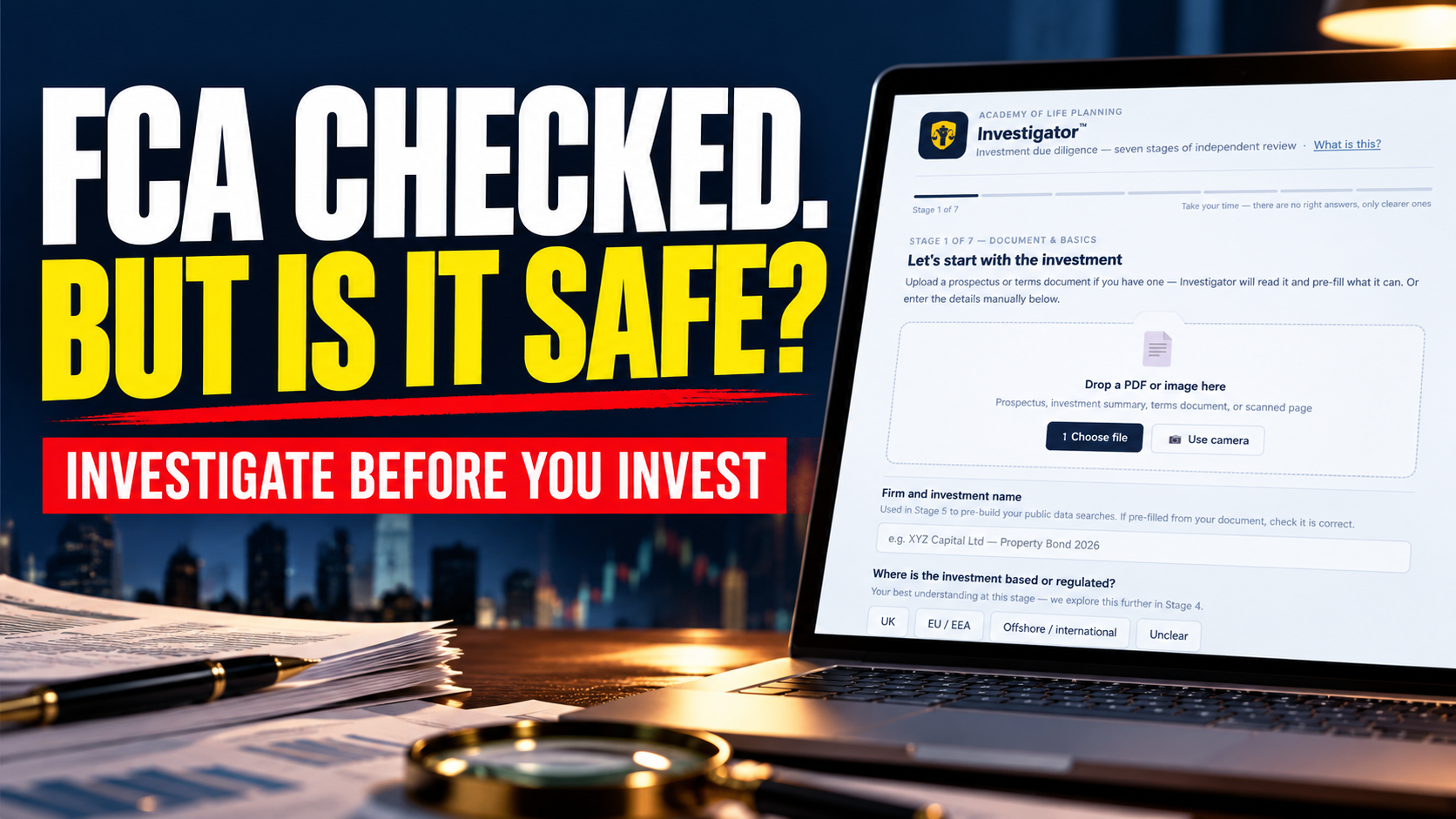
A firm appears on the FCA Firm Checker. You breathe a little easier. But what, exactly, have you checked?
You have checked something important: whether the firm is authorised and has permission to provide the service you want. You have not established that the person contacting you works for that firm, that this particular investment is regulated, or that your money will be used as promised.
That gap between checking a name and investigating a transaction is where people can lose their savings.
The return that wasn’t a return
On 23 September, James Gillingham was sentenced to five and a half years in prison for an investment fraud involving more than 60 people and around £1 million. Victims were promised guaranteed monthly returns of 0.5% to 5%. Brokers cold-called them, applied pressure and sometimes used false names. Prestigious London office addresses helped the scheme look established.
According to the Crown Prosecution Service, none of the money was invested. Some victims received payments described as investment income, but those payments came from other victims’ capital. No victim recovered their full investment or made a profit. One person lost £133,900. Gwasanaeth Erlyn y Goron
A payment is evidence that you have been paid. It is not evidence of how the payment was earned.
There is no evidence that these victims relied on the FCA’s Firm Checker. The case illustrates a wider problem: a firm search alone cannot answer the questions that mattered here.
What Firm Checker can tell you
The FCA Firm Checker is a vital first step. It helps you check a firm’s authorisation and permissions. The FCA says dealing with an authorised firm that has the right permissions greatly reduces the risk of harm. It does not remove all risk.
The FCA also says Firm Checker cannot confirm whether Financial Services Compensation Scheme or Financial Ombudsman Service protection would apply to a particular transaction. Certain products do not appear on the tool, and the full Financial Services Register holds further information about firms. FCA
Then there is identity. Fraudsters can copy a real firm’s name, address or firm reference number. The FCA advises contacting a firm through the details shown on Firm Checker, rather than a number or link supplied with the offer. fca.org.uk
A genuine firm, a genuine salesperson, a regulated activity and a sound investment are four different claims. Check each one.
Follow the claims, the money and the consequences
Before sending money, ask:
- Who is making the offer? Does the firm have permission for this activity? Can you confirm the person works there by calling the firm through FCA-listed contact details?
- What am I buying? What will you legally own? Who issues it? What evidence supports the promised return?
- Where will my money go? Who receives it, and what independent evidence shows it will be used for the stated purpose?
- Who is paid when I invest? Are brokers or introducers receiving fees or commissions? How much?
- What happens if it fails? Who is legally responsible? Would a complaint or compensation scheme cover this activity and this loss?
- Am I free to pause? Cold calls, urgency, secrecy and pressure to sign investor declarations deserve scrutiny.
These questions matter whether an offer arrives through an adviser, social media, a friend or a polished brochure. Familiarity can make a proposition feel safer without changing its structure.
Why we built Investigator™
Investigator™ is the Academy of Life Planning’s free, AI-assisted tool for working through those questions before you commit. Upload a prospectus or terms document, or enter the details yourself. Its seven-stage review examines the offer, investor classification, sales pressure, jurisdiction, public records and the consequences of loss. It helps you check sources including the FCA Register, FCA Warning List and Companies House, then produces a plain-English summary. Investment Due Diligence
Investigator cannot certify an investment as safe or prove where future payments will go. A clean public search means no warning was found in that search; it does not prove the offer is sound. The tool helps you see what still needs evidence and ask better questions while you can still walk away. Investment Due Diligence
The FCA check opens the investigation. It does not close it.
If someone wants your money today but cannot give you time to understand the investment, that is itself information. Pause. Check the firm. Investigate the transaction. Keep the decision yours.

