
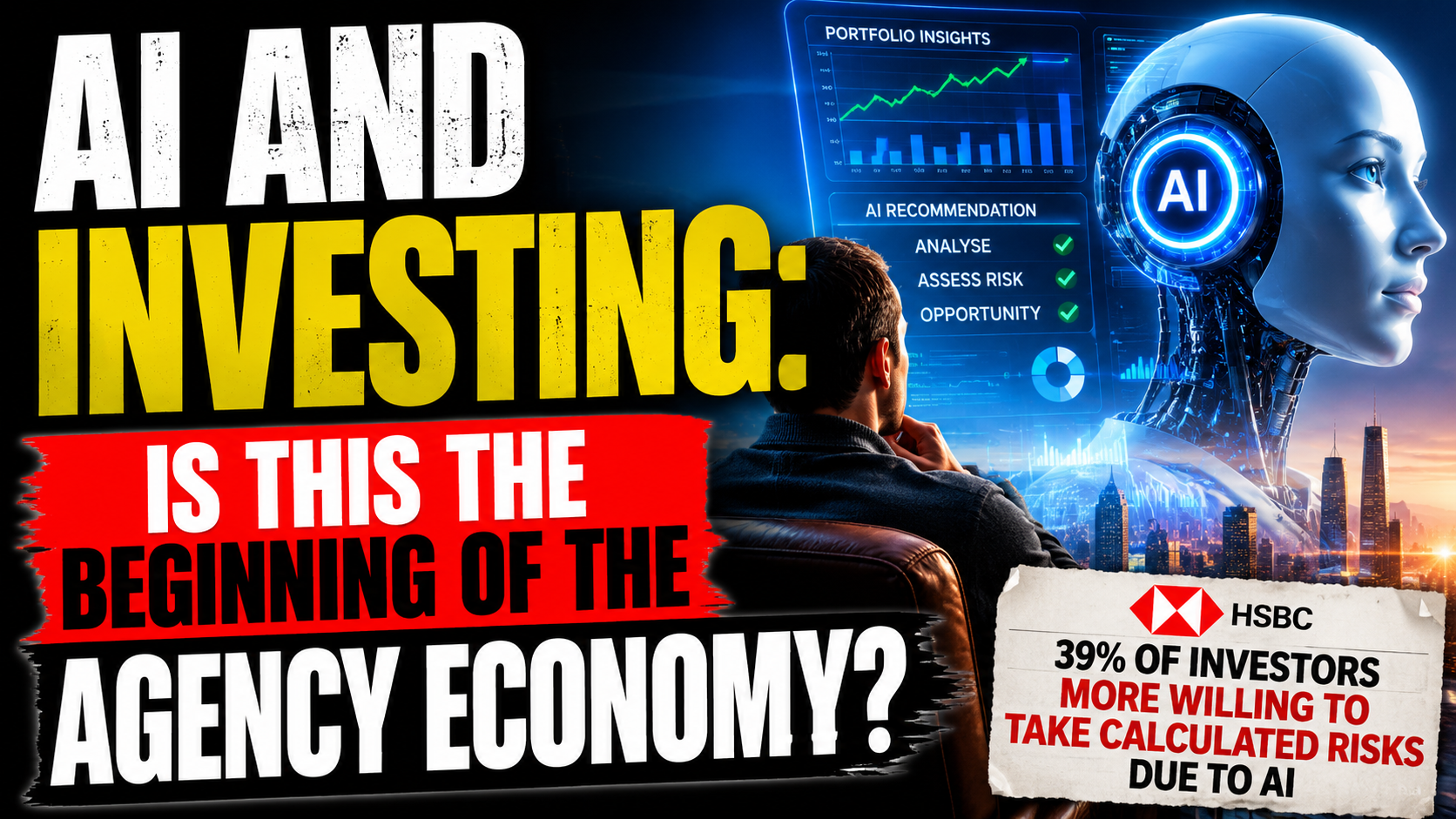
If AI is already influencing how affluent investors research, assess and feel about risk, is the real question whether advisers can control its use — or whether they can help clients use it wisely while keeping final agency with the individual?
HSBC’s research suggests AI is no longer peripheral. Among nearly 10,000 affluent and high-net-worth investors surveyed, many said AI has made them more willing to take calculated risks, especially younger investors. Most said AI had influenced portfolio returns, and high-net-worth investors increasingly use it for research, analysis, strategy support and second opinions.
Yet the findings also show that investors are not abandoning human judgement. They still look to advisers for reassurance, strategic expertise, validation, error-checking and personalised interpretation. The emerging picture is not AI replacing advice, but AI changing the balance of power: clients are arriving better informed, more questioning, and less willing to rely blindly on professional authority.
That leads to the deeper question: is AI making investors reckless, or is it beginning to restore the understanding and confidence that traditional financial services kept concentrated inside institutions?
Is this the shift from advice to agency?
- HSBC surveyed 9,993 affluent and high-net-worth investors aged 21–69.
- 39% said AI has made them more willing to take calculated investment risks.
- Younger investors were most influenced:
- 59% of Gen Z
- 58% of Millennials
- 41% of Gen X
- 40% of Baby Boomers
- 90% said AI tools had influenced at least some of their portfolio returns over the past 12 months.
- Investors attributed an average of 33% of their returns to AI’s influence.
- Among high-net-worth investors:
- 82% use AI for finance and investment tasks.
- 59% said AI makes them feel more in control of their finances.
- Only 9% said AI had not meaningfully changed how they manage wealth.
- Investors primarily use AI for:
- Analysis and research (66%)
- Strategy support (50%)
- Second opinions on investment ideas (31%)
- Despite growing AI use, investors still value human expertise:
- 80% seek reassurance from an adviser before acting.
- 72% value an adviser’s strategic expertise.
- The most valued adviser contributions were:
- Applying judgement and validation (32%)
- Spotting mistakes in AI-generated information (29%)
- Providing personalised interpretation of complex data (28%)
- When asked where their last investment idea came from:
- 62% cited financial professionals and institutions.
- 32% cited AI.
- When asked what most influenced their final investment decision:
- 37% cited financial professionals and institutions.
- 12% cited AI.
In summary: AI is becoming a mainstream research and decision-support tool, particularly among younger investors, but human judgement, validation and accountability remain highly valued at the point where decisions are actually made.
My view is that this is an important data point, but it can be interpreted in more than one way.
The headline HSBC is likely to emphasise is that AI is becoming a mainstream part of the investment process. Nearly everyone surveyed reports some influence from AI, many feel more in control, and younger investors appear more willing to take calculated risks.
The more interesting question is: what exactly is AI changing?
Historically, one of the biggest barriers to investing has been information asymmetry. Institutions, analysts, advisers and fund managers had access to information, tools and analytical capability that ordinary investors did not. AI is reducing that gap.
When 59% of Gen Z investors say AI makes them more willing to take risks, that could mean two very different things:
- AI is making them overconfident.
- AI is helping them understand risks they previously avoided through uncertainty.
Those are not the same phenomenon.
The data suggesting 59% of high-net-worth investors feel more in control is particularly significant.
Control is fundamentally an agency question.
If people understand their options better, can model outcomes, challenge assumptions, and test ideas before acting, they may not necessarily become reckless. They may simply become less dependent.
The findings around advisers are equally revealing.
Notice that investors are not primarily valuing advisers for access to products, fund selection, or information. They value:
- Judgement
- Validation
- Error checking
- Interpretation
- Context
That is a very different role from the traditional information gatekeeper model.
From an Academy of Life Planning perspective, this reinforces a distinction I think will become increasingly important:
The future is probably not AI versus advisers.
The future is AI plus human judgement.
But even that framing may be incomplete.
The deeper shift is from a world where people outsource decisions to experts, to a world where people use AI and experts to make better decisions themselves.
In other words, the centre of gravity moves from advice to agency.
What HSBC’s research may actually be measuring is not simply AI adoption. It may be measuring the early stages of a transfer of capability from institutions to individuals.
That would explain why:
- AI influences ideas.
- Advisers influence confidence.
- People feel more in control.
- Yet they still seek reassurance before acting.
The unresolved question is whether the industry embraces that shift or resists it.
Many firms are already using AI internally to increase their own capability. The real public-interest question is whether consumers will be encouraged to use AI to increase theirs.
That, to me, is the most important implication of this research. Not whether AI helps people pick investments, but whether it helps people become less dependent on others to navigate complexity in the first place.
I’d be interested to see a follow-up study asking not “Did AI influence your investment decision?” but “Did AI increase your understanding of the decision?” Those are very different measures of success.
The planners who thrive in the AI era may not be those who provide the most answers.
They may be those who help people ask better questions, think more clearly, and retain ownership of their decisions.
If you’d like to learn how to work with clients through an agency-first approach, contact the Academy of Life Planning to discover more about becoming a Total Wealth Planner.

