
The recent launch of Factory Capital provides an interesting glimpse into the future of wealth management.
On the surface, it is another wealth advisory firm entering the market. Dig a little deeper, however, and something more significant emerges. Factory Capital has not positioned itself primarily around investment selection, portfolio construction or retirement planning. Instead, it speaks the language of ownership, influence, entrepreneurship, intellectual property, culture and opportunity.
That shift deserves attention.
For decades, wealth management has largely been built around a simple assumption: wealth exists primarily in the form of financial capital. The adviser’s role is to help accumulate, preserve and transfer that capital through investment portfolios, tax planning and estate strategies.
Factory Capital appears to be working from a different premise.
Its target clients are athletes, entertainers, creators and entrepreneurs. These individuals often derive their wealth not from inherited assets or long-established investment portfolios, but from their ability to create value through their ideas, relationships, reputation, creativity and influence.
In other words, their most valuable assets frequently exist outside traditional balance sheets.
This reflects a broader trend that extends far beyond celebrities and professional athletes.
Increasingly, wealth is being created through human capital, intellectual property, digital platforms, personal brands, specialist knowledge, social networks and entrepreneurial ventures. The traditional portfolio remains important, but it is no longer the sole engine of economic value.
The question this raises is profound.
If wealth creation increasingly originates outside investment portfolios, should wealth management continue to focus primarily on managing money?
Or should it evolve into something much broader?
Perhaps the future of wealth management is not about managing portfolios at all.
Perhaps it is about helping people identify, organise, develop and deploy all of their assets.
This distinction matters.
Most people possess far more than financial capital.
They possess skills.
They possess experience.
They possess relationships.
They possess knowledge.
They possess opportunities.
They possess time, energy, creativity and purpose.
Many possess underutilised business potential, career options, community connections or intellectual property that never appear on a conventional financial statement.
Yet traditional financial planning often ignores these assets entirely.
The result is a curious paradox.
A person may receive sophisticated investment advice while remaining unaware of the most valuable opportunities available within their own life.
At the Academy of Life Planning, we have long argued that financial planning should begin with the whole person rather than the portfolio.
Before discussing investments, pensions or tax wrappers, it is worth understanding what already exists.
What capabilities does the individual possess?
What opportunities are available to them?
What goals are they trying to achieve?
What resources already surround them?
What barriers are preventing action?
Only then does it become possible to determine what role financial capital should play.
This is where Factory Capital becomes particularly interesting.
Its model recognises that wealth increasingly sits at the intersection of ownership, opportunity and influence.
That observation is correct.
However, it also raises an important challenge.
Whenever a platform combines wealth management, private investments, media, deal flow and opportunity sourcing, a natural tension emerges.
Who is directing whom?
Is the platform helping individuals exercise greater agency?
Or is it guiding them towards opportunities selected by the platform itself?
These are not criticisms of Factory Capital. They are questions that every next-generation wealth platform will need to answer.
The future of wealth management will not simply be determined by the quality of its investment advice.
It will be determined by how it handles human agency.
The central issue is not whether clients receive access to opportunities.
The central issue is whether they remain the ultimate authority over their own lives.
For much of the twentieth century, expertise was scarce and information was expensive. Consumers relied heavily on professionals to interpret complexity on their behalf.
Artificial intelligence is beginning to change that equation.
Information asymmetry is collapsing.
Knowledge that once sat behind professional gates is becoming increasingly accessible.
As this trend accelerates, the role of the adviser may need to evolve.
The future may belong less to those who control information and more to those who help people think clearly, evaluate options and make informed decisions for themselves.
That is a very different proposition.
It is the difference between managing someone’s wealth and helping them become the steward of their own wealth.
It is the difference between dependence and capability.
It is the difference between advice and agency.
Factory Capital may be remembered as one of the early examples of a broader transition taking place across the industry.
The real question is not whether wealth management will expand beyond portfolios.
The evidence suggests that it already is.
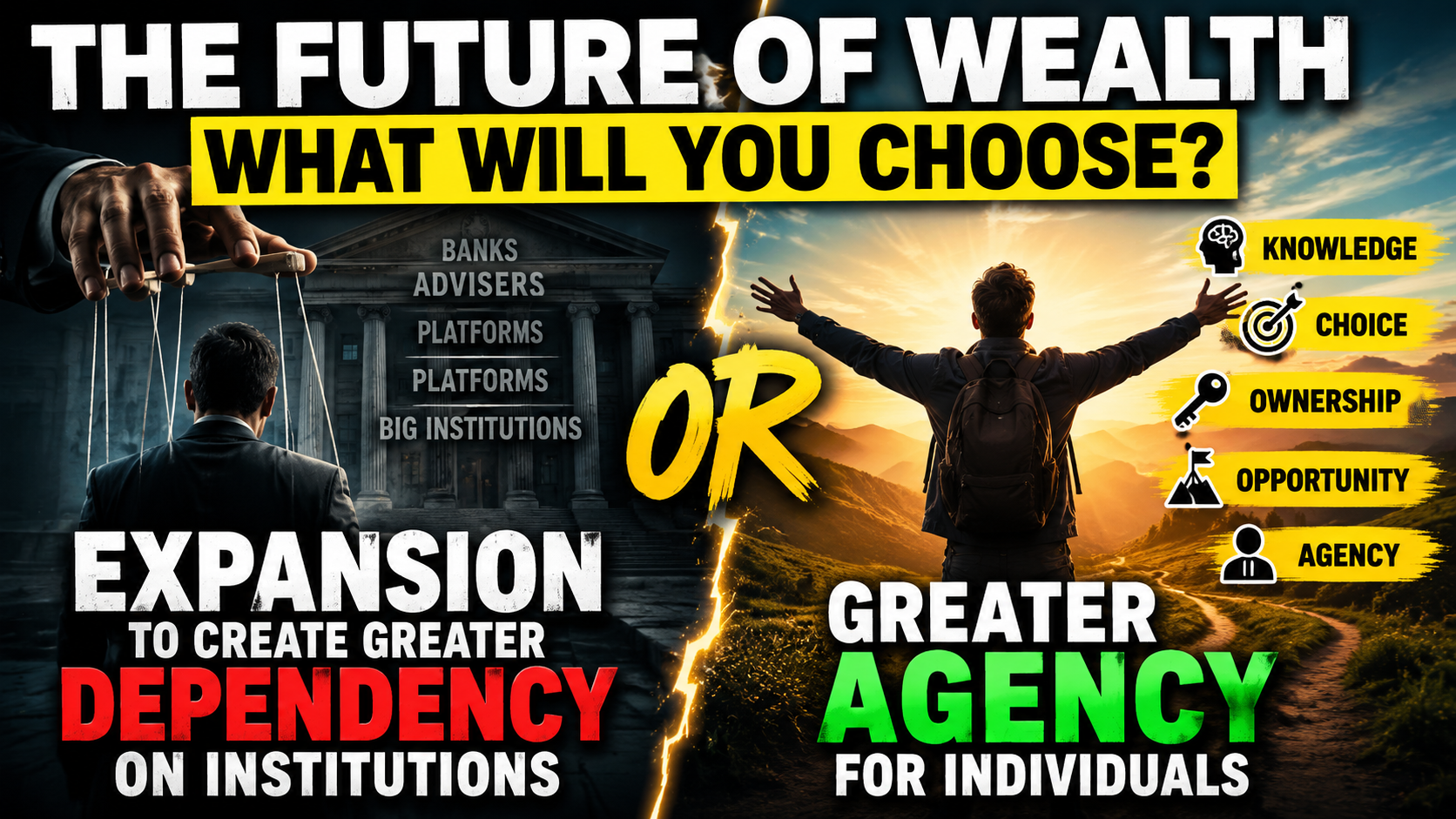
The real question is whether the next generation of wealth firms will use that expansion to create greater dependency on institutions—or greater agency for individuals.
The answer to that question may define the future of the profession.
And perhaps the future of wealth itself.

