
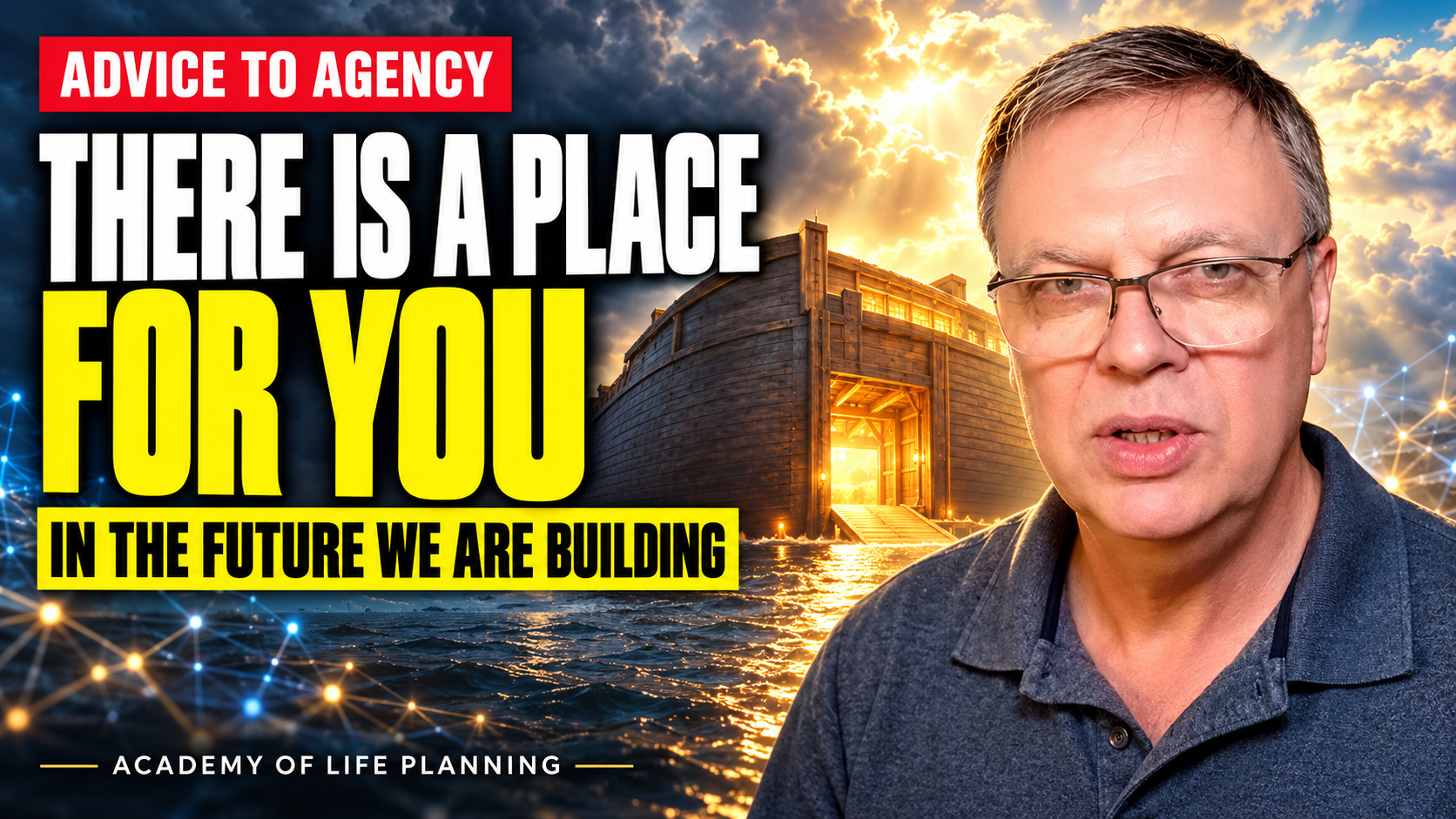
There is a place for you in the future we are building.
Helping financial advisers find a worthwhile role in a world where people become more capable.
What happens to your work when the people you help can do more for themselves?
For a financial adviser, that question can feel threatening. You have spent years acquiring knowledge, developing judgment and building relationships. Your livelihood may depend on providing expertise that clients have struggled to access or understand.
Now imagine those clients arriving with much greater capability.
They can examine a financial document, question a charge, explore alternatives and prepare for a difficult conversation. They can ask questions they would once have been embarrassed to raise. They can revisit an explanation until it makes sense.
AI creates the possibility of putting that kind of support into many more people’s hands.
What would a worthwhile financial planning profession look like in that world?
That is the future we are building at the Academy of Life Planning. And there is a place for you in it.
Building before the rain
During a recent conversation with a colleague, I found myself thinking about Noah’s Ark.
What stayed with me was the act of building before the need became obvious to everyone else.
There is something uncomfortable about preparing for a change that others cannot yet see, or do not believe will affect them. You can spend a long time explaining why you are building while people ask why you cannot simply carry on as before.
I recognise something of that feeling.
Since founding the Academy in 2012, I have worked towards a model in which people retain ownership of their lives and decisions, supported by education, practical tools and human expertise.
AI gives that work new possibilities.
The Ark is a metaphor for preparation and invitation. We are building somewhere practitioners can develop the skills, confidence and business model to serve increasingly capable clients.
You do not have to agree with every prediction about AI to begin preparing.
Clients have AI too
Much of the profession’s conversation asks how AI can help advisers.
Can it prepare meeting notes? Reduce administration? Produce reports? Help a firm serve more clients?
Those are useful questions. But clients have AI too.
What happens when they can interrogate the expertise they previously had to take on trust?
A client might ask:
“What am I paying for?”
“Which parts could I manage myself?”
“Does this arrangement still serve my interests?”
“Can I pay for the help I need when I need it?”
These are reasonable questions. A profession committed to people’s wellbeing should welcome their ability to ask them.
The commercial challenge arises when a business earns more from continuing dependence than from growing capability.
As clients become better equipped to understand and question those arrangements, firms will face greater pressure to explain their value.
A worthwhile role remains
Consider someone approaching retirement.
They may use AI to organise their information, understand unfamiliar terms and explore possible futures. They may still want an experienced person beside them when a decision feels consequential.
Someone who helps them recognise an assumption. Who notices that the numbers work but the proposed life does not. Who helps a couple discuss competing priorities. Who recognises when specialist advice is needed.
The person retains the decision. The professional contributes something worth paying for.
That is a worthwhile role.
It requires expertise, care and judgment. It also requires the confidence to help someone become less dependent on you.
A client leaving more capable is evidence that your work has succeeded.
Agency changes the business model
Agency means having the understanding, confidence and practical freedom to make choices and act on them.
Access to AI alone does not guarantee it. People need to question its answers, recognise uncertainty and know when to seek help. Some will need substantial human support.
Our task is to build that capability.
At the Academy, we bring together the GAME Plan, Academy OS and human support from Total Wealth Planners. People can organise their own information, develop a plan they understand and keep it current, drawing on expertise when their circumstances call for it.
For practitioners, this opens a different way to earn a living.
You can charge for helping someone resolve a problem, prepare for a transition or make sense of a difficult choice. Your value can extend across their life, including their work, relationships, health, purpose and financial resources.
Your livelihood can grow through the capability you help others build.
You are invited aboard
I understand that changing a practice is difficult.
Existing contracts, income commitments and professional identity all matter. An invitation to change needs a practical route: education, tools, peers and support while you develop a viable way of working.
That is what we are building.
Our £10,000 founding campaign will fund outreach and onboarding to help more advisers join the Academy and make the shift from advice to agency.
The first ambition is deliberately human in scale: two more planners joining our inner circle, and ten more active subscriptions. Each additional practitioner creates the possibility of helping more people take ownership of their decisions.
We have been developing this approach since 2012. We now want to bring more people into the work.
If you became a financial adviser because you wanted to help people live better lives, that purpose has a future.
Bring your experience. Bring your questions. Bring your willingness to work alongside people whose capabilities are growing.
There is a place for you in the future we are building.
Need help with your next business move, a life or money problem, or financial exploitation?
Get space to think clearly, explore your options and identify your next steps.
Book a 50-minute Strategy Zoom Meeting with Steve Conley — £50.

