
Five overturned banking convictions raise a bigger question: who has the power to shape a system, and who carries the consequences when it fails?
By Steve Conley, Founder, Academy of Life Planning
8 October 2026
A prestigious employer. A respected job title. A career in the City.
From the outside, these look like signs of security. But what happens when the institution you serve becomes the institution from which you need protection?
Yesterday, the Court of Appeal quashed the convictions of five former Barclays employees in cases connected with Libor and Euribor, the benchmark interest rates once used across vast parts of the financial system.
Jonathan Mathew, Jay Merchant, Alex Pabon, Philippe Moryoussef and Colin Bermingham had been convicted between 2016 and 2019. The Criminal Cases Review Commission referred their cases following the Supreme Court’s 2025 decision to quash the convictions of Tom Hayes and Carlo Palombo. Legal errors and misdirection of juries undermined the safety of the convictions. [1]
That is a welcome correction. It also leaves a painful question.
Who gives people back the years spent living under a conviction that should not have stood?
A correction cannot rewind a life
We should be precise about what happened. These were not all junior employees. The ruling does not establish that their bosses deliberately scapegoated them, nor does it determine every question about institutional responsibility.
But it does establish that these convictions were unsafe.
The human consequences of that deserve more than a passing headline. Imprisonment, prolonged proceedings and the stigma of a criminal conviction can reach into every part of a life: work, relationships, health, financial security and the confidence to imagine a future.
Friends and families carry consequences too.
A court can overturn a conviction. It cannot rewind a childhood, restore every relationship or recreate the life someone might otherwise have lived.
Accountability must follow power
For me, the wider issue is how responsibility is distributed inside powerful organisations.
Who sets the targets? Who approves the incentives? Who establishes acceptable behaviour? Who receives the rewards? And when things go wrong, whose decisions are examined?
Individual responsibility matters. An instruction from a manager does not automatically excuse wrongdoing. Equally, examining the person closest to an action should never become a substitute for examining the system around it.
My concern is what I would call the accountability gap: the distance between the power to shape behaviour and exposure to its consequences.
That gap can develop wherever leaders benefit from results while responsibility for how those results were produced is pushed further down the organisation.
It is a risk to investigate, not a finding to assume in every case.
Serious accountability requires us to examine instructions, records, supervision, incentives and decisions at every relevant level. Otherwise, removing an individual may leave the machinery that encouraged the behaviour untouched.
Authority to shape a system should carry responsibility for what that system encourages.
Equal rights do not mean equal staying power
There is another imbalance when an individual challenges an institution.
The institution may have legal teams, established procedures, extensive records and a budget for managing disputes. The individual may have an inbox, a folder of documents and a rapidly diminishing capacity to continue.
A delay that fits comfortably into an organisation’s timetable can consume a significant part of someone’s remaining savings or emotional strength.
This does not prove that delay is deliberate, that an institution is wrong or that an individual is right. Those questions require evidence.
But unequal resources affect the practical ability to exercise rights.
If the process requires more money, time and endurance than a person can supply, a formal right to challenge can become something they cannot realistically use.
Justice needs to hear the strongest evidence, even when it comes from the least resourced party.
Why this feels personal
I spent much of my career inside major financial institutions.
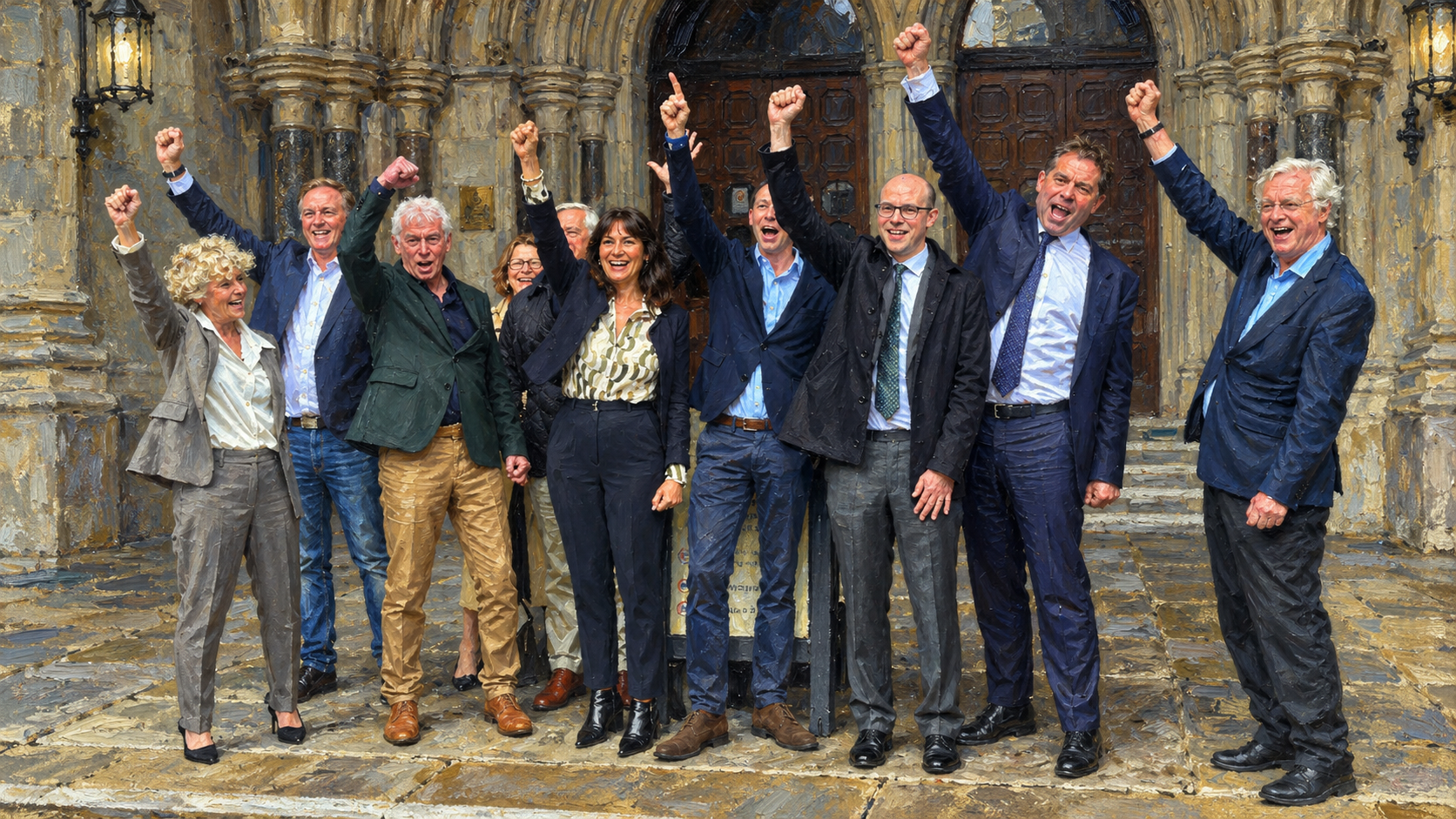
That is why this illustration of people celebrating outside the Royal Courts of Justice feels more than a distant news story. Behind the smiles lies a struggle that no professional title could make harmless.
I cannot claim to know everything these men and their families have endured. But I recognise the unsettling thought that a career spent serving a respected institution does not guarantee protection when events turn against you.
There but for the grace of God go I.
That thought leaves me with gratitude, and with a responsibility to help build practical support for people facing institutional power.
Restore the person’s ability to participate
At the Academy of Life Planning, restoring human agency means helping people understand, choose and act in matters that shape their lives.
That includes disputes.
An overwhelmed person may struggle to explain what happened, even when important evidence is already in their possession. Dates become confused. Correspondence accumulates. Facts, suspicions and conclusions become tangled together.
The first useful step is often to build a record that can be checked.
What happened? Which document supports it? What remains uncertain? What would the strongest answer to the case be? What needs professional judgement?
Clear answers help a person participate more effectively in their own case. They also help a professional or decision-maker assess it.
Taking on an institution? Start with Goliathon
This is why we created Goliathon, the Academy’s free AI-powered evidence and case-support application.
It helps people facing institutional disputes organise documents, build a chronology, identify gaps and contradictions, distinguish evidence from inference and prepare a clear case summary. It can also help prepare correspondence and questions for professionals. [2]
Start with one manageable task: assemble the key correspondence and reconstruct the sequence of events.
Then test your account against the documents. A clearer record may strengthen your position, expose a weakness or change the next step you choose. Each is useful progress.
Goliathon does not guarantee justice or replace specialist legal representation. AI outputs need checking against the original evidence. Its purpose is to help you approach a dispute with greater understanding and control.
Try Goliathon free at goliathon.app.
Whether you are challenging a bank, insurer, employer or another organisation, your ability to understand your own case matters.
An institution’s resources should never make your evidence irrelevant.
And an institution’s prestige should never make its decisions beyond question.

