
Small advice firms across the UK are asking the same question:
How do we protect the future value of our business in a changing market?
Regulation is tightening. Margins are compressing. Client expectations are rising. AI is accelerating analysis. And traditional AUM-based models are under pressure.
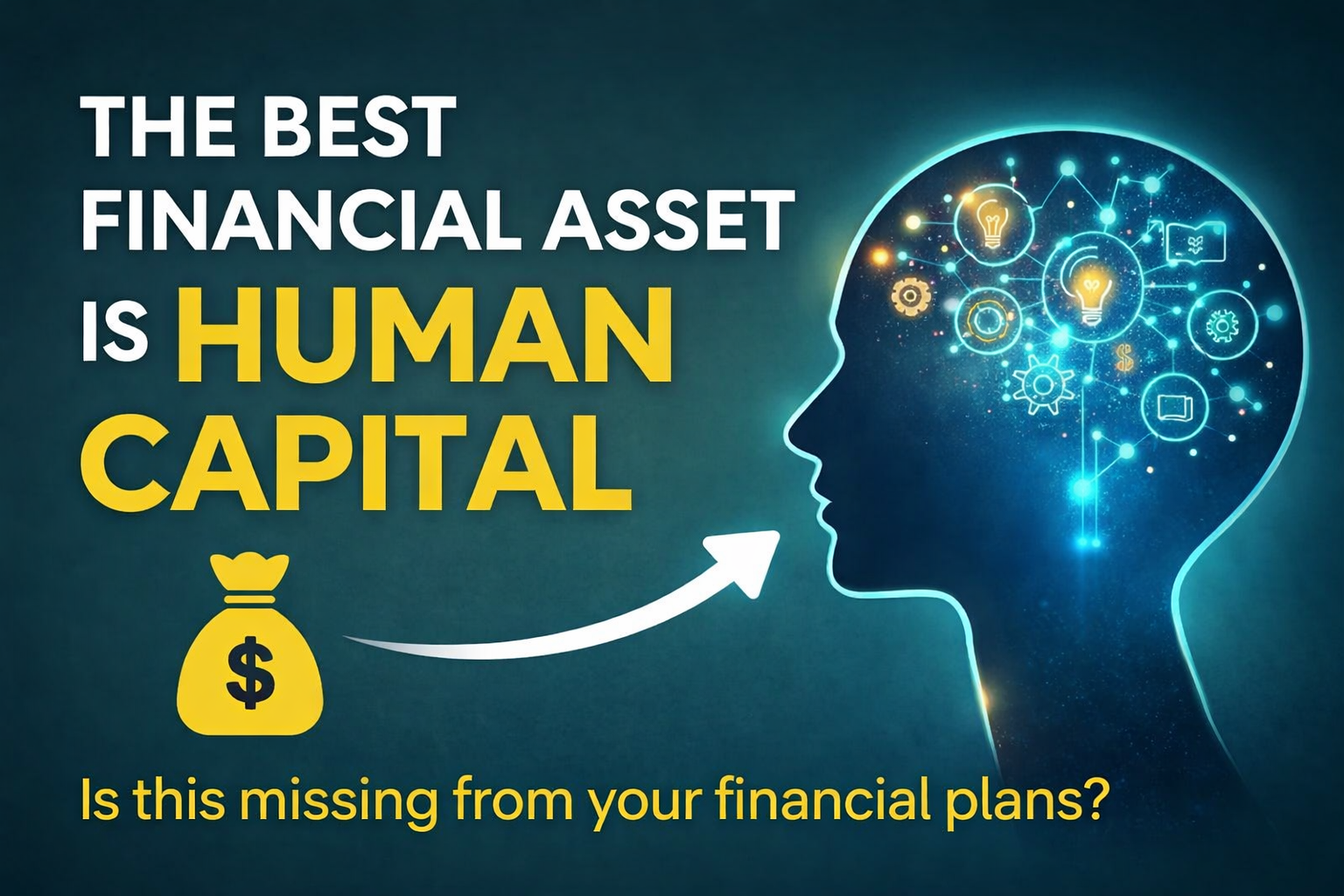
Yet one asset remains structurally underused in most financial plans:
Human capital.
The academic evidence is clear. The commercial implications are even clearer.
What the Research Actually Shows
Classic human capital theory argues that:
“The most valuable of all capital is that invested in human beings.”
[Ref: “Human Capital Theory” : A Review and Critique, By Shinae Kang.]
Across decades of economic research, several themes consistently emerge:
1️⃣ Education and skills drive economic growth
Evidence from cross-country growth studies shows that nations with higher enrolment and skill formation experience stronger long-term economic performance.
Human capital is not just about earnings. It:
- Drives productivity
- Supports technological adoption
- Increases lifetime income
- Improves resilience
2️⃣ Human capital creates inclusive growth
Human capital development:
- Raises income levels
- Stimulates productivity
- Integrates older people and those with disabilities into economic contribution
- Generates positive spillovers across society.
[Ref: Further Theoretical Discourse on Human Capital Development, By Gabriel Omowaye.]
In other words, it expands the economic pie rather than simply reallocating it.
3️⃣ Education and health are intertwined economic drivers
Human capital is not just formal education. It includes:
- Training
- Health
- Nutrition
- Lifelong learning
Higher education levels correlate with:
- Longer life expectancy
- Better financial decision-making
- Higher productivity
- Higher earnings
For planners, this matters enormously.
Why This Matters to Small Advice Firms
Most financial advice models focus on:
- Financial capital
- Investments
- Tax
- Protection
- Retirement pots
But here is the structural oversight:
For most working-age clients, human capital is 5–15x larger than financial capital.
If you ignore the largest asset on the balance sheet, the plan is incomplete.
And if your planning model is incomplete, your value proposition weakens over time.
The Commercial Opportunity
Including human capital in planning:
1️⃣ Improves client outcomes
When planners help clients:
- Protect earning capacity
- Develop skills
- Make career decisions
- Understand longevity economics
- Align health and wealth
…they move from product adviser to strategic life planner.
That increases stickiness.
2️⃣ Differentiates your firm
In a world of:
- Robo cashflow tools
- Platform consolidation
- AI portfolio construction
Investment selection is commoditising.
Human capital planning is not.
It requires judgement.
It requires conversation.
It requires structured thinking.
That is defensible value.
3️⃣ Future-proofs exit valuation
Firms valued purely on recurring AUM are exposed to:
- Market downturns
- Fee compression
- Consolidator arbitrage
- Ageing client banks
But firms positioned as holistic wealth planners, integrating:
- Human capital
- Financial capital
- Health and longevity modelling
- Career and purpose alignment
…have:
- Stronger brand positioning
- Broader fee justification
- Younger client pipelines
- More durable client relationships
That supports multiple expansion, not compression.
Lessons from Development Economics
The South Korean case in the literature shows that strategic investment in skill formation during industrial transition accelerated economic growth.
The parallel for advice firms is simple:
When the industry transitions, those who invest in skill formation outperform.
The industry is transitioning now:
- AI augmentation
- Reduced intermediation
- Consumer empowerment
- Regulatory perimeter shifts
The firms that upgrade their planning framework will outperform those that defend the old one.
Human Capital Planning in Practice
Incorporating human capital does not mean becoming a career coach.
It means systematically including:
- Lifetime earnings projections
- Career volatility modelling
- Skill reinvestment decisions
- Health-longevity impact
- Income protection strategy
- Purpose-aligned work transitions
- Retirement identity planning
It means planning life before planning money.
Financial capital then becomes the servant of the life plan, not the driver.
The Strategic Question for Small Firms
Ask yourself:
- If markets fell 30%, how much of your value proposition remains?
- If passive investing becomes near-free, how do you defend your fees?
- If clients increasingly use AI planning tools, where is your added layer?
Human capital integration is not an academic curiosity.
It is a structural upgrade.
The Bridge to Total Wealth Planning
The Academy of Life Planning has been helping advisers transition from product-led advice to Total Wealth Planning.
This is not about abandoning regulation.
It is about expanding the planning lens.
From:
“What should I invest in?”
To:
“How do I design a life that sustains income, health, meaning and capital over decades?”
Small firms who make this shift now are likely to:
- Improve client retention
- Attract younger demographics
- Enhance exit multiples
- Reduce dependence on market performance
In a profession under margin pressure, that matters.
Final Thought
Human capital is not soft theory.
It is the largest asset most clients will ever possess.
If your planning model does not formally include it, your competitors eventually will.
And the firms that understand this early will not just survive the next industry cycle.
They will define it.
Visit the Academy of Life Planning for details on how to transition in 12 weeks.
 Academy of Life Planning