
The UK financial advice profession is facing a quiet but profound contradiction.
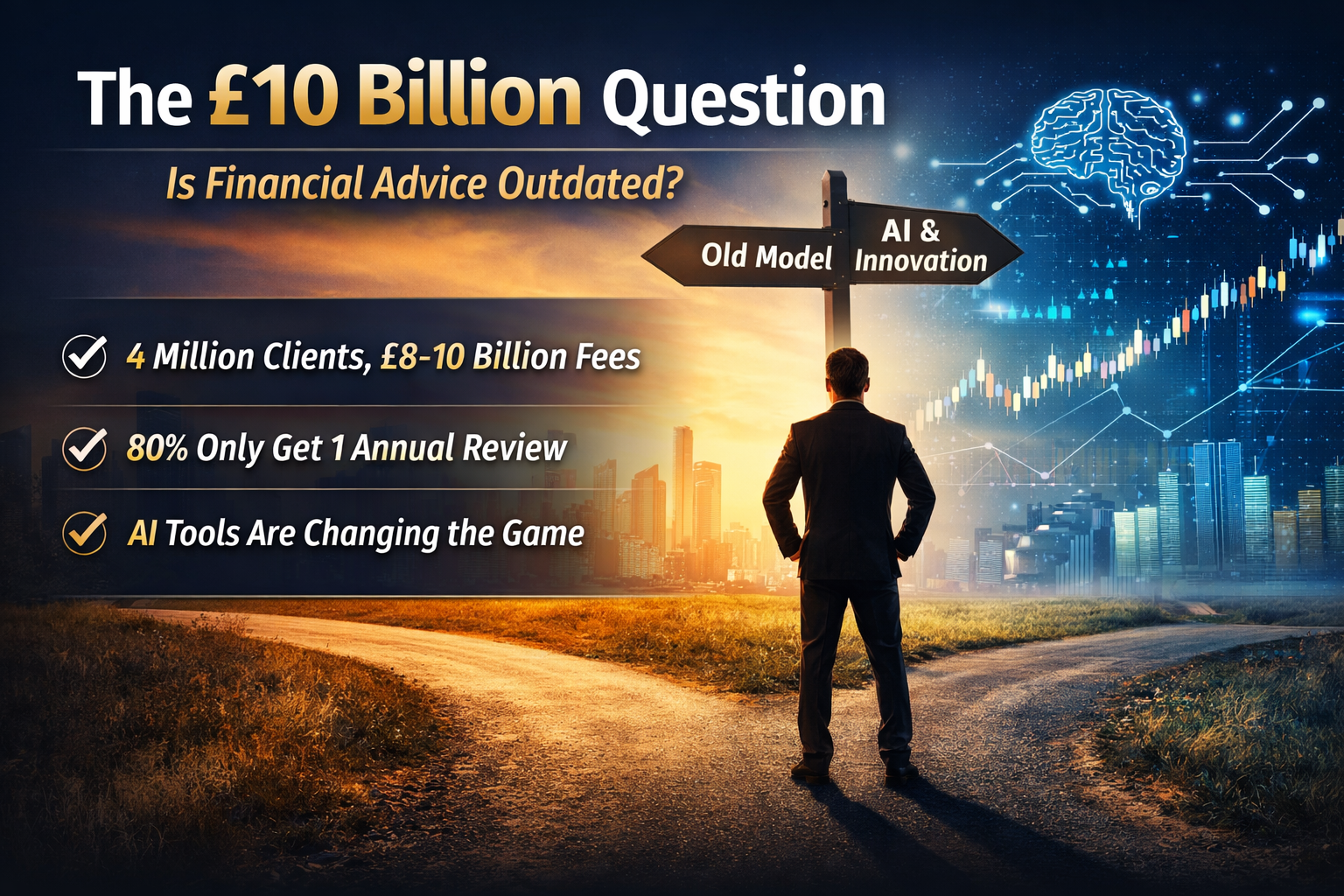
According to the Financial Conduct Authority, around 4 million clients currently pay for ongoing advice. Together, they generate an estimated £8–10 billion a year in fees—around 80% of total adviser-charge revenue.
On the surface, this suggests a healthy, sustainable model.
Look closer, and a more uncomfortable question emerges.
What does “ongoing” really mean?
For most clients, “ongoing advice” amounts to one annual review, typically charged at around 0.8% of assets. With the average advised portfolio now approaching £370,000, that translates to £2,000–£2,500 per year—often justified by a single, backward-looking meeting.
Even more concerning, the FCA’s own data suggests that not all promised reviews are actually delivered.
This model may once have felt reasonable in a slower, more stable world.
But that world no longer exists.
A daily-changing world, reviewed once a year
We are living through one of the most volatile periods in modern economic history:
- Geopolitical conflict affecting energy, food, and supply chains
- Rapid shifts in central-bank policy and interest-rate regimes
- Trade tensions and fragmentation of global markets
- Accelerating technological disruption
- Climate-related economic shocks
And yet, the dominant advice model still assumes that an annual checkpoint is sufficient.
By the time an annual review identifies that a portfolio is misaligned with current conditions, the damage may already be done. Losses are crystallised. Opportunities missed. Anxiety compounded.
Charging billions for “ongoing” advice that arrives after events unfold raises not just commercial questions—but ethical ones.
The uncomfortable irony: AI has already changed the rules
Here’s the part many in the industry would rather avoid.
AI-enabled tools are already allowing individuals to:
- Monitor portfolios in near real time
- Track geopolitical and market-wide risks
- Stress-test allocations
- Explore protective and adaptive strategies
All at a fraction of the cost of traditional ongoing advice.
This doesn’t mean advisers are obsolete.
It means the old definition of value is.
The real opportunity: dynamic, human-centred planning
At the Academy of Life Planning, we see AI not as a threat—but as a catalyst.
Used well, AI allows planners to:
- Move from static reviews to dynamic planning
- Support clients when life and markets actually happen
- Create space for meaningful human conversations—judgement, values, trade-offs, resilience
This is why we emphasise responsive planning, including the ability for clients to pause, reassess, and engage in focused “break-out” conversations when circumstances change—whether that’s a market shock, geopolitical event, or personal crisis.
That is what ongoing should mean.
Not a calendar-driven review.
A relationship that responds to reality.
A profession at a crossroads
The data tells a clear story.
The traditional ongoing-advice model is:
- Commercially vulnerable
- Increasingly misaligned with lived experience
- Ethically difficult to defend in a daily-changing world
The question is no longer whether disruption is coming.
It’s whether it will come:
- From within, led by planners who embrace AI and redesign their role around human value and responsiveness
- Or from outside, as technology platforms bypass traditional advice altogether
At AoLP, we believe the future belongs to planners who choose the first path—who use AI to elevate the profession, not defend an outdated status quo.
The £10 billion question isn’t about fees.
It’s about whether financial planning evolves fast enough to remain worthy of trust.
At the Academy of Life Planning, we support planners who want to move beyond annual reviews and build genuinely responsive, life-centred practices—using AI as an ally, not a replacement.
If this question resonates, you’re already part of the conversation the profession needs to be having.
 Academy of Life Planning