
Let me tell you a story.
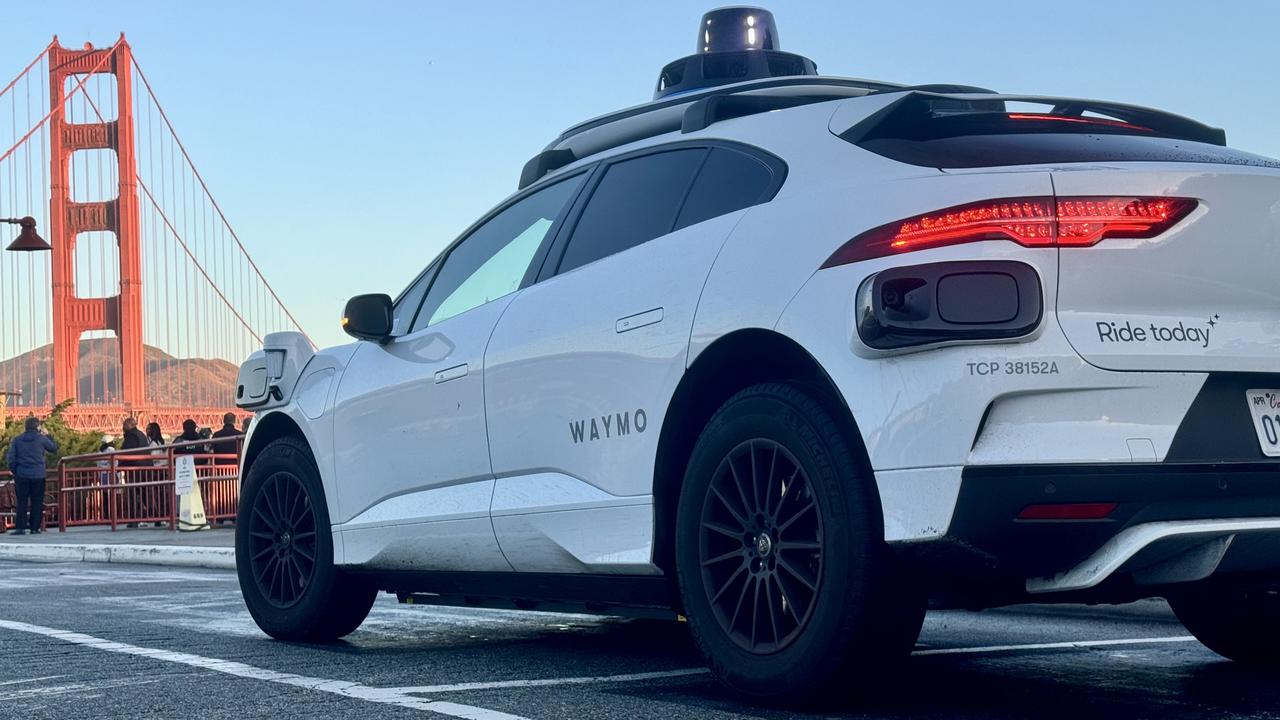
A friend of mine was in San Francisco recently and decided to try one of those new Waymo autonomous taxis.
You just open an app, order a car, and a few minutes later, up it rolls — completely empty.
No driver. No small talk. No “Sorry, mate, wrong turn.”
Just a quiet electric hum, a polite ping on your phone, and a car that opens its doors because it knows you’re the passenger.
He hops in, the seatbelt gently tightens, and off they go. The car obeys every rule of the road: smooth acceleration, measured braking, courteous lane changes — it even waits patiently at amber lights. (Try finding a London cabbie who does that.)
He says it was eerily calm, almost too perfect.
Then came the comparison.
On the way to the airport, he’d taken an Uber.
The driver was impatient, tailgating, weaving through traffic, late on the brake, early on the horn.
It was a symphony of stress.
He told me, “the car drove itself better than the human did.
And I couldn’t shake the thought — this Uber driver has no idea what was coming.”
That moment hit hard.
He was right.
Let’s break things down
My friend recounted an experience in San Francisco, where they took a Waymo autonomous taxi — a fully self-driving car operating under official authorisation.
They describe how:
- You simply book it on your phone,
- The car arrives with no driver,
- You unlock it with your phone,
- It obeys all traffic laws, is courteous, and feels completely safe,
- It contrasts sharply with a recent Uber ride that was tailgating, impatient, and unsafe on the freeway.
They remark that the Waymo could not enter airport property, likely for security reasons, but otherwise operates throughout the city.
Then they reflect:
“You are just so redundant.”
They note that the UK is only a couple of years away from similar authorisation, and that this technology could replace all taxi and delivery drivers, wiping out whole sectors of employment.
The Broader Point
The anecdote becomes a springboard to a larger reflection on AI-driven economic disruption:
- After taxis and couriers, white-collar professions (like financial planning, law, accounting) could face the same fate.
- As automation erodes traditional roles, society may have to move toward a Universal Basic Income (UBI) because “this stuff is just actually going to wipe out swathes of industry.”
- The speaker acknowledges that their own professional expertise—once valuable because others lacked that knowledge—is now being replicated by AI.
- The Uber vs. Waymo contrast symbolises the transition from human-led imperfection to machine-led precision, echoing their concern that entire livelihoods, not just manual jobs, could become obsolete.
The Insight
The autonomous taxi vs. Uber comparison encapsulates the coming shift from human intermediated to AI-automated systems.
Where the Uber driver still represents the old economy—dependent on human labour, risk, and error—the Waymo signifies the next phase: fully autonomous, efficient, ethical-by-design, yet socially disruptive.
In the conversation’s context (about AI in financial planning and ethics), it serves as a warning and a mirror: if automation can replace drivers, it can just as easily replace planners, advisers, and analysts unless they evolve into roles that guide, govern, or give meaning to AI rather than compete with it.
🤖 The Automation Moment
What’s happening to taxi drivers today will happen to almost every profession in the next decade — including ours.
Automation doesn’t arrive overnight; it slides quietly into the passenger seat and starts helping out until one day you realise it’s taken the wheel.
We’re already seeing it:
- AI summarises complex financial reports in seconds.
- It builds lifetime cashflow models from unstructured notes.
- It answers compliance queries faster (and sometimes better) than the compliance officer.
- It produces risk profiles that adapt in real time to client answers.
All that used to take teams of people and weeks of work.
Now, it’s an afternoon prompt away.
So let’s be honest — the 27,000 retail-investment advisers across the UK aren’t facing an “advice gap.”
They’re facing an identity gap.
The Uber moment has arrived for our profession.
If AI can drive the financial planning process faster, safer, and cheaper — what’s left for the human to do?
🧭 The Answer: Everyone Needs a GAME Plan™
At the Academy of Life Planning, we’ve said it for years:
“When the world automates, humanity must elevate.”
The same applies to advisers. The future isn’t about doing more financial planning — it’s about being a better planner.
Every adviser now needs two GAME Plans:
- The one they deliver — helping clients align money with meaning.
- The one they live — helping themselves adapt, evolve, and stay relevant.
Let’s break that down.
🎯 G – Goals
What are you really here to do?
Not your firm’s targets. Not your AUM number.
Your purpose.
In the coming age of autonomous advice, your worth won’t be measured in basis points.
It’ll be measured by your ability to connect — to ask the questions AI can’t:
“Why does this matter to you?”
“What does enough look like?”
“What would a life well lived feel like?”
Machines calculate.
Humans care.
That’s your advantage — but only if you cultivate it.
⚙️ A – Actions
Adaptation isn’t a theory. It’s a practice.
Start learning to pilot AI, not compete with it.
Use it to remove the admin, speed up your analysis, and free yourself for deeper conversations.
AI doesn’t replace you; it reveals you — by stripping away the noise and showing what’s left of value.
Your clients don’t want a robot.
They want a human who knows how to use one responsibly.
💰 M – Means
The traditional adviser model — built on AUM percentages and product sales — is already running out of road.
It’s the Uber model: hustle harder, drive faster, hope for five stars.
The future is the Waymo model: transparent, ethical, purpose-built systems that work for people, not through them.
You don’t need more products. You need better frameworks.
That’s why we teach product-free, people-first planning at AoLP — so you can earn a living helping clients live better, not just richer.
🚀 E – Execution
This is where the magic happens.
A GAME Plan isn’t just theory. It’s a way of living your purpose into form.
It’s about building a sustainable practice that:
- Uses AI as an ally, not a threat.
- Charges fairly for your wisdom, not your wallet-watching.
- Serves communities, not corporations.
- Aligns your professional path with your personal growth.
Because when the driverless car arrives, you can either stare at the empty seat — or get in and decide where it goes.
🌍 The Takeaway
The Waymo vs. Uber moment isn’t about cars.
It’s about control.
It’s about whether you let the system drive your life, or whether you take the wheel and write your own code for the future.
We’re entering an age where every adviser, every planner, every human, must have a GAME Plan —
a roadmap that connects your Goals, Actions, Means, and Execution into one coherent path of purpose.
Because in the age of AI, your clients don’t just need advice —
they need a guide who’s living proof that life can be planned with integrity, joy, and humanity.
Ready to build yours?
Join the Academy of Life Planning and discover how to deliver — and live — your own GAME Plan™.
Let’s help a generation of financial planners move from being passengers in a system…
to becoming drivers of a movement.
So, what should advisers do on Monday morning?
Three practical steps.
1. Stop pretending clients aren’t using AI
Assume every client already has:
- Googled their question
- Asked an AI chatbot for a view
- Seen a TikTok or YouTube video with “advice”
Bring it into the open:
- “What have you already read or asked online?”
- “Do you use ChatGPT or other AI tools for money decisions? How has that been?”
If you can’t talk about AI comfortably, you’ve already lost authority.
2. Pivot from answers to architecture
Stop selling “I know the answer.” Start offering:
- “Let’s build a GAME Plan – a clear cycle of Goals → Actions → Means → Execution – and use AI to test it from every angle.”
- “I’ll show you how to use these tools safely, challenge their output, and integrate the best of it into your plan.”
You become the designer of the planning system, not the sole source of wisdom.
3. Price for human value, not product access
If AI can do the cashflow projections, portfolio modelling, and tax comparisons:
- Why is your fee still pegged to assets under management, a tiny sliver of the client’s total wealth?
- Why not price against the depth of transformation – the quality of decisions, the progress toward life goals, the reduction in anxiety?
Done-by-you (DIY with templates), done-with-you (coaching), and done-for-you (curated support) models can all sit on top of the same AI-enabled planning architecture.
Conclusion: adapt, or be quietly automated
Lloyds has just told the country, in black and white:
- The majority are already using AI for money.
- ChatGPT is the dominant platform.
- They’re using it not just for pocket-money budgeting, but for investment, debt, pensions and long-term planning.
The industry can respond in one of two ways:
- Deny and defend, insisting that “proper advice” can only live inside a regulated sales architecture that the majority will never access.
- Embrace and elevate, using AI to dismantle information asymmetry, reduce costs to near zero, and focus human expertise where it truly belongs: on structural trust, conscience, and human flourishing.
At the Academy of Life Planning, we’re unapologetically choosing the second path.
Mind the gap?
What gap.
The void has already been filled.
Now the real work begins: making sure it’s filled with empowerment, not extraction.
Join the Movement
If you believe financial planning should serve life — not the other way around — join us at the Academy of Life Planning.
Together, we’re replacing extraction with empowerment.
 Academy of Life Planning