
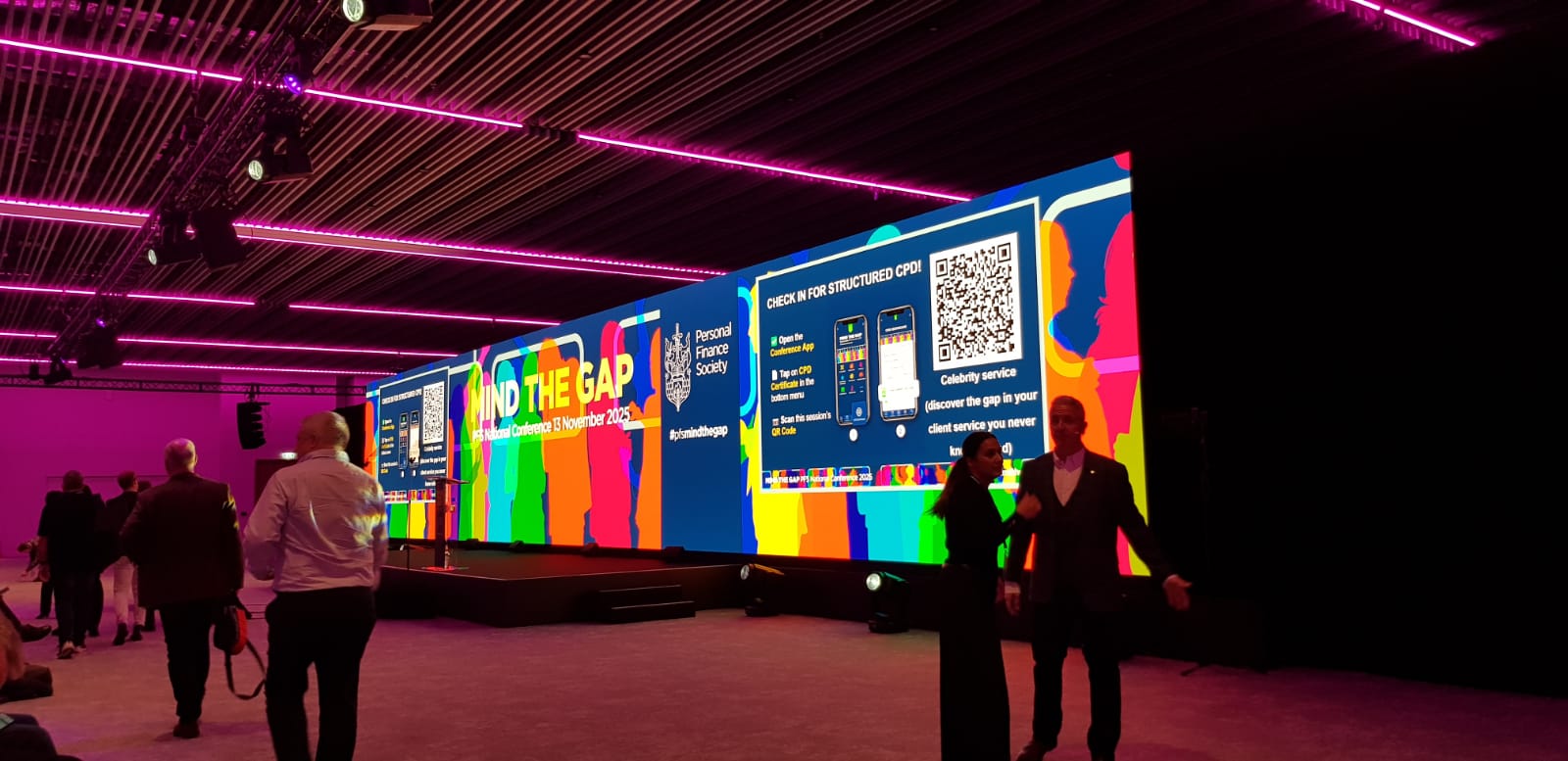
Thursday 13 November 2025 will go down as one of the most revealing days of my career.
It was a tale of two worlds.
In the morning, I stood in the ExCeL Centre surrounded by more than 2,000 advisers at the PFS “Power” Conference — a rally called Mind the Gap. The message repeated all day was about gaps: the advice gap, the innovation gap, the generation gap, the talent gap.
But the biggest gap of all — the one that defines the very future of our profession — was invisible.
The trust gap.
No mention of it.
No acknowledgement of it.
No recognition that without structural trustworthiness, no profession can ever claim legitimacy.
What I witnessed was a system congratulating itself, while ignoring the people it harms.
Later that same day, in a cramped Committee Room in the House of Commons, I listened for four and a half hours to the victims of that very system — people whose lives had been gutted by structurally untrustworthy financial institutions and a regulatory regime that has become a guard dog for the City, not a watchdog for the people.
The contrast could not have been starker.
And in that contrast lies the whole truth about where we are today — and where we must go next.
PART 1 — The Morning: The Illusion of Professionalism
The PFS Power Conference was branded as a celebration of professionalism. In practice, it felt like a political rally — the “Make Advisors Great Again” roadshow.
The language was polished.
The music was loud.
The messaging revolved around emotional intelligence, relationship-building, customer experience, and celebrity service.
At one point, the keynote speaker proudly demonstrated the idea of giving clients personalised mugs for their annual review.
A gift costing £8.50 — offered during a meeting that some clients are charged £10,000 a year for in ongoing advice fees.
And that was held up as an example of “excellence”.
Meanwhile, a much more significant announcement quietly slipped through the cracks.
The PFS has reportedly spent £1 million of members’ funds on attracting new blood into the industry.
Their chair — who also owns an SJP practice — celebrated this recruitment push.
Half of all new recruits in the UK join the St. James’s Place Academy.
Which means that £500,000 of PFS members’ money has effectively been deployed as a recruitment subsidy for SJP.
Approved by its own chair.
If this were a corporate AGM, the conflicts would be glaring.
In a professional body, they should be unthinkable.
And yet there we were.
Thousands of foot soldiers applauding their leadership.
I felt like a Democrat in a Republican rally.
A lone dissenting voice in a hall of 2,000.
The Invisible Gap: Structural Trustworthiness
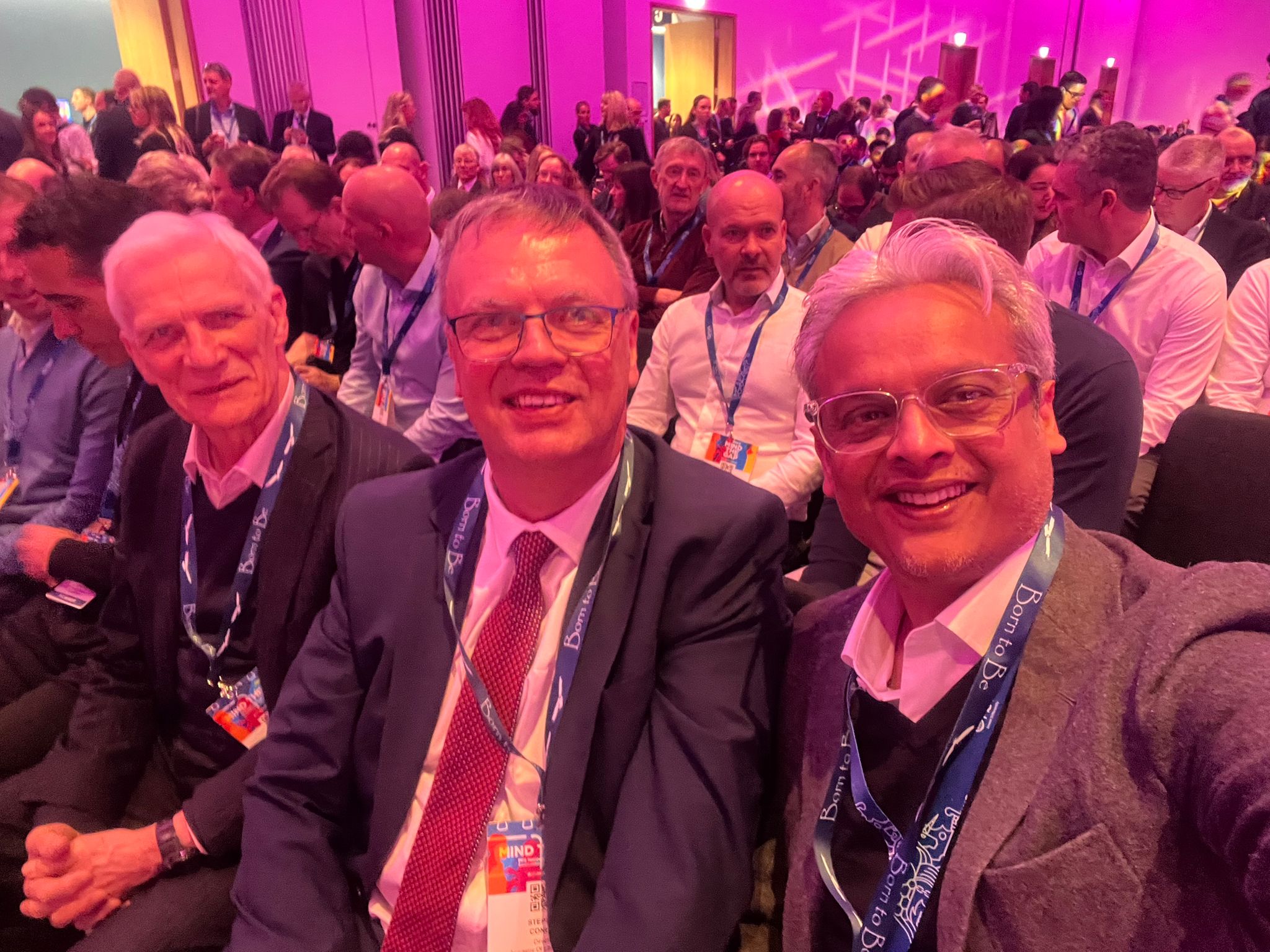
Among those 2,000 attendees, I spoke with just six people who recognised the missing conversation — the trust gap.
Even the most trustworthy individual advisers remain distrusted if they operate inside a structurally untrustworthy system.
That system still:
- pays the majority of advisers via product sales
- extracts fees based on assets under management
- conflates financial planning with regulated advice
- positions investment products as the centre of the client relationship
- treats 1% of a client’s wealth (regulated investments) as if it is the entire universe
- ignores the 99% of a client’s real wealth — their other financial capital and human capital
And crucially:
it erases the line between advice and sales.
Every stand at the conference was a product stand.
Every message from the stage reinforced the same paradigm:
the client is the vehicle through which the adviser gets paid.
This is what makes the system structurally untrustworthy.
By contrast, the Holistic Wealth Planner — the planner who separates advice from product — works in a world grounded in total wealth, human capital, purpose, clarity, wellbeing, and values.
In that entire hall of 2,000?
I saw six of them.
Six who could see the trust gap.
Six who knew they were standing inside a system built for extraction, not empowerment.
PART 2 — The Afternoon: The Human Cost of a Broken System
After leaving ExCeL, I travelled on the Jubilee line to Westminster.
Committee Room 14, House of Commons.
The All-Party Parliamentary Group on Fair Finance.
The contrast with the morning could not have been more brutal.
Instead of advisers boasting about service models, awards, and client gifts, I listened to victims telling their stories of:
- life savings wiped out
- pensions looted
- homes repossessed
- businesses destroyed
- regulators refusing to intervene
- ombudsmen declining jurisdiction
- institutions gaslighting the very people they harmed
For four and a half hours, the stories kept coming.
If I wrote a blog every day for a year, each one detailing a different case, I would barely scratch the surface of the suffering inflicted over just one issue. It would take us 100 years plus to tell every story!
And there are dozens of issues.
Banks.
Advisers.
SIPPs.
QROPS.
Car finance.
Corporate fraud.
Mis-selling scandals.
Regulatory failures.
Cover-ups.
Inaction.
Institutionalised evasion.
Deliberate misdirection.
The scale is not in the hundreds.
Not in the thousands.
It is in the millions.
And some do not survive the ordeal.
We paused for a minute’s silence to remember those friends of the Transparency Task Force who died recently:
- Ian Davis, a Transparency Task Force member and the inspiration behind Get SAFE
- Dr Christopher Sier, a Transparency Task Force member
- Baroness Newlove, the Victims’ Commissioner
- Alun Richards, whose health collapsed after Lloyds Bank forced the sale of his farm without legal right
Real people.
Real names.
For Ian and Alun.
Real consequences of structural untrustworthiness.
This was not an abstract policy discussion.
This was the human fallout of structural untrustworthiness.
The Regulator: Guard Dog for the City
Time and again, victims explained how:
- the regulator told them “not our remit”
- the ombudsman said “go away”
- government departments passed them from one agency to another
- the system seemed designed to exhaust them
It is not neglect.
It is design.
As more than one victim said:
“The FCA is not a watchdog. It is a guard dog for the City.”
And the evidence we hold across multiple cases bears that out.
Meanwhile, on the other side of the Atlantic, Frank Vogel of Transparency International listed 13 sweeping deregulations now being enacted in the U.S. under the current administration — with the UK quietly preparing to follow suit.
We think the situation is bad now?
It is going to get worse.
Much worse.
PART 3 — A Two-Minute Window — and the Disbelief in the Room
After four and a half hours of stories, I had a two-minute slot.
Most of the room had left.
Lawyers glared at the mention of “AI.”
Victims stared blankly, exhausted, traumatised, and understandably doubtful.
I spoke about Get SAFE, and about the power of:
- AI-assisted citizen investigation
- structured case building
- AI-enabled redress strategies
- digital truth preservation
- community-based empowerment
A practical, scalable, bottom-up solution.
Not a theory.
Not a complaint.
A solution.
For the 1% in the room who had used AI with us, the nods were instant.
They knew.
They had lived the transformation.
For the rest, the idea seemed unbelievable — until I shared the statistic:
56% of British adults used AI for financial advice in the last 12 months.
Next year, that could be 96%.
Advisers fear AI because it exposes the system as obsolete.
Victims fear AI because the system has never given them hope.
But AI — done correctly — is not the threat.
AI is the lifeline.
AI is the power-up suit the citizen investigator wears into battle.
The Truth the Industry Cannot Face
AI is not coming for the profession of financial planning.
AI is coming for:
- the product seller
- the structurally untrustworthy adviser
- the conflicted model
- the AUM treadmill
- the extraction-based revenue system
- the 1% world of regulated investments
- the opaque charging structures
- the sales-led hierarchy of profit and power
Financial planning — real planning — survives.
Financial selling does not.
Mind the Gap — The Trust Gap
Here is the real message the PFS conference missed:
AI + the need for trust is an existential threat to the structurally untrustworthy system.
Not to planning.
Not to guidance.
Not to coaching.
To the system.
And yet there is hope — because in both rooms that day, 1% of people understood what was really happening.
In ExCeL, it was the 1% of advisers who could see the truth.
In Westminster, it was the 1% of victims who had touched the power of AI.
The Holistic Wealth Planners.
The Citizen Investigators.
The Academy of Life Planning.
The Get SAFE network.
The resistance.
The conscience-led, structurally trustworthy alternative.
The Academy’s Role: Structural Trustworthiness in Action
We are not here to criticise.
We are here to build.
To replace extraction with empowerment.
To separate advice from product.
To democratise planning.
To restore justice.
To rebuild lives.
To give voice to the unheard.
To turn trauma into purpose.
To co-pilot people with AI into autonomy and clarity.
To build the world the financial industry pretends to be.
We are not waiting for permission.
We are not waiting for regulators.
We are not waiting for the Treasury.
We are not waiting for a profession that refuses to grow up.
We are doing it ourselves.
From the bottom up.
With conscience.
With clarity.
With purpose.
With structural trustworthiness baked in.
The Question Every Planner Must Now Ask
Are you working in a structurally trustworthy system — or a structurally untrustworthy one?
Your conscience will know the answer before your mind does.
And your conscience already knows your next step.
Final Thought: When Trust Precedes Trade, Growth and Justice Follow
The industry’s self-image and the lived experience of its victims no longer match.
The trust gap is wide.
But it is not unbridgeable.
A new movement is already rising:
Holistic Wealth Planners.
Citizen Investigators.
AI-assisted justice.
Values-led planning.
Community-based empowerment.
People before products.
Purpose over profit.
Truth over tradition.
The old system has the numbers.
We have the conscience.
And conscience always wins — eventually.
Mind the gap.
Mind the trust gap.
And choose which side of it you want to stand on.
Join us at the Academy of Life Planning.
Let’s raise capability and integrity — together.
Because only when products and services are structurally trustworthy can consumers truly be free.
Get SAFE Exists to Support After Financial Exploitation
Get SAFE (Support After Financial Exploitation) is building a national lifeline for victims — providing free emotional recovery, life-planning, and justice support through our:
- Fellowship: peer-to-peer recovery and community.
- Witnessing Service: trauma-informed advocacy for those seeking redress.
- Citizen Investigator Training: empowering survivors to uncover truth and pursue justice.
Our Goal: Raise £20,000 to Rebuild Lives
Your contribution will help us:
Register Get SAFE as a charity (CIO)
Build our website, CRM, and outreach platform
Fund our first year of free recovery and justice programmes
Every £50 Changes a Life
Each £50 donation funds a bursary for one survivor — giving them access to the tools, training, and community that restore confidence, purpose, and hope.
This Isn’t Just a Fundraiser — It’s a Movement
We’re reclaiming fairness and rebuilding trust, one life at a time.
Support the Crowdfunder today
Be part of the movement to rebuild lives and restore justice.
 Academy of Life Planning