
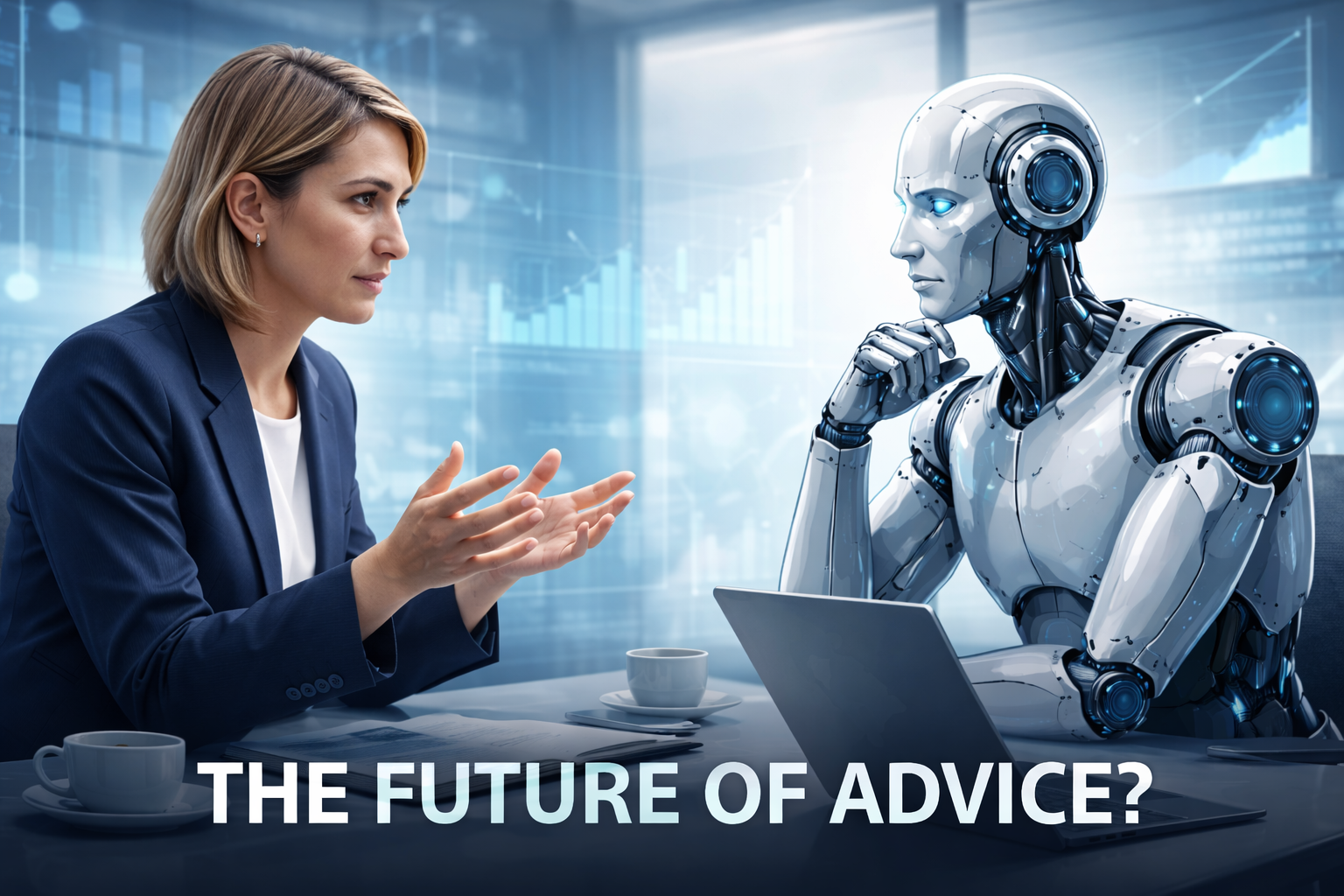
1,000 female advisers at St. James’s Place.
That’s a milestone worth acknowledging.
The financial advice profession has long struggled with gender imbalance, and bringing more diverse voices into the industry is unquestionably a positive step.
But the announcement also arrives at a fascinating moment for wealth management.
Across the sector, another conversation is unfolding.
AI.
Transparency.
And the future shape of financial advice.
When I speak with advisers privately, the questions they are asking are rarely about technology itself.
They are deeper questions about professional identity.
Questions like:
• “Do I actually need the platform I’m sitting on?”
• “Where does my real value lie?”
• “If the industry evolves toward client-agency planning, would I be ready?”
• “What kind of planner do I want to become?”
These aren’t questions driven by fear.
They’re questions driven by awareness of structural change.
For decades, financial advice operated within a model built on information asymmetry.
Advisers had access to tools and analysis clients couldn’t easily obtain.
That gap is narrowing rapidly.
AI can now help clients:
• model retirement outcomes
• analyse portfolio risk
• compare investment strategies
• estimate lifetime fees.
That doesn’t eliminate the need for advisers.
But it does shift the centre of gravity.
The most valuable advisers of the next decade may not be the ones who control information.
They may be the ones who guide decisions.
Helping clients navigate:
• life transitions
• career changes
• family complexity
• behavioural biases
• intergenerational wealth.
In other words:
planning that starts with life — not products.
Which is why the SJP announcement is interesting.
Because many female advisers entering the profession today are often drawn precisely to that human dimension of planning.
Not product selection.
But purpose, behaviour, and life context.
That could prove to be one of the most important evolutions in advice.
Maybe the industry changes dramatically.
Maybe it evolves more slowly.
No one knows.
But when industries start debating AI disruption, it is usually a signal that something structural is shifting.
Which raises a simple professional question:
What harm would there be in learning future-focused planning skills today?
Curious how others see this.
 Academy of Life Planning