
What Financial Planners Can Learn from Economic Development Research
For decades, economists have been clear on one thing:
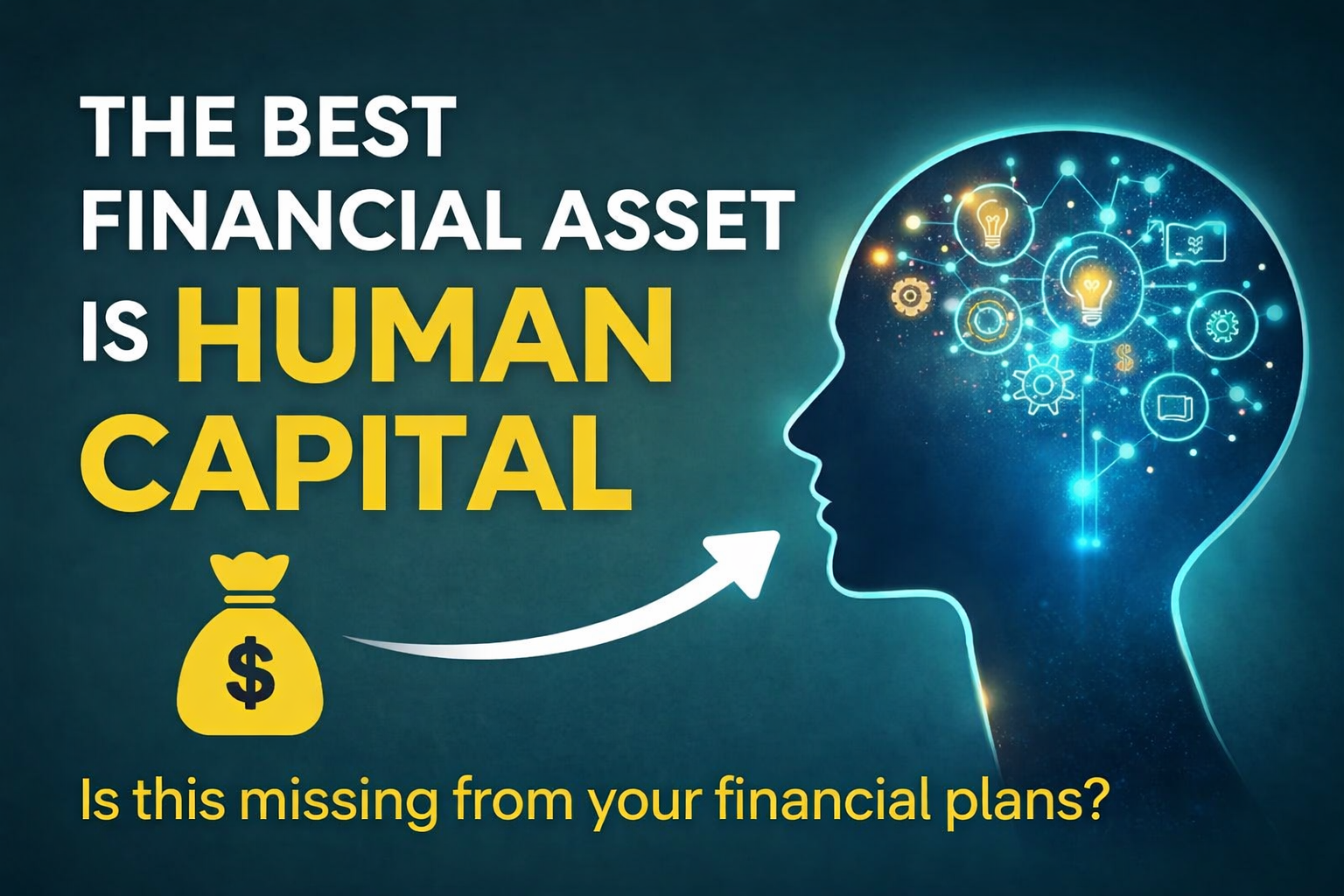
Nations grow not primarily because of physical capital — but because of human capital.
The study Role of Human Capital Formation in Economic and Human Development makes this explicit: economic prosperity and human development are driven by investments in education, health, skills, and capability expansion.
If that’s true at the macro level, the question for planners is obvious:
Why are so many financial plans still built almost entirely around financial capital?
What the Research Actually Says
The paper outlines several core mechanisms through which human capital drives economic growth and development:
1️⃣ Human Capital Increases Productivity
Physical capital becomes more productive when combined with skilled, educated, capable people.
Machines don’t create value.
People using machines do.
2️⃣ Human Capital Drives Innovation
Innovation is the primary engine of modern economic growth.
Innovation comes from brains — not balance sheets.
3️⃣ Human Capital Raises Income and Living Standards
Education and skills increase earning power and employment resilience.
4️⃣ Human Capital Improves Life Quality
Health, education, and opportunity expand life expectancy and capability — reflected in the UN’s Human Development Index (HDI).
5️⃣ Human Capital and Economic Development Reinforce Each Other
It’s a virtuous cycle:
Human capital → growth → more human capital formation → more growth.
The Problem in Financial Planning
Most financial planning models:
- Forecast investment returns
- Project pension withdrawals
- Model tax efficiency
- Stress test markets
But they rarely model the largest driver of lifetime wealth:
- Skills
- Earning adaptability
- Career optionality
- Health capital
- Psychological resilience
- Entrepreneurial capability
- Learning velocity
The study makes clear that human capital formation is the backbone of economic prosperity.
Yet in practice:
We treat it as a footnote.
Why This Matters for Your Practice
Dear reader, this is where the future-proofing conversation becomes urgent.
1️⃣ Demographic Pressure Is Rising
Client portfolios are ageing. AUM growth is slowing in many firms.
If you only manage accumulated assets, your model is exposed.
If you develop clients’ human capital, you expand value creation.
2️⃣ AI Is Disrupting Product Intermediation
Portfolio construction is increasingly automated.
What cannot be automated?
- Judgement
- Life design
- Capability development
- Behavioural navigation
- Strategic career repositioning
Human capital planning is defensible advice.
3️⃣ Exit Valuations Will Reward Broader Capability Models
Firms tied purely to recurring AUM are vulnerable to compression.
Firms embedded in:
- Career planning
- Business growth strategy
- Capability expansion
- Intergenerational human capital
…build deeper, stickier client relationships.
That increases enterprise value.
The Strategic Shift: From Asset Management to Capability Architecture
The research is clear:
Human capital formation is not optional — it is foundational.
In financial planning, this means expanding from:
“How do we grow your investments?”
to:
“How do we grow your earning power, adaptability, and life capability?”
This is not soft planning.
It is structural wealth design.
What This Looks Like in Practice
Human capital integration means:
- Modelling future earning flexibility
- Mapping career optionality scenarios
- Quantifying re-skilling ROI
- Planning entrepreneurial pathways
- Stress testing health disruption impact
- Structuring sabbatical planning
- Forecasting education investments
- Incorporating psychological capital
When you do this, financial capital becomes the servant — not the master.
The Competitive Advantage
The study positions human capital as the backbone of economic development.
For planners, the implication is profound:
The firms that integrate human capital into planning will outlast those who don’t.
Because the future of advice is not portfolio allocation.
It is capability allocation.
The Next Evolution of Advice
This is exactly why Total Wealth Planning exists.
It integrates:
- Financial capital
- Human capital
- Intellectual capital
- Social capital
- Structural capital
In a single architecture.
Not theory.
Not philosophy.
But a practical framework.
If You Want to Future-Proof Your Practice
You can continue refining investment models.
Or you can expand the scope of what planning means.
If you’re ready to move beyond product intermediation and into holistic capability design:
👉 Become a Total Wealth Planner.
Join the Academy of Life Planning and transition your model in 12 weeks.
The future belongs to planners who build people — not just portfolios.
 Academy of Life Planning