
A strategic briefing for planners approaching the transition toward Total Wealth Planning
The Hidden Asset Most Financial Plans Ignore
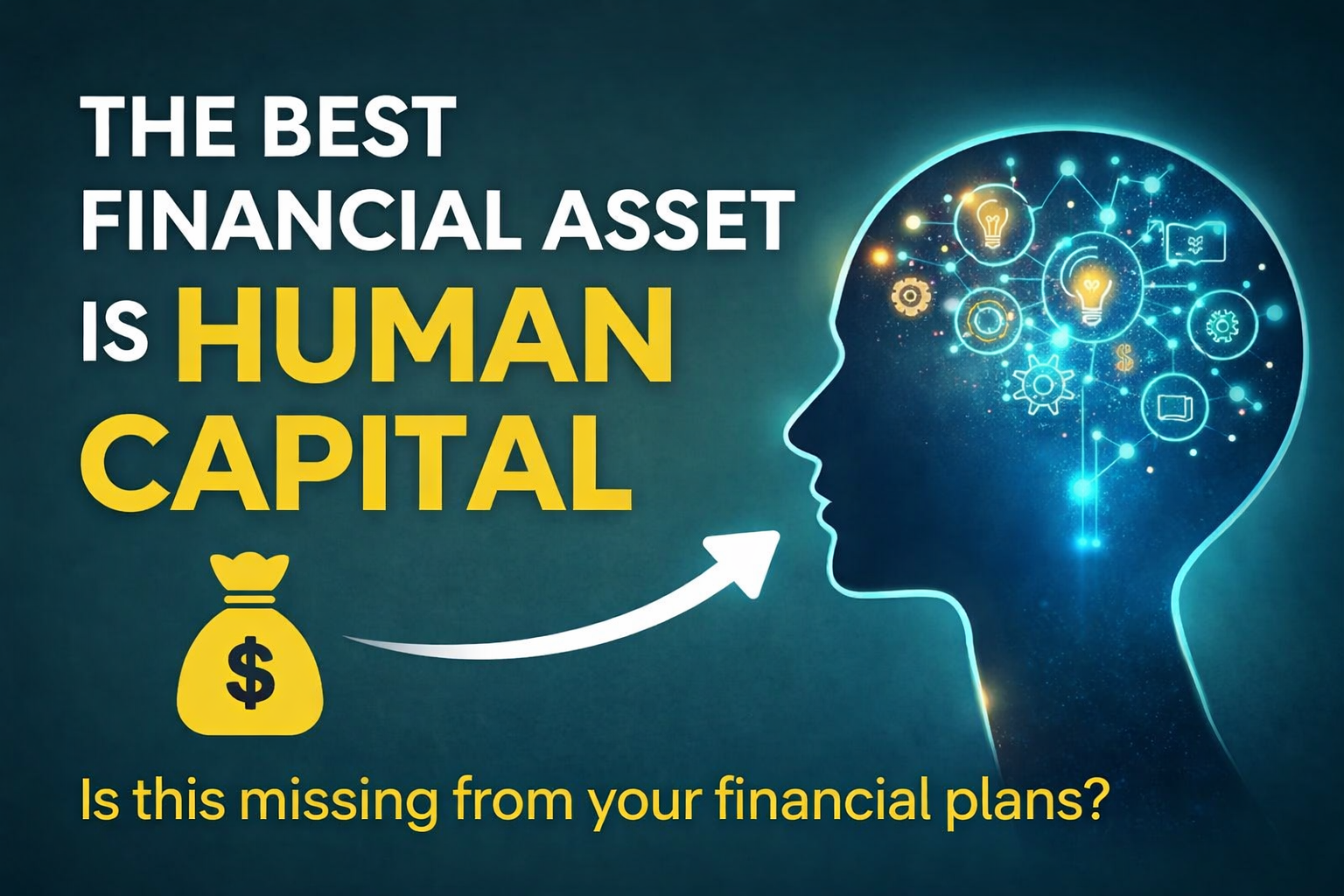
Traditional financial planning models are built on a narrow definition of capital: money, markets, and measurable returns. Yet research shows that human prosperity is actually driven by a broader set of capabilities—health, cognition, emotional regulation, and the ability to care for others.
[Reference: Reconceptualizing human capital, By Paula England]
These capabilities determine not just income potential, but decision-making quality, resilience, relationships, and long-term life outcomes. In other words, they shape the very conditions under which financial capital can grow—or collapse.
For planners, this is the blind spot.
What the Evidence Shows About Real Wealth Drivers
The study identifies four foundational human capabilities that underpin well-being and productive functioning:
- Physical capability — health, energy, and functional ability
- Cognitive capability — reasoning, problem solving, learning
- Self-regulation — discipline, impulse control, delayed gratification
- Caring capability — empathy, relational capacity, social contribution Reconceptualizing_human_capital
Each of these is:
- A durable asset (like capital stock)
- Developable over time
- A multiplier of life outcomes
Critically, they benefit not only the individual but society collectively. Reconceptualizing_human_capital
That means they behave more like infrastructure than income.
Why Traditional Planning Models Miss the Point
Conventional human-capital theory assumes people build capability mainly through deliberate self-investment—education, training, career moves.
But the research demonstrates this is incomplete.
Many of the most powerful drivers of capability development are external inputs and social environments, not intentional investments:
- Family behaviour patterns
- Peer groups
- Workplace culture
- Networks
- Community context Reconceptualizing_human_capital
In fact, the authors argue these external influences may explain more variation in outcomes than deliberate investments do. Reconceptualizing_human_capital
For planners, this changes everything.
It means:
Client outcomes are shaped as much by environment and behaviour as by portfolio construction.
The Missing Link Between Advice and Outcomes
Another crucial insight:
Skills and preferences develop together.
When people build a capability, they also tend to develop a preference for using it—and vice versa. Reconceptualizing_human_capital
Implication:
Financial behaviour is not just a knowledge problem.
It is a capability ecosystem problem.
Clients don’t fail to follow plans because they lack information.
They fail because their capability infrastructure isn’t aligned.
This is why:
- Some clients execute flawlessly
- Others self-sabotage despite perfect advice
The Commercial Opportunity Most Planners Haven’t Seen Yet
Advisers who integrate human capital into planning gain three structural advantages:
1. Better client results
Plans match the client’s real capacity, not theoretical assumptions.
2. Higher retention and trust
Clients feel understood as people, not portfolios.
3. Competitive differentiation
You stop competing on performance and start leading on transformation.
In short:
Financial planners optimise money.
Total Wealth Planners optimise lives.
The Strategic Shift Ahead
The profession is entering a transition phase.
Planners who recognise human capital as the primary asset class will:
- design more realistic plans
- reduce behavioural failure risk
- deliver deeper client impact
Those who don’t will increasingly find their plans underperforming—not because markets fail, but because assumptions about human behaviour were incomplete.
The future planner is not a product selector.
They are a capability architect.
Practical First Steps for Planners Crossing the Bridge
If you’re considering integrating human capital into your planning model, begin here:
- Assess client capability profiles alongside financial assets
- Identify behavioural constraints before recommending strategies
- Evaluate environmental influences affecting client outcomes
- Treat life infrastructure as part of the balance sheet
These shifts don’t replace financial planning.
They complete it.
Final Thought
Financial capital grows fastest when human capital is strong.
The planners who understand this earliest will not only deliver better client outcomes—they will define the next era of the profession.
Ready to Step Across the Bridge?
If you’re sensing that traditional planning is no longer enough for the clients you truly want to serve, that instinct is worth paying attention to.
The next evolution of your professional journey is not about abandoning what you know. It’s about expanding it — integrating human capital, behavioural insight, and life architecture into the financial planning framework you already understand.
The Academy of Life Planning invites you to explore that transition.
Across the bridge you’ll discover:
- A proven framework for integrating human and financial capital
- A professional pathway to becoming a Total Wealth Planner
- Tools that deepen client outcomes and professional fulfilment
- A global community of forward-thinking planners shaping the future of the profession
You don’t have to leap.
You just have to look.
Start by exploring the pathway and seeing whether it aligns with the planner you feel called to become.
The bridge is open.
 Academy of Life Planning