
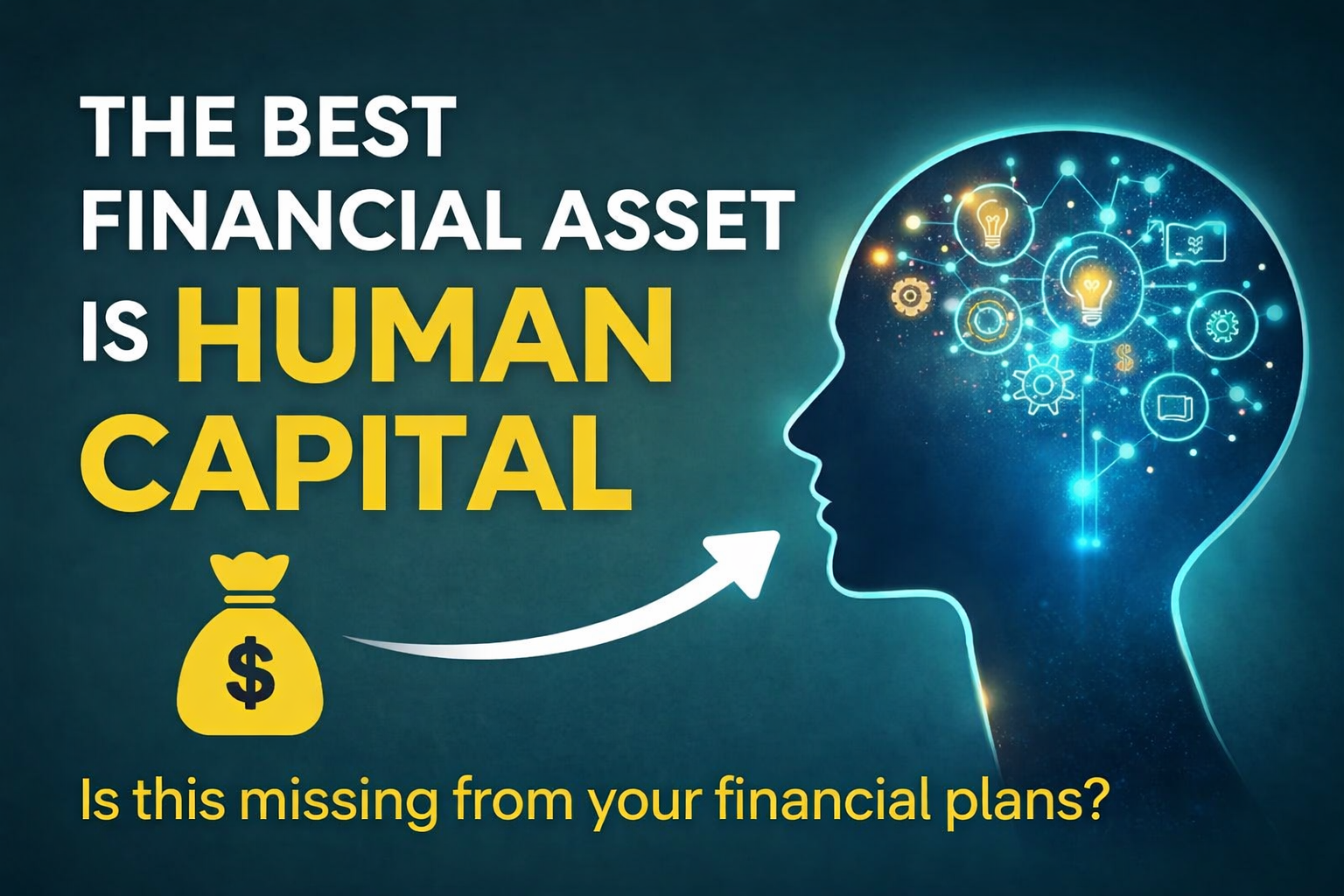
Lessons from Three Major Studies Most Planners Overlook
Financial planning that ignores human capital is structurally incomplete.
If your models focus only on assets, withdrawals, and investment returns, you are planning around the reservoir—not the spring that fills it.
Modern research across economics, development theory, and organisational science converges on a single conclusion:
Wealth is generated first by people, then by money.
This is not philosophy. It is evidence.
Below are the most important lessons from three academic studies on human capital—and why they should reshape how financial planners design lifetime and succession cash-flow models.
1. Human Capital Is Not Optional — It Is the Primary Driver of Wealth Creation
The historical analysis in HUMAN CAPITAL APPROACH: HISTORICAL DEVELOPMENT AND MODERN APPROACHES shows that since the 1960s, human capital has become a central pillar of economic theory and is now widely recognised as a major determinant of both individual earnings and national growth.
Key findings:
- Human capital represents individuals’ productive capacity and income-generating potential.
- Higher education levels consistently correlate with better employment outcomes and higher earnings.
- At macro level, human capital improves productivity, innovation, and long-term growth.
Implication for planners:
When lifetime cash-flow projections exclude skill development, career transitions, retraining, health capacity, or productivity changes, they ignore the dominant driver of income sustainability.
Traditional planning models assume income as a static input.
Human-capital-based planning treats income as a dynamic asset class.
2. Physical Capital Cannot Perform Without Human Capital
The development study Role of Human Capital Formation and Manpower in Economic Development of an Underdeveloped Country highlights a crucial structural insight:
Physical capital is passive. Human capital is the active force that mobilises it.
It demonstrates that countries with machinery, infrastructure, or financial capital but insufficient skilled labour cannot fully utilise those assets.
Consequences observed:
- Machines break down faster
- Resources are wasted
- Productivity falls
- Growth stagnates
Planner lesson:
Asset-allocation advice without capability-allocation planning is incomplete.
A client with:
- £2m portfolio + declining cognitive health
is financially weaker than - £500k portfolio + growing skill set.
Human capital determines the conversion rate of financial capital into outcomes.
3. Earnings Are a Function of Human Capital Investment Decisions
Empirical research summarised in HUMAN CAPITAL APPROACH: HISTORICAL DEVELOPMENT AND MODERN APPROACHES shows:
- More education → higher annual wages
- Skill-intensive professions → steeper lifetime earnings curves
- On-the-job training returns estimated at 9–13%
This is critical:
Human capital investments behave like financial investments.
They have costs, time horizons, and measurable returns.
Yet almost no financial plans model:
- ROI of retraining
- Career pivot timing
- Earnings volatility from skill obsolescence
- Learning curve lag periods
4. Human Capital Is Multi-Dimensional — Not Just Education
The education-focused research Developing human capital through education defines human capital as the combination of:
- education
- experience
- genetics
- attitudes
It also identifies measurable components used internationally:
- general skills
- technical knowledge
- cognitive ability
And modern research extends this to include:
- creativity
- innovation
- social skills
- emotional intelligence
Planner lesson:
Future earning power is not determined solely by qualifications.
It depends on behavioural, psychological, and adaptive traits.
Which means:
Traditional financial planning models cannot forecast income risk accurately unless they model the client as a human system—not just a balance sheet.
5. The Most Overlooked Insight: Human Capital Explains Income Inequality
Becker’s analysis shows income disparities arise largely because individuals invest in themselves at different rates.
This reframes risk:
Income risk is not random.
It is behavioural and developmental.
For planners, this means:
Risk profiling without human-capital profiling is incomplete risk assessment.
6. Succession Planning Fails Without Human Capital Mapping
Succession projections typically model:
- inheritance flows
- estate taxes
- asset transfer timing
But the research shows human capital drives productivity and income across generations.
A financial legacy without capability development often collapses within one generation.
A human-capital legacy compounds.
The Structural Shift Facing Financial Planning
Traditional planning model
→ Financial capital first
→ Human factors second
Emerging evidence-based model
→ Human capital first
→ Financial architecture second
This is not ideology.
It is the direction of economic science.
What This Means for Planners Considering Transition
If you are sensing that:
- traditional models feel incomplete
- clients need deeper planning
- cash-flow projections miss real-life variables
you are not alone.
The profession is evolving from asset management planning to human-centred wealth architecture.
The Strategic Opportunity
Financial planners who integrate human capital:
- deliver more accurate lifetime forecasts
- design resilient income strategies
- reduce client failure risk
- improve intergenerational outcomes
- differentiate instantly in the market
Those who do not risk becoming calculators in an AI-assisted world.
The Bridge Is Open
The Academy’s 12-Week Transition Bridge enables planners to evolve from traditional financial planning into Accredited Total Wealth Planning — integrating:
- human capital modelling
- behavioural economics
- life architecture design
- adaptive cash-flow frameworks
This is not starting over.
It is upgrading your professional operating system.
✅ Invitation
If you are a planner ready to future-proof your practice and deliver truly complete planning, explore the transition pathway.
Because the future of planning isn’t about managing money.
It’s about modelling human potential.
 Academy of Life Planning