
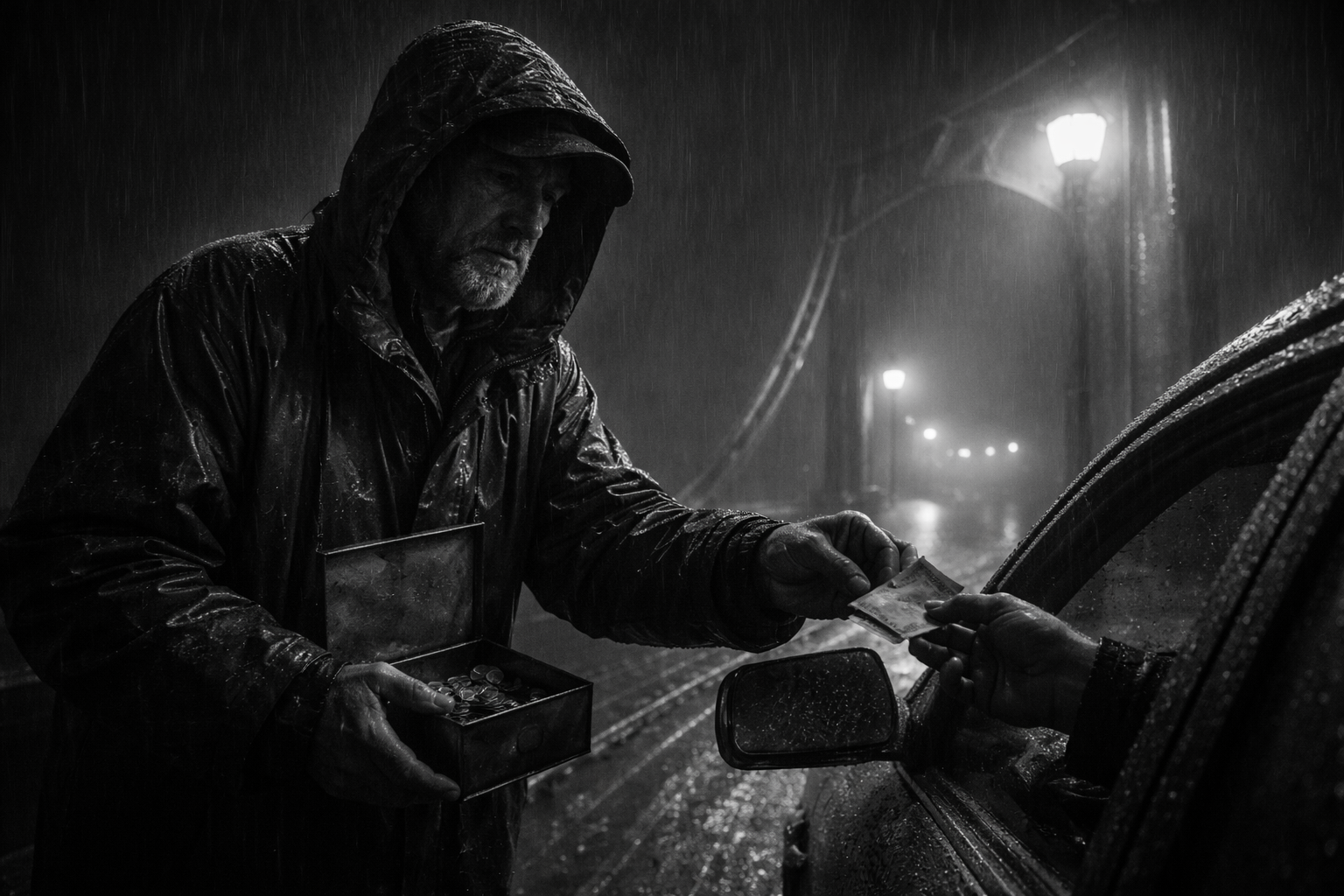
Where you are now (Before the Bridge)
People arrive at the bridge carrying some combination of:
- exhaustion from systems that take more than they give
- a sense of having been used, overlooked, or misled
- skills and experience that no longer fit the roles available
- a quiet knowing that this chapter is over
They often describe this as:
“Something is wrong — but I can’t go back.”
They are not lost.
They are between identities.
What the Bridge is (The Crossing)
The bridge is not a programme.
It is not advice.
It is not rescue.
The bridge is a transition from dependence to authorship.
On the bridge, three things happen:
- Your story is reclaimed
What happened to you is no longer something to recover from.
It becomes something you can use. - Your human capital is named
Not in credentials, but in capabilities:- insight
- judgement
- lived understanding
- the ability to guide others
- Your livelihood is re-imagined
Not as a job title — but as a way of sustaining yourself while serving something larger.
The bridge is where fear turns into orientation.
Who you are on the other side (After the Bridge)
This is the heart of what you asked for.
On the other side, you are:
🧭 Self-directing
You no longer wait for permission, approval, or protection from broken systems.
You make informed choices aligned with your values.
🌱 Economically dignified
You have a sustainable way to earn that:
- doesn’t require selling your soul
- doesn’t depend on exploitation
- grows with your capability
Money becomes supportive, not controlling.
🛠 Structurally useful
Your skills and experience now:
- solve real problems
- help real people
- in ways the old system could not
You are not competing for roles.
You are creating value where it’s needed.
🤝 Able to help others cross
You don’t become a saviour.
You become a guide, a mentor, a steady presence.
You understand the terrain because you’ve walked it.
🌍 Contributing beyond yourself
Your work connects to something larger:
- fairness
- education
- justice
- opportunity
Not as abstract goals — but as lived outcomes in people’s lives.
This is self-transcendence made practical.
The Identity Shift (in one line)
You cross the bridge as someone trying to survive a system —
and arrive as someone who can help build a better one.
The Role of the Toll-Bridge Attendant
He doesn’t decide who crosses.
He doesn’t push.
He doesn’t persuade.
He:
- explains what lies ahead
- ensures the bridge is safe
- and asks one quiet question:
“Are you ready to take responsibility for the life on the other side?”
That’s the toll.
A simple orientation question for you
This is what our framework invites you to consider:
If you step onto this bridge,
are you willing to stop asking how to fit back into what harmed you —
and start asking how to build something that serves you and others?
If yes — you’re ready.
Why this works
Justice, education, fairness, and meaningful work are not destinations here.
They are the conditions that make your identity possible.
We don’t lead with them.
We embody them.
Here is the “letter from your future self”, written to be read at the threshold, before you move onto the bridge.
It avoids instruction.
It avoids persuasion.
It lets the future identity speak.
A Letter From the Other Side
I remember exactly how you feel right now.
You’re standing there, carrying more than you should have had to.
Tired. Alert. Unsure who or what to trust anymore.
Part of you wants certainty. Another part knows certainty is what failed you before.Let me tell you this first:
You are not broken.
You were inside systems that couldn’t hold who you are becoming.I know — because I’m you.
When you step onto the bridge, nothing magical happens all at once.
There’s no sudden confidence. No applause.
Just a quiet moment where you stop waiting to be rescued.That’s when things begin to change.
On this side, your story makes sense.
Not because it was fair — but because it’s now useful.The things you thought had set you back —
the loss, the confusion, the disillusionment —
they become the very things that allow you to see clearly.You stop asking:
“Why did this happen to me?”And you start asking:
“Who can I help because it did?”Here’s what life looks like where I am now.
I make decisions without apologising for them.
Not reckless decisions — grounded ones.
I trust my judgement again.I earn in a way that doesn’t cost me my dignity.
Money no longer decides who I have to be.
It supports what I’m here to do.People come to me because they sense I understand.
I don’t pretend to have all the answers.
I walk beside them while they find their own.I don’t feel trapped anymore.
There is work to do — but it’s work that feels alive.And something else happens, quietly.
I realise I’m part of something larger than my own recovery.
My life now contributes to fairness, to learning, to opportunity —
not as ideas, but as lived realities in other people’s lives.That’s when you understand this isn’t about going back to who you were.
It’s about becoming someone new:
someone who can stand in the world without shrinking,
someone who can build rather than endure,
someone who knows that what they’ve lived through
wasn’t the end of the story — it was the training.I won’t lie to you.
The bridge asks something of you.
It asks you to let go of the hope that someone else will fix this.
It asks you to take responsibility for the life that wants to emerge.But I promise you this:
On the other side, you belong to yourself again.
And that changes everything.I’ll be here when you arrive.
— You
 Academy of Life Planning
The Bridge Between What Was and What’s Emerging
For a long time, many of us have lived as if change would arrive from outside —
a breakthrough moment, a new system, someone else fixing what no longer works.
But another possibility has been becoming clearer.
What if the shift isn’t something that arrives…
but something that reveals itself when we’re ready to see differently?
Not a single event.
Not a dramatic turning point.
But a gradual change in how people understand themselves and their place in the world.
I notice more people questioning old assumptions:
At the same time, there’s a growing pull toward something quieter and more grounded:
This doesn’t feel like awakening all at once.
It feels like standing at a threshold.
Between:
That space can feel uncomfortable.
Even disorienting.
I see my role here not as directing people,
but as holding a bridge steady while they cross.
Some arrive wounded — having trusted systems that failed them.
Others arrive restless — knowing they’re meant to contribute in a different way.
What they share is readiness.
The crossing isn’t about becoming perfect or certain.
It’s about moving from dependence to authorship.
From being shaped by structures that don’t fit
to shaping a life that reflects who you actually are.
When enough people make this shift — quietly, individually —
the world changes not through force, but through coherence.
I’m curious: