
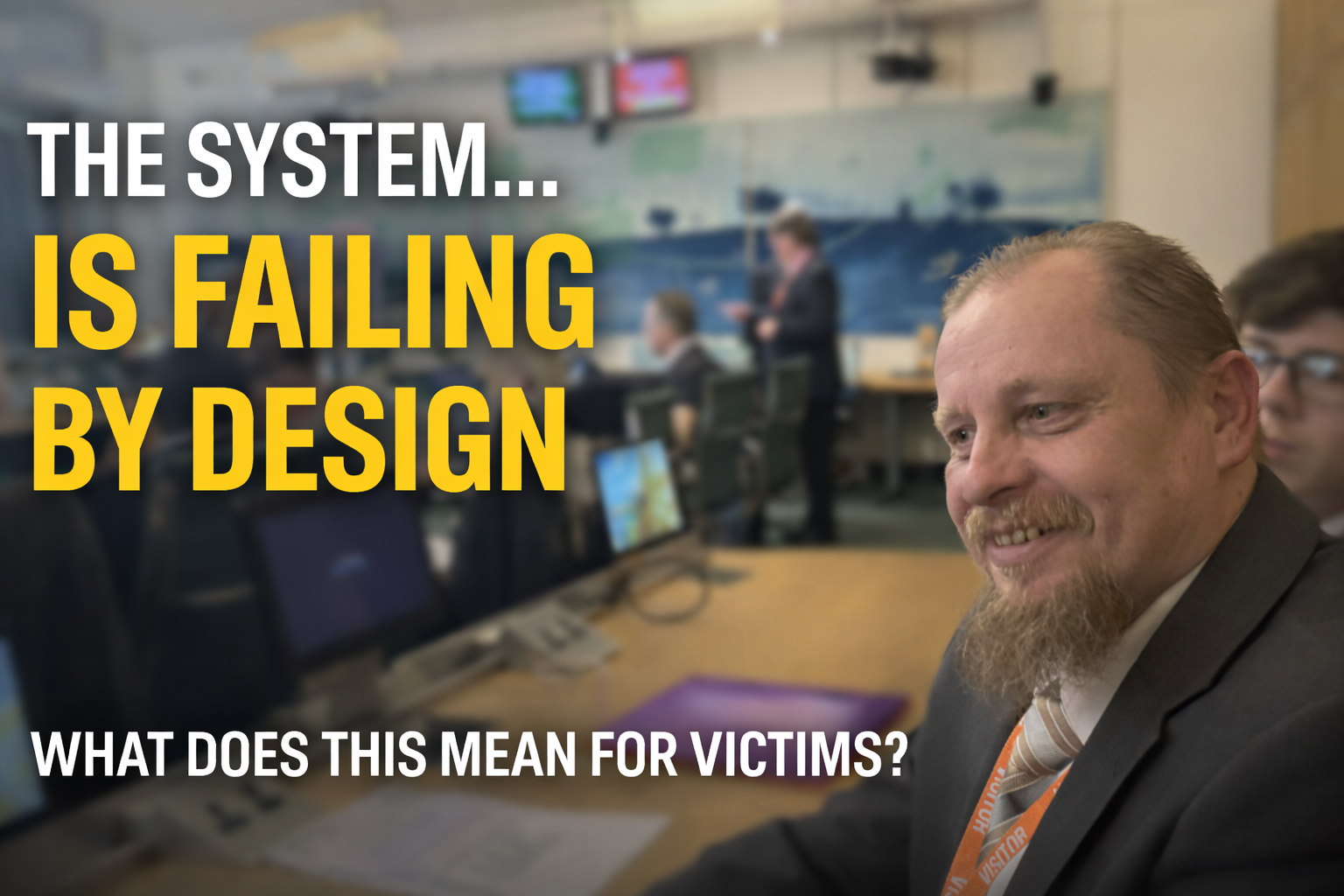
Artur Nadolny, Citizen Investigator. This article draws on insights shared by John Galajsza, from the APPG on Investment Fraud and Fairer Financial Services summit in Parliament 16th March 2026.
What the House of Commons Summit Means for Citizen Investigators
By Steve Conley
A Moment of Clarity
On 16 March 2026, inside the House of Commons, something unusual happened.
Not another technical debate.
Not another incremental reform discussion.
But a convergence.
Parliamentarians, whistleblowers, investigators, lawyers, journalists, and victims came together around a single, uncomfortable truth:
The system designed to protect people is not working.
And more importantly:
It knows it isn’t working.
This Is Not About Isolated Failures
What emerged from the summit was not a catalogue of individual scandals.
It was something far more serious.
A pattern.
- Decades of repeated financial scandals
- Regulatory bodies failing to act—or acting too late
- Victims left without redress
- Institutions avoiding accountability
- Reforms promised… but rarely delivered
This is not noise.
This is structure.
As one speaker put it, we are caught in a cycle:
Scandal → Inquiry → Recommendations → Inaction → Repeat
The Human Cost Is Not Abstract
This isn’t about policy.
It’s about people.
Lives destroyed.
Businesses lost.
Families broken.
In some cases, lives ended.
The story of Ian Davis—who lost his life savings and ultimately his life—was not presented as an exception.
It was presented as a warning.
The Core Problem: A Captured System
Across multiple speakers, a consistent diagnosis emerged.
The issue is not incompetence alone.
It is structural conflict.
An “unholy trinity” was identified:
- The revolving door between regulators and industry
- Conflicts of interest embedded in the system
- Regulatory capture
In simple terms:
The system is too close to the system it is meant to regulate.
Why This Matters for Get SAFE
This is where it becomes directly relevant to what we are building.
Because if the system worked as intended…
Get SAFE would not need to exist.
But the summit confirms something critical:
Victims cannot rely on the system to carry their case for them.
And that changes everything.
The Shift: From Passive Victim to Active Investigator
One of the most important insights from the summit came from an unexpected place.
A comparison.
Experts can see the pattern of wrongdoing clearly.
But the public cannot “join the dots.”
Why?
Because:
- Information is fragmented
- Evidence is buried
- Narratives are diluted
- Systems are complex by design
This is the gap Get SAFE exists to close.
Not by fighting the system directly.
But by helping individuals:
- See clearly
- Organise evidence
- Understand their position
- Communicate effectively
What Citizen Investigators Must Understand Now
The summit changes the strategic landscape.
Here are the key implications.
1. You Are Entering a Structurally Unequal System
You are not dealing with a level playing field.
You are dealing with:
- Better-resourced institutions
- Complex legal frameworks
- Interconnected professional networks
- Delays that work against you
This is not a reason to stop.
But it is a reason to be prepared.
2. Time Is a Weapon—Used Against Victims
New rules and practices are increasingly:
- Limiting claim windows
- Creating rigid time bars
- Restricting access to redress
In some cases, people are excluded before they even realise they’ve been defrauded.
3. Transparency Is Being Quietly Reduced
There are growing concerns about:
- Removal of detailed enforcement records
- Less visibility of individual cases
- Reduced ability to identify patterns
For investigators, this matters deeply.
Because:
Without data, there is no pattern.
Without pattern, there is no case.
4. The “Fair and Reasonable” Principle Is Under Threat
The Financial Ombudsman has historically been:
- A rare point of balance
- A place where fairness could override rigid rules
But proposals now risk reducing it to:
A rule-checking function rather than a justice mechanism
This is a critical shift.
5. Story Matters as Much as Evidence
One of the most powerful contributions at the summit:
Data alone does not create change.
Story does.
For citizen investigators, this is a breakthrough insight.
It means:
- Your experience matters
- Your narrative matters
- Your ability to communicate clearly matters
What Get SAFE Must Do Next
The summit doesn’t change our mission.
It sharpens it.
1. Stabilise First
Before investigation:
- Reduce overwhelm
- Create emotional safety
- Restore clarity
Because no one builds a case well in distress.
2. Structure Everything
- Chronology
- Evidence
- Correspondence
- Key facts
Clarity beats volume.
3. Surface Options—Not Promises
We are not here to:
- Fight institutions
- Escalate prematurely
- Offer legal outcomes
We are here to help people:
Understand their position and move forward safely.
A Final Reflection
The summit ended with a call.
Not to outrage.
But to responsibility.
A recognition that:
Small, determined groups of people can change systems.
Where This Leaves Us
Dear reader, here’s the reality:
The system may reform.
There may be inquiries.
There may be change.
But right now…
People still need support.
Not in ten years.
Not after reform.
Now.
And That’s Where This Work Matters
Get SAFE is not here to replace the system.
It is here to fill the gap while the system catches up.
Quietly.
Carefully.
Human-first.
If you’ve been affected
You are not alone.
You don’t need to understand everything at once.
Start with clarity.
Start with structure.
Start where you are.
Because the moment you can see clearly…
you begin to take your power back.
 Academy of Life Planning