
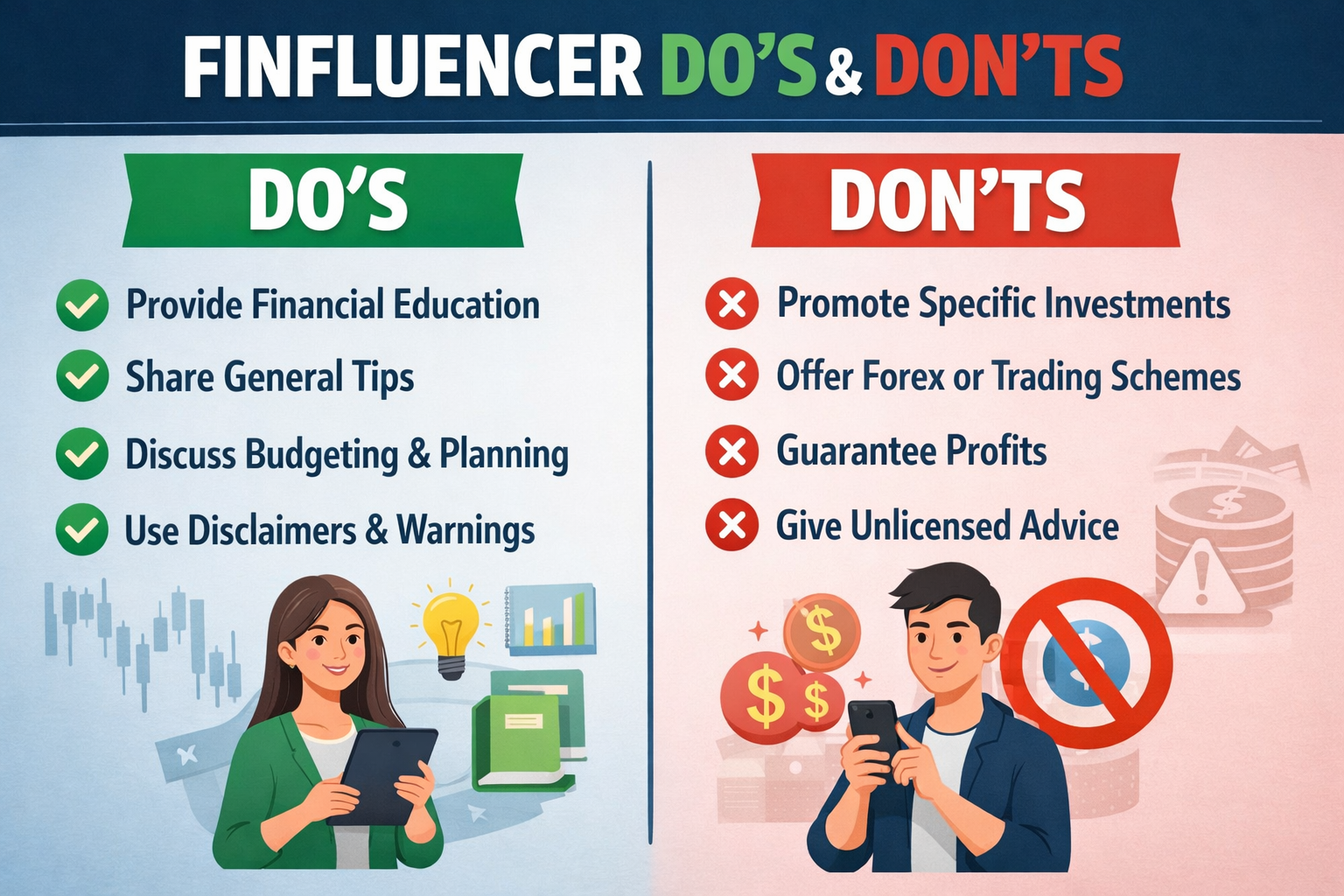
Understanding financial regulation in the UK is often portrayed as complicated, restrictive, or risky. In reality, the structure is logical, proportionate, and surprisingly navigable once you understand one central concept:
The FCA’s perimeter isn’t a blanket over financial discussion. It is a targeted safeguard applied only to retail investment activities capable of causing direct financial loss — such as recommending products, arranging transactions, controlling assets, or exercising discretion.
This article combines structural explanation with a real enforcement case from this week to show exactly how the regulatory perimeter works in practice — and why informed professionals rarely have problems with it.
The Role of the Financial Conduct Authority
The FCA is responsible for maintaining market integrity and protecting consumers from financial harm. One of its core powers is enforcing the UK financial promotions regime, which governs how investments and financial opportunities can be communicated.
Crucially, the FCA does not regulate all financial discussion.
It regulates “retail investment” activities that:
- influence investment decisions
- involve specific products
- could cause measurable loss
- rely on consumer trust
This distinction is the foundation of the perimeter.
First Principle: Most Wealth Isn’t Regulated
To understand why the perimeter exists, you must first understand what proportion of wealth it actually covers.
For the average UK individual:
- Total wealth = 100%
- Human capital (future earning power) ≈ 80%
- Financial capital ≈ 20%
- Retail financial capital ≈ 5% of financial capital
- = about 1% of total lifetime wealth
- Retail financial capital ≈ 5% of financial capital
So FCA regulation of retail investments governs activities related to roughly 1% of total wealth for the average Brit.
That doesn’t make it trivial. It makes it targeted.
The FCA focuses on this slice because that’s where consumers historically suffer direct financial loss through poor advice, misleading promotions, or product mis-selling.
Regulated vs Unregulated Activity
The perimeter is activity-based, not topic-based.
You can discuss money, planning, or investments without authorisation provided you do not perform regulated activities.
Generally Outside the FCA Perimeter
Examples include:
- financial education
- budgeting guidance
- life planning conversations
- generic asset allocation principles
- behavioural coaching
- scenario modelling
- career strategy and income planning
These may still be governed by other legal frameworks — for example the Competition and Markets Authority oversees consumer protection and fair trading — but they do not require FCA authorisation.
Importantly:
Conducting activities outside the FCA perimeter without FCA permission is not illegal.
Activities Inside the Perimeter — Regulated vs Not Regulated
Many activities require authorisation because they create a high risk of consumer harm or directly influence financial outcomes. These typically include:
Activities That Do Require FCA Authorisation
Because they can directly affect a consumer’s money or decisions about specific products:
- Recommending a specific investment or provider
- Arranging retail financial products
- Promoting a named retail investment opportunity
- Managing or controlling client assets
- Exercising discretion over investments
- Advising on the merits of a particular regulated contract
These are regulated because they can directly cause financial loss if performed incompetently or dishonestly.
Activities That Sit in the Retail Financial Space but Do Not Require FCA Authorisation
These are commonly misunderstood. They relate to money and investments but do not constitute regulated activity when delivered properly and neutrally:
- Financial planning and life planning
- Generic guidance about investment principles
- Asset-allocation education (non-product-specific)
- Cashflow modelling and scenario analysis
- Explaining how financial products work in general
- Providing factual information without opinion or recommendation
- Budgeting or savings coaching
- Risk-tolerance education
- Behavioural finance discussions
- Human capital planning and career income strategy
These activities do not require FCA permission because they do not:
- recommend a specific product
- induce a transaction
- handle client assets
- or influence a decision about a named investment
The Practical Rule
If you are educating, explaining, or modelling — you are generally outside the perimeter.
If you are recommending, arranging, or promoting — you are inside it.
Why This Distinction Matters
This boundary is deliberate. Regulation is not applied randomly or broadly. It is imposed precisely where conduct has the power to:
- move money
- influence decisions
- control assets
- or create measurable financial loss
Understanding this distinction allows professionals to operate confidently, ethically, and legally without unnecessary restriction.
The Real-World Example: This Week’s Finfluencer Case
What Happened
This week, seven social-media personalities were prosecuted for unlawful financial promotions. Among them were reality-TV figures:
- Yazmin Oukhellou
- Lauren Goodger
- Scott Timlin
The court found that:
- They promoted foreign-exchange trading schemes on Instagram
- The posts encouraged followers to participate in trading activity
- None were authorised to promote investments
- At least one follower lost money
Penalties imposed were generally in the hundreds of pounds plus prosecution costs.
When Are Forex Platforms Regulated Retail Products?
A forex platform falls inside the regulatory perimeter of the Financial Conduct Authority when it offers regulated investments or services to retail consumers, such as:
- Contracts for Difference (CFDs)
- Spread betting
- Leveraged FX trading
- Managed FX accounts
- Signals or copy-trading services tied to execution
These are classified as regulated financial instruments because they:
- involve leverage
- expose clients to rapid losses
- can be complex and high risk
Firms offering these to UK retail clients must be FCA-authorised.
When Forex Activity Is Not Regulated
Forex activity may fall outside FCA regulation if it is limited to:
- spot currency exchange for travel or commerce
- wholesale interbank FX trading
- purely educational content about currency markets
- general market commentary without inducement
These do not involve regulated investment activity.
Why the Distinction Exists
Regulation applies when an activity can:
- directly cause consumer loss
- involve speculative investment risk
- or influence a consumer to enter a financial contract
Retail leveraged FX trading ticks all three boxes. That’s why it is regulated.
Simple Rule of Thumb
Currency exchange = usually unregulated
Currency speculation products = usually regulated
Why They Were Fined
Under the Financial Services and Markets Act 2000, a financial promotion is:
An invitation or inducement to engage in investment activity.
That definition includes social media posts.
To lawfully issue such a promotion, a person must:
- be FCA-authorised, or
- have approval from an authorised firm, or
- qualify for a statutory exemption
The influencers met none of these conditions.
They crossed the boundary from:
general content → regulated activity
That is precisely what triggered enforcement.
What They Weren’t Punished For
They were not fined for:
- discussing money
- sharing opinions
- posting online
- having followers
They were fined for one thing only:
Promoting specific investments without authorisation.
That distinction matters enormously for professionals.
Why the System Worked Exactly as Designed
This case demonstrates that the regulatory framework is not arbitrary or oppressive. It is risk-based and targeted.
The regulator did not intervene until conduct:
- involved specific retail financial products
- encouraged investment decisions
- exposed consumers to potential loss
That is the point at which consumer protection becomes necessary.
The Most Common Misunderstanding
Many professionals mistakenly believe:
Talking about finance requires regulation.
It does not.
What requires regulation is influencing someone to enter a specific retail financial product.
This misunderstanding causes two opposite problems:
- Some people avoid valuable educational work unnecessarily.
- Others unknowingly stray into regulated activity.
Both stem from not understanding where the line actually sits.
Financial Planning vs Product Promotion
Financial planning — including modelling that references real investments or existing holdings — can sit outside the FCA perimeter. What matters is not whether products appear in the plan, but whether you perform a regulated activity in relation to them.
So the real distinction is:
Typically outside the perimeter
- Planning frameworks and life-strategy design
- Cashflow modelling using actual holdings
- Recording or illustrating existing products factually
- Generic guidance about investment principles
Inside the perimeter (requires authorisation)
- Recommending a specific investment or switch
- Arranging or executing transactions
- Promoting a named investment opportunity
- Advising on the merits of a regulated product
The boundary is this:
Referencing products in a plan is not regulated.
Influencing a decision about them is.
Why This Matters for Total Wealth Professionals
Most Total Wealth Planning activity focuses on:
- long-term decision structures
- behavioural insight
- life strategy
- human capital optimisation
- future scenario modelling
These relate primarily to the 99% of wealth that sits outside retail investment products.
In other words, most professional value creation occurs outside the FCA perimeter.
The key is simply recognising when you approach the boundary.
The Electric Fence Principle
The regulatory perimeter isn’t a maze. It’s a fence.
You don’t need to memorise every rule.
You just need to know where the live wire is.
Once you understand:
- what is regulated
- what isn’t
- why the boundary exists
…compliance becomes straightforward.
Knowledge removes risk.
The Strategic Advantage of Regulatory Literacy
Professionals who understand the perimeter can confidently:
- educate audiences
- build influence
- publish insights
- grow communities
- guide decisions
—all without needing FCA authorisation.
That’s why informed practitioners are rarely investigated. They simply don’t cross the line.
Final Perspective
The FCA’s role is not to restrict ethical professionals.
It is to restrict harmful conduct.
This week’s finfluencer enforcement didn’t show a system failing.
It showed a system working.
The lesson isn’t fear.
It’s clarity.
Because once you understand where the boundary is, operating safely becomes easy.
Closing Thought
Professionals who want ongoing clarity, updates, and peer insight into regulatory boundaries can deepen their understanding inside the Academy of Life Planning network — where regulatory awareness is part of professional competence, not an afterthought.
In regulated environments, knowledge isn’t just power.
It’s protection.
 Academy of Life Planning