
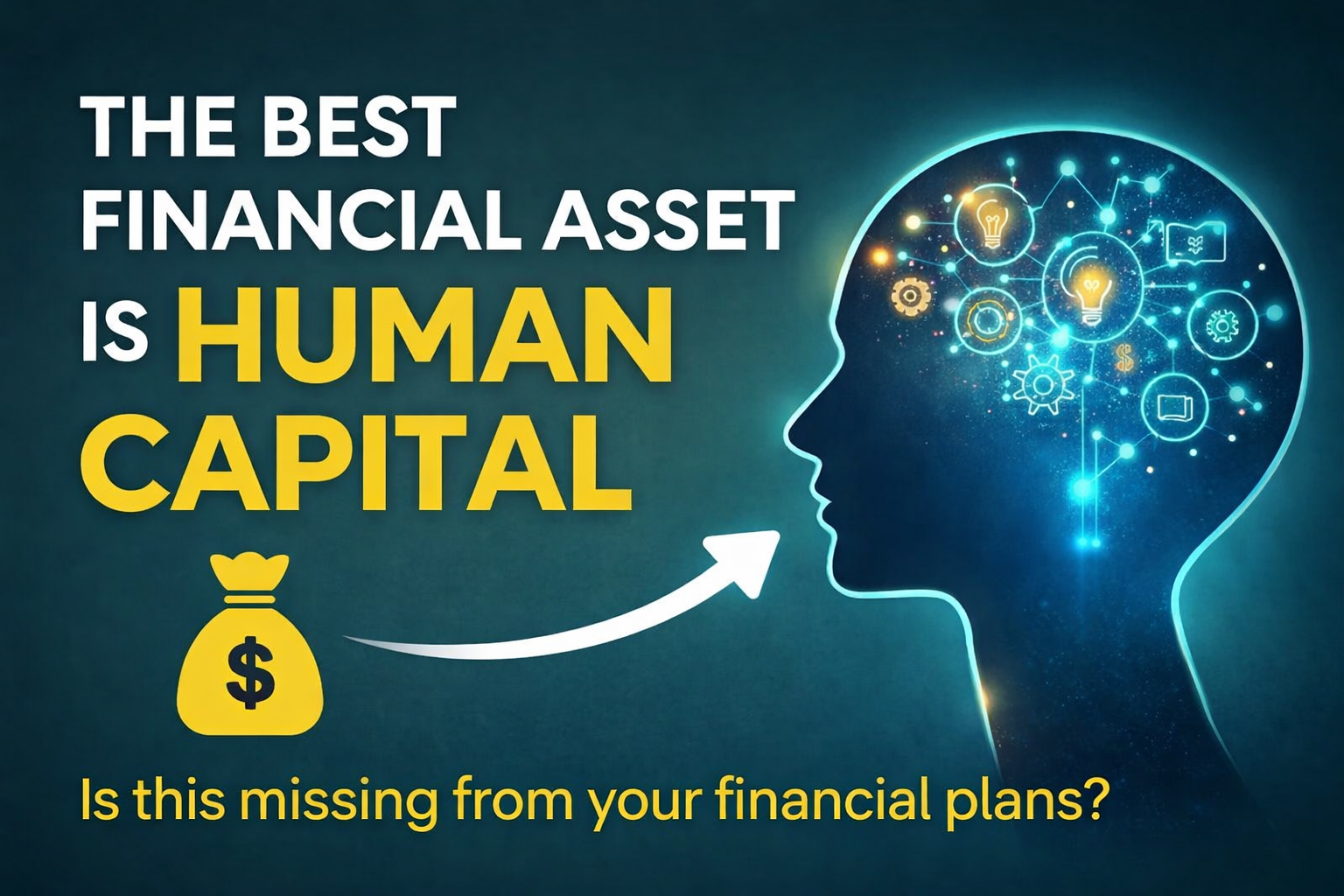
Why the Future of Financial Advice Is Human, Not Just Financial
For decades, mainstream financial advice has revolved around financial capital — portfolios, products, tax wrappers, asset allocation, and return optimisation. That model is now reaching its natural limits.
A growing body of research — including OECD work on human capital and academic critiques of Human Capital Theory — points to a deeper truth:
The most valuable asset any client has is not their pension or ISA. It is their capacity to learn, adapt, create value, and generate income over a lifetime.
This insight reframes what it means to be a modern adviser. It also explains why the Academy of Life Planning exists — to support advisers who want to cross the bridge from traditional product-led advice into Total Wealth Planning.
[See: 1) The 3rd OECD World Forum on ” Statistics, Knowledge and Policy ” HUMAN CAPITAL AND ITS MEASUREMENT KWON, DAE-BONG, and 2) “Human Capital Theory” : A Review and Critique Theories of International Education and Development MA International Education and Development School of Education and Social Work University of Sussex Shinae KANG.]
Lesson 1: Human Capital Is the Primary Engine of Wealth Creation
The OECD defines human capital as the knowledge, skills, competencies, experience, health, motivation, and social capabilities embedded in individuals.
Research consistently shows:
- Investment in human capital produces higher long-term economic returns than physical or financial capital
- Education, training, and skills development increase income resilience
- Knowledge accumulation drives productivity, innovation, and adaptability
For advisers, this overturns a core assumption of traditional planning:
Wealth is not primarily something clients “own”. It is something they continuously “generate”.
Implication for Total Wealth Planners
Instead of starting with:
- “How should we invest your money?”
We start with:
- “How can we strengthen your ability to create income, meaning, stability, and opportunity over the next 10–30 years?”
This shifts planning upstream — from money optimisation to life capability design.
Lesson 2: Traditional Metrics Miss Most of What Actually Matters
OECD and academic critiques highlight that conventional human capital measurement relies on weak proxies such as:
- Years of schooling
- Qualifications
- Income levels
- Productivity statistics
These fail to capture:
- Creativity and initiative
- Motivation and resilience
- Social networks and reputation
- Transferable skills
- Learning agility
- Wellbeing and health
As Kang’s critique of Human Capital Theory notes, wealth and income growth do not reliably translate into life satisfaction, stability, or reduced inequality.
Implication for Total Wealth Planners
Financial advisers who only model money flows are working with partial reality.
A Total Wealth Planner must also assess:
- Human earning power
- Career optionality
- Skill renewal pathways
- Health and energy sustainability
- Psychological capacity to execute plans
- Support networks and community capital
This is why Total Wealth Planning integrates human capital mapping alongside financial forecasting.
Lesson 3: Human Capital Is Expandable, Self-Generating, and Transferable
OECD research identifies four defining characteristics of human capital:
- Expandable — knowledge compounds over time
- Self-generating — learning creates further learning capacity
- Transportable — skills travel across roles, industries, and geographies
- Shareable — value multiplies through networks and collaboration
Unlike financial capital, which is finite and vulnerable to market shocks, human capital becomes stronger when exercised.
Implication for Total Wealth Planners
This creates an entirely new advisory frontier:
- Designing multi-career life strategies
- Building portable income streams
- Supporting encore careers and transitions
- Structuring learning investment plans
- Helping clients convert experience into advisory, teaching, consulting, or digital products
In short: you don’t just protect wealth — you architect it.
Lesson 4: Human Capital Must Be Integrated With Social and Psychological Capital
Both the OECD and Kang’s critique emphasise that human capital does not operate in isolation.
Outcomes depend heavily on:
- Social networks and community ties
- Trust and reputation
- Mental health and emotional stability
- Cultural context and life meaning
Kang notes that Human Capital Theory breaks down when it ignores:
- Trauma
- Poverty
- Care responsibilities
- Discrimination
- Psychological stress
Implication for Total Wealth Planners
This demands a broader advisory skillset:
- Trauma-informed planning conversations
- Life transition coaching
- Purpose mapping
- Energy and wellbeing planning
- Relationship and support-system design
This is why Total Wealth Planners operate as life architects, not product distributors.
Lesson 5: Education and Skill Renewal Must Be Continuous
Both studies converge on one clear conclusion:
Human capital depreciates unless it is actively renewed.
This has profound implications in:
- AI disruption
- Career volatility
- Longevity risk
- Industry automation
The old retirement model — work 40 years, then stop — is structurally obsolete.
Implication for Total Wealth Planners
Your role expands into:
- Lifelong learning strategy design
- Skill portfolio diversification
- Midlife and late-life career planning
- Reskilling finance
- Monetising experience into advisory income
This is the practical foundation of financial independence in the AI era.
Why This Creates a New Professional Category: The Total Wealth Planner
The evidence is clear.
The adviser of the future:
- Works across human + financial capital
- Designs adaptive, multi-phase life plans
- Uses AI to democratise strategic planning
- Operates product-free and conflict-free
- Is trained in psychology, transition support, and life architecture
This is not a tweak to traditional advice.
It is a new profession.
Your Next Step: Become a GAME Plan Practitioner
The GAME Plan Practitioner Programme is how advisers cross the bridge into Total Wealth Planning.
It equips you to:
- Map human capital alongside financial capital
- Run life-first planning conversations
- Design income resilience strategies
- Build portable, ethical planning businesses
- Use AI to scale empowerment, not extraction
Build an Independent, Client-First Planning Practice
Without Starting From Scratch
Launch your holistic planning business in 90 days — with training, business setup, and steady professional support.
→ Apply to the GAME Plan Practitioner Programme
Final Thought
The financial advice profession does not need another product revolution.
It needs a human revolution.
And it starts with you.
 Academy of Life Planning