
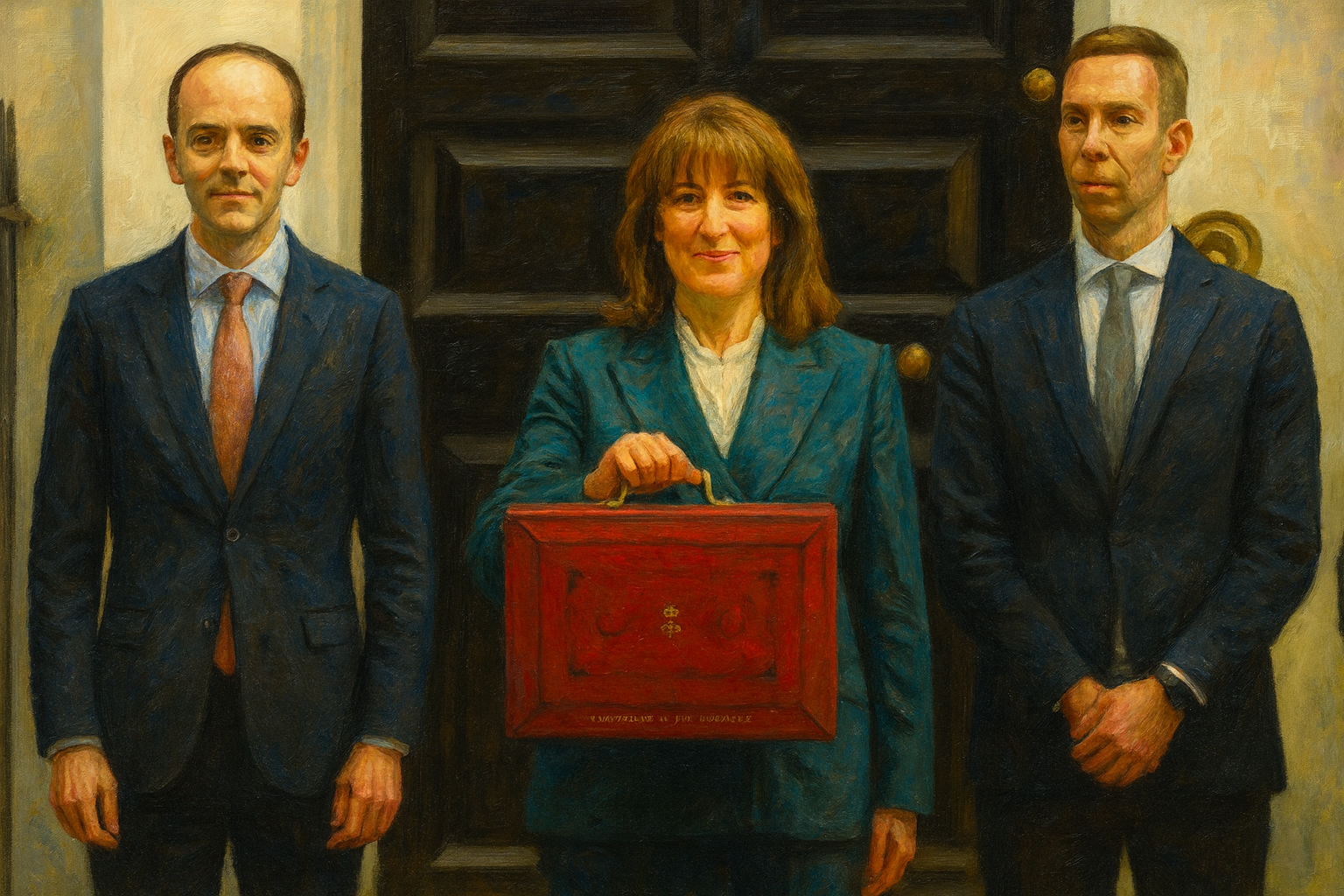
💡 The Academy Welcomes Budget 2025: Britain Finally Puts Human Capital First
“Strong Foundations, Secure Future” — that’s the slogan of the UK’s 2025 Budget. But beneath the fiscal charts and economic forecasts lies a much deeper signal: the government has finally recognised that the true foundation of wealth is human capital.
This year’s Budget places people, not products, at the centre of growth — aligning perfectly with the Academy of Life Planning’s mission to build wealth through wellbeing and freedom through purpose.
For over a decade, the Academy of Life Planning has championed a simple but revolutionary idea:
Real growth comes not from financial engineering, but from investing in people.
With the 2025 Budget, the UK Government has finally embraced that principle — turning policy toward education, health, skills, and wellbeing as the true drivers of prosperity.
It’s exactly what we’ve been asking for in our ongoing series, Lessons for the Chancellor.
What was delivered:
🧠 1. The Age of Human Capital Has Arrived
For the first time, Treasury analysis explicitly connects education, health, and opportunity to long-term economic output.
£1.5 billion is being invested into the Youth Guarantee and the Growth & Skills Levy, ensuring every 16–24-year-old can “earn or learn.”
Human capital is no longer a side note — it’s national infrastructure.
Holistic Wealth Planners should treat learning as a core compounding asset in every client plan, right alongside pensions and property.
💪 2. Health is the New Economic Engine
With 250 new Neighbourhood Health Centres, a 10-Year Health Plan, and £50 billion of additional NHS investment by 2030, the Budget reframes health as a productivity driver.
When clients invest in their physical and emotional wellbeing, they aren’t spending — they’re increasing their earning capacity, resilience, and lifespan return on effort.
In AoLP language: that’s Freedom Capital at work.
👨👩👧 3. Breaking the Poverty Trap — Early-Life Planning
Scrapping the two-child limit in Universal Credit will lift 450,000 children out of poverty. Treasury’s own data shows that children raised in poverty earn 25% less by age 30.
This is a stark reminder that inequality in human capital formation compounds faster than any financial interest rate.
Planners can play a crucial role in helping families design intergenerational wealth strategies — combining education, health, and community support to prevent inherited financial disadvantage.
🧭 4. From Welfare to Empowerment
The welfare system is being rebalanced to reward capability, not dependency.
Those who are ill will be supported to return to meaningful work, while employers are being enlisted to sustain wellbeing at work.
This shift mirrors the GAME Plan cycle — moving clients from Goals → Actions → Means → Execution, and from passive survival to active creation.
💡 5. Productivity Through Learning
The OBR’s productivity downgrade triggered a new wave of skills and innovation funding, R&D reform, and planning liberalisation.
The message: growth now depends more on mindset than machinery.
For planners, this is an opportunity to integrate lifelong learning pathways into financial blueprints — coaching clients to continuously upskill and reinvent, not retire and withdraw.
🏘️ 6. Local Empowerment = Social Capital
Initiatives such as the Leeds City Fund, Northern Growth Corridor, and regional devolution mark a return to community-centred economics.
The Budget recognises that when people trust local systems, they invest more time, care, and creativity in them — precisely what AoLP calls structural trustworthiness.
⚖️ 7. Tax Reform as Value Alignment
The shift from taxing wages alone to also taxing property, dividends, and savings signals a slow but meaningful rebalancing between earned and unearned income.
It’s a subtle moral correction: the system is starting to value contribution over accumulation.
For Holistic Wealth Planners, this confirms the direction of travel — from extractive wealth to empowering wealth.
🔮 8. Pensions, Purpose, and Longevity
A new Pensions Commission and a third State Pension Age Review acknowledge that the future of retirement isn’t about deferring life — it’s about designing one that remains purposeful, productive, and sustainable.
The planner’s role? Help clients build lives worth living now, not just pots worth drawing later.
✨ 9. The Holistic Lesson
Every measure in this Budget — from skills to health, from fairness to local empowerment — points to one conclusion:
The future economy will be powered by people who plan their lives, not by products that sell them.
Holistic Wealth Planners stand at the frontier of that transformation — guiding clients to grow human capital, not just financial capital, and to live in alignment with what the Academy calls the Universal Cycle of Creation.
Your 10-point Summary
“Wealth is not what you own. It’s what you can do, become, and give.”
Budget 2025 confirms that the state has started to think like a life planner.
It’s time the profession caught up. Here is your 10-point summary of Human Capital Strategies in the UK Budget 2025 — aligned with AoLP’s human-capital-first philosophy:
- Youth Guarantee & Skills Levy: £1.5 billion to ensure every 16–24-year-old can learn or work — activating purpose and preventing dependency.
- Health as Economic Infrastructure: £50 billion NHS boost and 250 Health Centres — reframing health as a productive asset, not a cost.
- Welfare-to-Work Reforms: Incentivising recovery and re-employment through a rebalanced Universal Credit and capability-building focus.
- Education & Equality: Ending the two-child limit in benefits to lift 450,000 children from poverty and expand early-life opportunity.
- Productivity & Lifelong Learning: Investing in training, R&D, and innovation to treat education as national capital stock.
- Health-Work Integration: Requiring employers to support employee wellbeing, linking prevention to sustained earning power.
- Family & Community Capital: Funding local health and regeneration projects to build trust and social capital regionally.
- Fairer Fiscal Reform: Aligning taxation of labour and assets to reward productive contribution over passive accumulation.
- Pension Sustainability: Establishing a new Pensions Commission to link financial security with longevity and purpose.
- Holistic Integration: Treating health, education, and work as one human-capability system — the true engine of national growth.
What we asked for at AoLP:
- #1: Human Capital as the Foundation for Sustainable Prosperity
- #2: Building Britain’s Future on Human Capital, Not Fiscal Firefighting
- #3: Why Equality in Education Is the Key to Growth
- #4: When Education Fuels Inequality
- #5: Human Capital — Britain’s Hidden Engine for Growth
🧠 Lesson #1 Reaffirmed: Human Capital — Britain’s Hidden Engine for Growth
(Based on Dr. Mahesh U. Daru, 2015)
The Chancellor’s recognition that “growth depends on capability” mirrors the Academy’s founding thesis: wealth is not what you own — it’s what you can do, become, and give.
By investing in learning, health, and fair opportunity, the Budget begins to unlock the compounding power of human potential — Britain’s most undervalued national asset.
🎓 Lesson #2 Realised: Building Britain’s Future on Human Capital, Not Fiscal Firefighting
(Based on Latif Zeynalli, 2020)
Short-term stimulus can’t fix long-term stagnation. But human capital investment can.
The new Growth & Skills Levy, Youth Guarantee, and lifelong learning commitments are a powerful shift from crisis management to capability building.
The message is clear: the future economy will be built, not borrowed.
📚 Lesson #3 Applied: Equality in Education Is the Key to Growth
(Based on Castelló & Doménech, 2002)
By scrapping the two-child limit in Universal Credit and expanding access to education, the Chancellor is directly tackling the inequality trap that has stifled productivity for decades.
This is how you grow both GDP and GNH — Gross National Happiness.
⚖️ Lesson #4 Advanced: When Education Fuels Equality
(Based on Onur Özdemir, 2020)
Education must not only expand opportunity — it must distribute it fairly.
By embedding skills development within regional and community programmes, the Government begins to ensure that the next generation’s prospects depend less on where they start, and more on what they can contribute.
🌍 Lesson #5 Embodied: Human Capital as Britain’s Growth Engine
(Based on Dr. Mahesh U. Daru, 2015)
For the first time, the UK’s fiscal policy treats people as productive infrastructure.
This Budget sees health and education not as costs, but as investments with compounding social returns — the foundation of a structurally trustworthy economy.
🔄 AoLP’s View: The Policy Now Matches the Philosophy
Britain is finally speaking the language of the GAME Plan —
- Goals: health, education, purpose
- Actions: training, fairness, inclusion
- Means: capability investment
- Execution: sustainable growth
AoLP welcomes this shift as a victory for holistic economics — proof that empowering human capital delivers both moral and fiscal dividends.
It’s not about redistribution; it’s about reconstruction — of lives, communities, and confidence.
🕊️ Closing Reflection
“The nations that thrive in the 21st century will be those that invest in their people — not as costs to manage, but as creators of value.”
— Steve Conley, Academy of Life Planning
The Academy stands ready to help advisers, planners, and policymakers put these principles into practice — turning policy into purpose, and purpose into prosperity.
In Summary
“The wealth of a nation is not measured by its gold or GDP, but by the quality and creativity of its people.”
Chancellor Reeves has anchored her Budget in human-capital investment — education, skills, health, and purpose — by doing so she can turn austerity into renewal. Britain’s balance sheet may be in deficit, but its people remain its greatest untapped asset.
 Academy of Life Planning
One thought on “🌍 Human Capital is the New GDP: 10 Lessons for Holistic Wealth Planners from Budget 2025”