
By the Academy of Life Planning
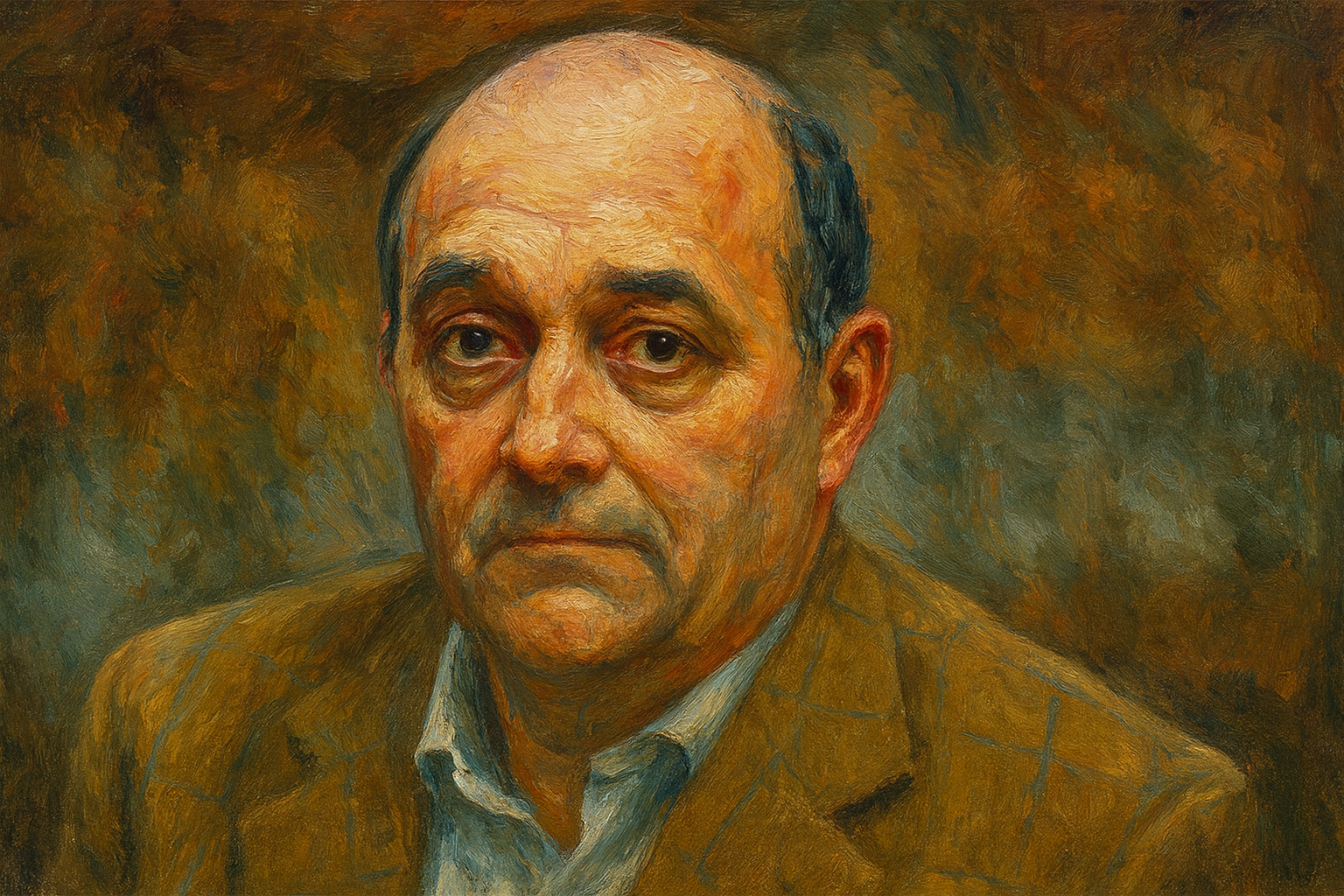
Paul Russell Moore (1958–2020) was the former Head of Group Regulatory Risk at HBOS and the whistleblower who warned, years before the 2008 crash, that the bank’s aggressive sales culture and weak controls posed a serious risk to customers and financial stability. For speaking up, he lost his job, his career in mainstream finance, and much of his health – but he never stopped campaigning for ethics, accountability, and prudence in banking. His memoir, Crash Bank Wallop, and his public testimony to the Treasury Select Committee not only exposed what went wrong inside HBOS, they laid bare the human cost of telling the truth inside a system built to silence it.
“An economy without ethics ultimately destroys wealth and creates poverty.” — Paul Moore
When Paul Moore, former Head of Group Regulatory Risk at HBOS, spoke out about the culture inside one of Britain’s biggest banks, he wasn’t just reporting misconduct. He was diagnosing a systemic illness — one that still shapes the financial services industry today.
His testimony, drawn from years inside the machine, reveals an uncomfortable truth:
What failed at HBOS wasn’t a product, a model, or a management line.
It was the structure itself.
At the Academy of Life Planning, we call this structural untrustworthiness — a design problem that cannot be solved through rhetoric, branding, or good intentions. The Moore Doctrine offers a rare insider’s map of how these systems behave, and what it will take to build alternatives that serve the public good.
This is a summary of what he taught us — and why it matters more now than ever.
1. The Culture Behind the Collapse: When Sales Overtake Prudence
Moore described HBOS’s culture with three metaphors:
Pipers. Emperor’s New Clothes. Lemmings.
Each reveals a different layer of structural failure:
- The Pipers: Investment analysts demanded short-term growth. Executives obeyed.
- The Emperor’s New Clothes: Everyone pretended the strategy was sound, despite clear warning signs.
- The Lemmings: Entire teams followed profit targets off a cliff because obedience had replaced judgement.
This wasn’t an aberration. It was the operating model of a system built for extraction, not service.
Moore summed it up through one tragic observation from a 23-year-old at a Scunthorpe branch:
“We’ll never hit our sales target and sell ethically.”
She said what the board would not: the business model made prudence impossible.
2. The Sales Machine: Turning Banking into a Supermarket
HBOS hired a retail executive from Asda, set double-digit growth targets, and engineered a banking model around one goal: volume.
The consequences were predictable — and devastating:
- Customers walked in for a temporary overdraft and walked out with a £5,000 loan they never requested.
- PPI was bundled as a reflex.
- Risk limits were quietly loosened to make sales targets achievable.
- Staff operated under fear; dissenters were marginalised or fired.
The institution had replaced fiduciary duty with an internal sales contest.
This pattern — advising through an incentive to sell — is still the dominant model in UK financial services today. It is why the Academy trains Holistic Wealth Planners to work outside the product-sales perimeter. You cannot heal a system by participating in the very mechanism that breaks it.
3. When Risk Management Is Silenced, Harm Becomes Guaranteed
One of Moore’s most shocking revelations was this:
Risk managers were not allowed to book loan-loss provisions because it would “hurt the numbers.”
Risk didn’t disappear; it was buried.
Automated credit models provided a veneer of science, but Moore exposes the truth:
they were built on assumptions that could not be validated and were manipulated to support sales objectives.
This is what structural untrustworthiness looks like in practice:
- Models used as weapons of persuasion, not truth.
- Governance designed to protect targets, not customers.
- Whistleblowers removed to preserve the illusion of safety.
The problem wasn’t the people — it was the architecture that made honesty professionally suicidal.
4. Governance Failure: Power Without Counterbalance
Moore’s testimony shows a system with no meaningful brakes:
- Boards demanded growth without examining consequences.
- Directors interpreted fiduciary duty as “maximise short-term returns.”
- The real-economy consequences of bank actions were never discussed at board level.
- Regulators had power but no accountability.
As Moore put it:
“I never heard anyone, in any bank, discuss how the bank affected the economy.”
This is the core flaw of shareholder primacy: it turns decision-making inward, blinding institutions to the human impact of their choices.
5. The Regulator: Immune, Detached, and Unaccountable
Moore didn’t mince his words:
regulators were structurally incapable of preventing another crisis.
His key points:
- Regulatory bodies face no real consequences for failure.
- Ring-fencing is a red herring — retail banks caused as much damage as investment banks.
- Capital requirements do nothing to prevent conduct-driven crises.
- Government inquiries avoided forensic investigation of the actual decision-making that caused the collapse.
A regulator without accountability reinforces, rather than restrains, structural untrustworthiness.
This is why independent AI-powered citizen investigators — the model championed in Get SAFE — have become essential. If oversight fails, the public must build its own tools.
6. The Human Cost: Poverty, Mortality, and Social Collapse
Moore reminded Parliament of what is too often forgotten:
The banking crisis was not a financial event.
It was a humanitarian one.
- Over 100 million people were driven back into poverty.
- Mortality rates for the poorest rose sharply.
- Families lost homes, security, and future prospects.
Financial misconduct doesn’t just misallocate capital — it destroys wellbeing, health, and life expectancy.
Holistic Wealth Planners must understand this:
ethical planning is not a luxury; it is a public health intervention.
7. A Practitioner’s Blueprint for Structural Reform
Moore proposed a radical yet practical governance innovation:
Create a protected oversight tier inside banks —
a role that can never be fired by executives, where risk, compliance, and audit all report independently.
This “telemetry layer” would act like the engineer who warns the Formula 1 driver when they’re burning too much fuel.
Its job: to speak truth early, clearly, and without fear.
He also called for:
- Transparent, forensic investigation of HBOS and RBS
- Real accountability for breaches of principles
- A regulatory system with reciprocal accountability
- Governance that balances executive power with equal counter-power
These principles mirror the foundations of structural trustworthiness — the framework the Academy teaches through the Holistic Wealth Planner model and the GAME Plan.
8. The Moore Doctrine: What It Really Means
At its core, the Moore Doctrine teaches one defining lesson:
If incentives reward sales, the system will produce sales — even if it destroys customers, staff, institutions, and society to get them.
Culture is not created by slogans.
Ethics are not restored by committees.
Trust is not built by marketing.
Trust is structural.
Ethics are structural.
Prudence is structural.
Unless the architecture changes, history will repeat itself.
Why This Matters for the Academy of Life Planning
The Moore Doctrine validates everything we stand for:
- Prudence over sales
- Human capital over financial capital
- Independent thinking over groupthink
- Structural trustworthiness over extraction
- Empowered citizens over passive consumers
Holistic Wealth Planners act as a counter-model to the sales-driven financial system.
They plan the person before the money.
They serve the whole life, not the balance sheet.
They anchor decision-making in purpose, prudence, and community.
In a world shaped by incentives that erode ethics,
Holistic Wealth Planners are the structural antidote.
A Call to Action
Paul Moore paid a heavy price for telling the truth.
He showed what happens when honest voices speak inside an unbalanced system.
But he also offered a way forward:
redesign the structures, not the slogans.
The Academy of Life Planning is building that future —
a movement that restores ethics, prudence, and human dignity
to the centre of financial decision-making.
If you want to be part of that transformation,
or help others navigate a system that still carries the same risks Moore exposed,
you’re in the right place.
The Moore Doctrine isn’t history.
It’s a warning.
And it’s a roadmap.
We intend to follow it.
Every year, thousands across the UK lose their savings, pensions, and peace of mind to corporate financial exploitation — and are left to face the aftermath alone.
Get SAFE (Support After Financial Exploitation) exists to change that.
We’re creating a national lifeline for victims — offering free emotional recovery, life-planning, and justice support through our Fellowship, Witnessing Service, and Citizen Investigator training.
We’re now raising £20,000 to:
Register Get SAFE as a Charity (CIO)
Build our website, CRM, and outreach platform
Fund our first year of free support and recovery programmes
Every £50 donation provides a bursary for one survivor — giving access to the tools, training, and community needed to rebuild life and pursue justice with confidence.
Your contribution doesn’t just fund a project — it fuels a movement.
Support the Crowdfunder today and help us rebuild lives and restore justice.
Join us at: http://www.aolp.info/getsafe
steve.conley@aolp.co.uk | +44 (0)7850 102070

 Academy of Life Planning
One thought on “The Moore Doctrine: What HBOS Taught Us About Structural Untrustworthiness”