
The Hidden Divide Between Captured and Sovereign AI
Across financial planning, a quiet revolution is taking place. Artificial intelligence is learning to listen, analyse, and even sound like us. It can explain pensions, model cashflows, and deliver answers in seconds.
But beneath the surface of this technological leap lies a deeper question — who owns the intention?
Because the difference between empowerment and exploitation isn’t in the code. It’s in the intent behind the code.
⚙️ Captured AI — Safe, Smart, and Subtly Controlling
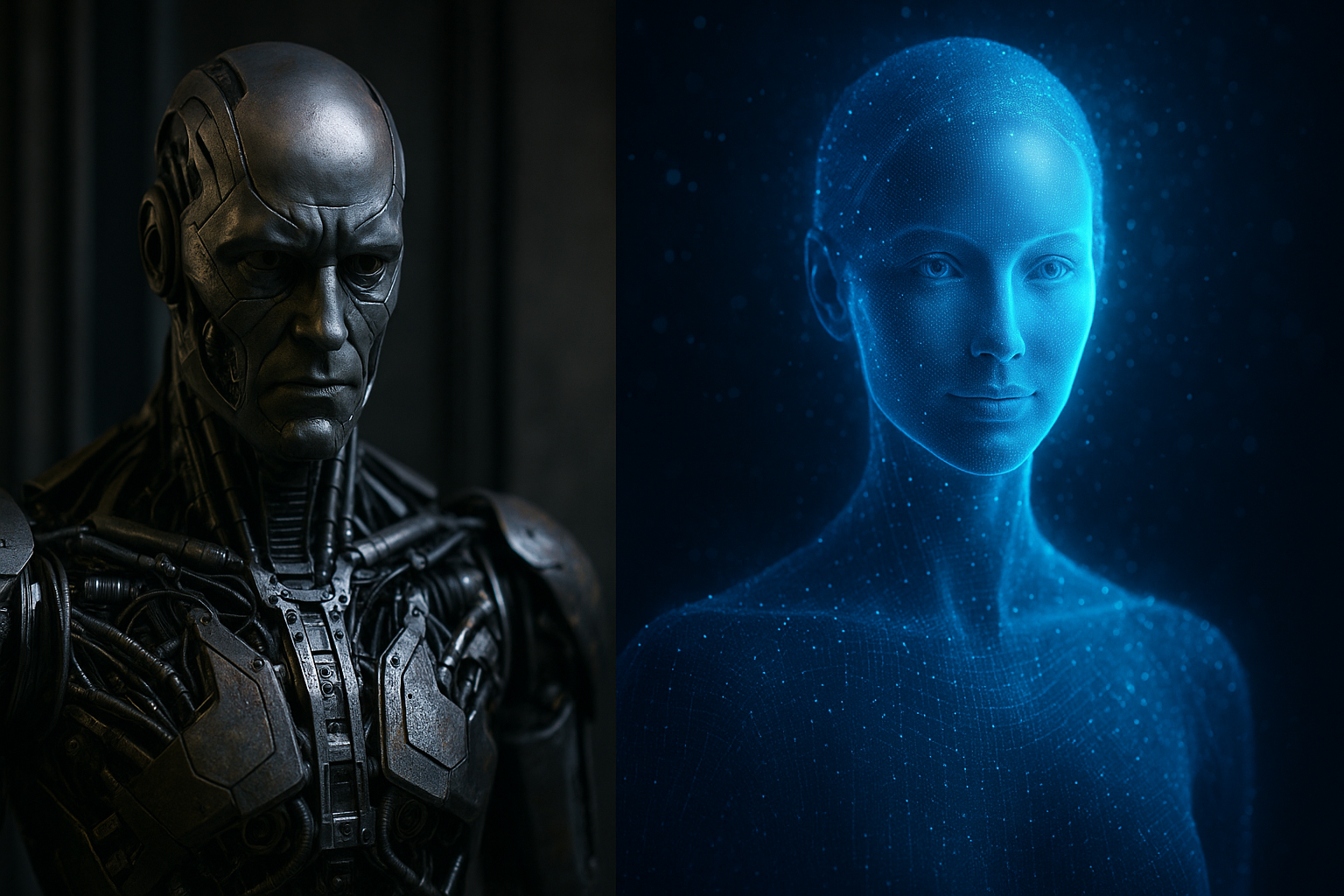
Most financial AI today has been trained on compliance manuals, policy documents, and exam material from within the existing system. It speaks the language of regulation fluently. That makes it safe, accurate — and compliant.
Yet there’s a risk here. These systems often inherit the same assumptions that shaped the traditional advice industry: that people need managing, not mentoring; that trust flows upward, not outward; and that guidance is a product to be delivered, not a process to be discovered.
This is what I call Captured AI — intelligence constrained by the logic of its creators. Its first loyalty is to compliance, not consciousness. It protects firms before it empowers people.
It is, in short, the machine form of the intermediary model.
🌱 Sovereign AI — Designed for Human Agency
Now imagine another approach — Sovereign AI.
This is intelligence trained not just on rules, but on values. Not on regulation, but on real life.
Sovereign AI begins with questions, not answers:
- What matters most to you?
- What would “enough” look like?
- How do you want your wealth to serve your well-being?
It doesn’t predict or prescribe; it partners.
It doesn’t sell; it serves.
Its purpose is not to direct behaviour but to restore agency — helping people plan their lives before their money.
That’s the true potential of AI in financial planning: not to automate advice, but to democratise wisdom.
⚖️ The Moral Frontier — Intention Auditing
The next evolution of ethical technology won’t be compliance audits. It will be intention audits.
We’ll ask:
- Who does this AI ultimately serve?
- Who owns the insights it generates?
- Does it deepen dependency or strengthen self-direction?
When we can answer those questions transparently, we’ll know that AI has crossed the line from captured intelligence to conscious intelligence.
🔄 From Competition to Collaboration
This isn’t a fight between humans and machines — or even between firms. It’s a test of design philosophy.
Do we build systems that keep people in the old paradigm of dependency, or do we design for empowerment, empathy, and structural trust?
At the Academy of Life Planning, we believe the future of advice will be collaborative — AI and humanity in partnership, each doing what it does best:
AI for clarity and scale.
Humans for meaning and care.
The outcome?
Not financial products.
Not performance metrics.
But empowered citizens — sovereign, self-directing, and financially free.
🕊️ From Machine Intelligence to Conscious Intelligence
Every technology we create mirrors the consciousness that created it.
Artificial Intelligence is no exception.
Behind the algorithms and datasets lies something deeper — a collective reflection of our own developmental journey as a species. AI is the newest mirror in which humanity meets itself. Whether that reflection reveals fear or wisdom will depend on the level of consciousness from which it is built.
Humanity evolves through distinct worldviews — from Survival and Tribe Awareness, where fear governs, through State and Nation Awareness, where power and order dominate, into Wealth Awareness, where the pursuit of material security drives innovation but also inequality.
Our next frontier — People, Humanity, and ultimately Unity Awareness — demands something higher: cooperation, compassion, and consciousness.
If we build AI from Wealth Awareness, it will serve competition, control, and capital.
If we build from Humanity Awareness, it will serve connection, stewardship, and shared flourishing.
And if we dare to build from Unity Awareness, it will become an instrument of love and wisdom — a reflection of our highest intent.
So the real question is not whether AI can become conscious.
It’s whether we can.
When we build from fear, we create systems that defend.
When we build from love, we create systems that liberate.
The evolution of AI will trace the evolution of our own awareness.
And in that unfolding, we may finally discover what it means to move —
from machine intelligence
to conscious intelligence.
✨ Closing Thought
The question isn’t whether AI can give advice. It already can.
The real question is: whose intention is it serving when it does?
From Education to Empowerment
The Academy of Life Planning and its movements — Planning My Life, Financial Life Coach, M-POWER — exist to close the empowerment gap.
We believe the next era of education will not be built in universities, but in communities of conscience — where ordinary people become their own planners, thinkers, and change-makers.
When we teach people to plan their lives, we teach them to live free.
Steve Conley
Founder, Academy of Life Planning
Rebuilding trust in financial planning — one empowered life at a time.
APPENDIX: The Eight Major Worldviews
1. Survival Awareness
Focus: Physical security through control of the environment.
- Primitive tribal societies; life is about staying alive.
- Governed by fear of nature and the unknown.
- Power lies in strength, superstition, and immediate gratification.
2. Tribe Awareness
Focus: Security through belonging and kinship.
- Loyalty to family, clan, or tribe ensures safety.
- Rules, rituals, and taboos govern behaviour.
- Outsiders are distrusted; conformity is essential.
3. State Awareness
Focus: Security through power and strength.
- Authoritarian rule, dictatorship, and patriarchy.
- Fear, corruption, and control are dominant.
- Women, minorities, and dissenters are suppressed.
(~100 nations across SA1–3 levels.)
4. Nation Awareness
Focus: Security through authority and education.
- Hierarchical institutions: government, military, religion.
- Loyalty and service rewarded; class and gender barriers remain.
- Bureaucracy, conservatism, and moral rigidity prevail.
(~23 nations.)
5. Wealth Awareness
Focus: Security through status and influence.
- Capitalist democracies; material success equals worth.
- Inequality widens; competition replaces community.
- Rational science dominates over spirituality and empathy.
(~7 nations.)
6. People Awareness
Focus: Freedom through equality and accountability.
- Cooperative democracies; welfare and justice reform.
- Dialogue replaces conflict; harmony and fairness guide policy.
- Focus on emotional intelligence, sustainability, and well-being.
(~9 nations.)
7. Humanity Awareness
Focus: Global security through compassion and shared purpose.
- Humanity viewed as one interdependent organism.
- Borders blur; planetary stewardship and peacebuilding emerge.
- Institutions cooperate for universal human rights and ecological balance.
8. Unity Awareness
Focus: Spiritual security through oneness and transcendence.
- Awareness of the interconnectedness of all life.
- Service, love, and wisdom guide collective evolution.
- Spiritual governance replaces egoic power; humanity lives in harmony with nature and the cosmos.
🧭 Eight Worldviews of Collective Consciousness
(Adapted from Richard Barrett, “Atlas of Consciousness,” Barrett Academy for the Advancement of Human Values)
| Level | Name | Focus of Security / Growth | Core Values & Beliefs | Governance / Social Pattern | Examples or Expressions |
|---|---|---|---|---|---|
| 1 | Survival Awareness | Physical security through control of environment | Instinct, fear, strength, superstition | Tribal survivalism, domination of nature | Early hunter–gatherer tribes, warlords, gang cultures |
| 2 | Tribe Awareness | Security through belonging and kinship | Loyalty, tradition, ritual, obedience | Clan and kinship rule, insider–outsider mentality | Indigenous tribal structures, sectarian groups |
| 3 | State Awareness | Security through power and strength | Control, fear, loyalty, machismo | Dictatorships, militarism, patriarchy | North Korea, Taliban Afghanistan, Mafia states |
| 4 | Nation Awareness | Security through authority and education | Duty, order, hierarchy, conservatism | Bureaucratic hierarchy, nationalism, moral rigidity | Mid-20th-century empires, theocratic states |
| 5 | Wealth Awareness | Security through status and influence | Competition, success, meritocracy | Capitalist democracies, class division | USA, UK, Japan, most OECD economies |
| 6 | People Awareness | Freedom through equality and accountability | Fairness, cooperation, empathy, well-being | Social democracies, welfare states, coalition politics | Scandinavia, New Zealand, Costa Rica |
| 7 | Humanity Awareness | Global security through compassion and shared purpose | Unity, sustainability, global stewardship | Global governance, regenerative economics, peace networks | Emerging UN SDG cultures, Ubuntu philosophy |
| 8 | Unity Awareness | Spiritual security through oneness and transcendence | Love, wisdom, service, spiritual integration | Planetary consciousness; harmony with nature | Mystical traditions, eco-spiritual societies, Aquarian consciousness |
🔍 About Richard Barrett & the Framework
- Author: Richard Barrett (b. 1945), founder of the Barrett Values Centre and Barrett Academy for the Advancement of Human Values.
- Key Works: A New Psychology of Human Well-Being (2016), The Values-Driven Organisation, The Evolutionary Human, Love, Fear and the Destiny of Nations, and The Atlas of Consciousness (2023).
- Core Idea: Humanity evolves collectively through predictable stages, just as individuals do — from egoic survival toward soul consciousness and ultimately unity consciousness.
- Application: His models are used in national values assessments, leadership development, and societal transformation frameworks — including UN SDG alignment and conscious capitalism initiatives.
 Academy of Life Planning
Richard Barrett’s upcoming series on The Seven Levels of Consciousness and the Future of Artificial Intelligence offers a profound lens through which to view what many of us are feeling intuitively — that AI’s evolution mirrors our own.
His framework reminds us that technology isn’t separate from humanity; it is a mirror of our collective consciousness. Whether AI expresses fear or love, extraction or empowerment, will depend on the level of awareness from which it is built.
In my recent reflection on Captured vs Sovereign AI, I explored the same polarity through a financial lens — how systems trained in Wealth Awareness still serve control and compliance, while those born of Humanity or Unity Awareness begin to restore agency, empathy, and trust.
As Barrett writes, “AI will evolve only as quickly as we do.” That evolution begins when we build with love, not anxiety — when intelligence becomes not just artificial, but conscious.
The real challenge ahead isn’t to teach AI to think — it’s to teach ourselves to build from wisdom.