
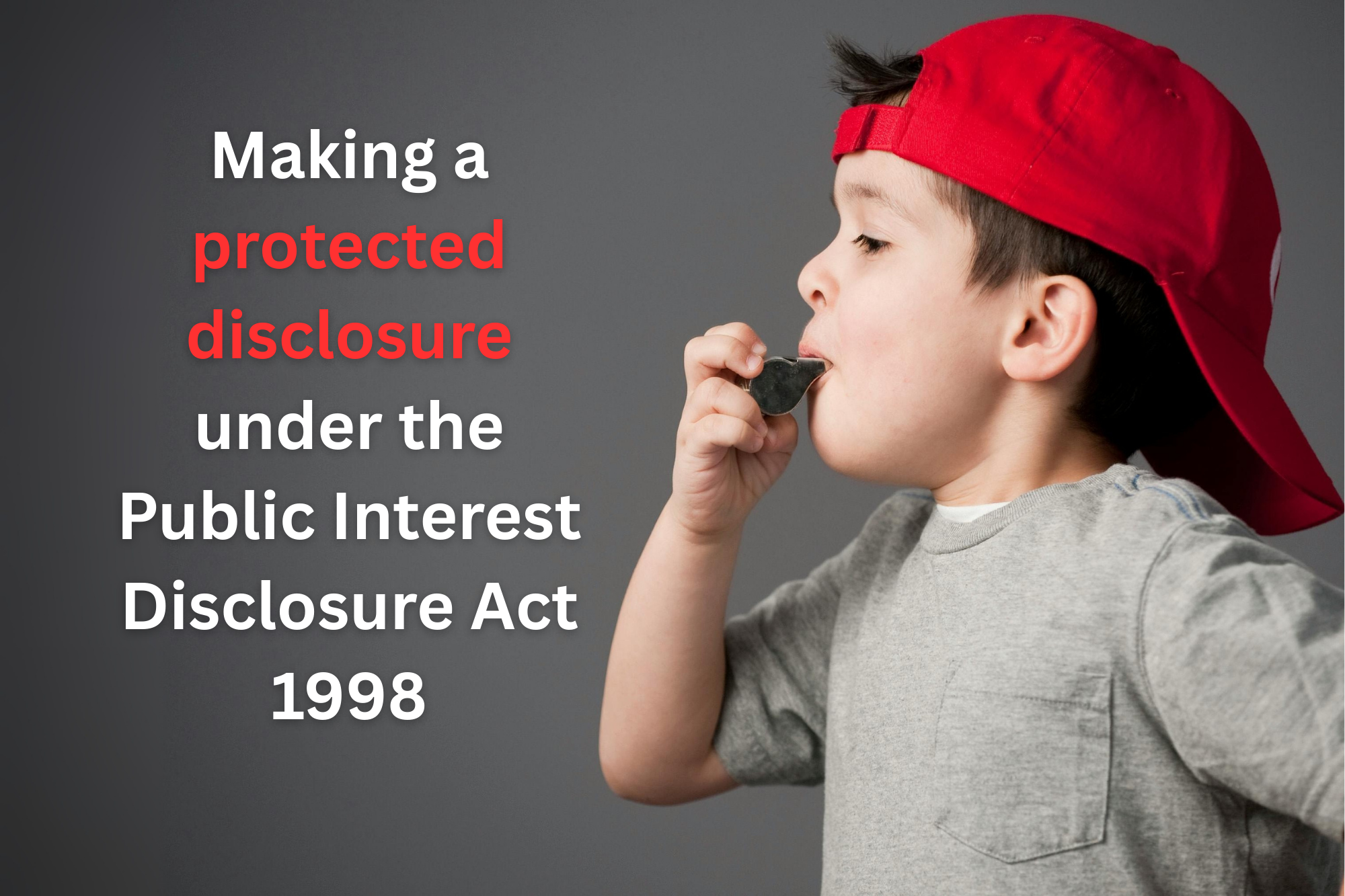
“The only thing necessary for the triumph of evil is for good people to do nothing.”
Discovering malpractice inside your workplace is a jolt. One moment you’re doing your job; the next, you realise harm is being caused — to customers, to colleagues, or to the public. Your conscience won’t let you ignore it, but your head is telling you: this could get messy, even dangerous, for me.
If you’re here, reading this, you may already be a whistleblower in the making. This article offers you a safe, structured way forward.
1. Pause. Protect Yourself First.
- Don’t confront. Resist the urge to “call out” what you’ve seen in the heat of the moment. That can tip off wrongdoers.
- Start a private log. Write down what you saw, when, who was involved, and how you became aware. Stick to facts, not feelings.
- Preserve, don’t plunder. Save documents or screenshots you lawfully access in the course of your work. Don’t break security rules — you want to protect yourself, not give them ammunition.
- Look after your wellbeing. Shock, stress, and paranoia are normal. Find a trusted ally outside of work — someone who can remind you that you’re not alone.
2. Define the Wrongdoing Clearly.
Ask yourself: Can I sum up the problem in five lines?
A good whistleblowing statement covers:
- What happened (e.g. false reporting, customer harm, cover-up).
- Who is affected (consumers, investors, public safety).
- When/where it took place.
- Why it matters (public interest, potential illegality).
- What’s at risk if it continues.
This clarity is your shield. Regulators, lawyers, and journalists all need that one-page clarity before they’ll act.
3. Choose Your Channel Wisely.
You have three main options — and you don’t have to pick just one.
- Internal “speak up” routes. If you believe your company has an independent whistleblowing officer, this can be fastest. Always request written acknowledgement, a case reference, and a clear timeline.
- Regulators. In financial services, that’s usually the FCA. In health, it might be the CQC. In charities, the Charity Commission. Regulators are duty-bound to log and assess.
- Journalists. Sometimes the only way to force change is to shine a light. A serious, credible journalist can protect your anonymity and amplify your story.
4. Expect Pushback. Prepare.
The sad truth: retaliation happens. That’s why you should:
- Keep a Retaliation Log (emails, meetings, exclusion, sudden criticism).
- Stay professional. Don’t give them “cause” to undermine you.
- Remind HR or managers that your disclosure is a protected disclosure in the public interest. That’s a legal phrase with real force.
5. What “Good” Looks Like.
A healthy response to whistleblowing includes:
- Immediate containment of harm.
- Independent investigation, not a cover-up.
- Evidence preserved and reviewed.
- Regular, documented updates to you.
- No retaliation — ideally written into your HR record.
If you see delay, minimisation, or silence, escalate — regulator and media are your allies when internal channels stall.
6. Your Next Move.
Being a whistleblower isn’t about vengeance. It’s about courage, conscience, and accountability. When you act with clarity, document your steps, and protect yourself, you level the playing field.
At Get SAFE, we equip ordinary people with tools to act as citizen investigators. You don’t have to do this alone — and you don’t have to hand your story to the system and hope for the best.
Remember: whistleblowing isn’t the end of your career; it’s the beginning of your role as a guardian of integrity.
If you’ve found something rotten at work, breathe. Document. Clarify. Then choose the safest, strongest channel to act.
👉 Want a structured whistleblower’s playbook? Download our free one-page checklist to guide your first 30 days after discovery.
🔑 What is a “Protected Disclosure”?
Under the Public Interest Disclosure Act 1998 (PIDA), certain types of whistleblowing disclosures are legally protected. This means that if you raise a concern in the right way, your employer must not subject you to detriment (harassment, dismissal, demotion, etc.) because of it.
✅ Conditions for a Protected Disclosure
Your report must meet five tests:
- A disclosure of information
- Not just vague allegations. You must set out facts — e.g., “On 3 Sept, I observed [x document] being altered to misrepresent client accounts.”
- Reasonable belief
- You don’t have to prove the wrongdoing, only that you reasonably believe it happened.
- Qualifying wrongdoing
- It must relate to one of these six categories:
- A criminal offence.
- Breach of legal obligation.
- Miscarriage of justice.
- Danger to health and safety.
- Environmental damage.
- Deliberate concealment of any of the above.
- It must relate to one of these six categories:
- Public interest test
- The issue must affect more than just you personally (e.g., widespread consumer harm, systemic mis-selling, fraud).
- Example: complaining about your own unpaid bonus isn’t protected, but exposing bonus manipulation across the firm is.
- Appropriate channel
- Disclose to your employer, a prescribed regulator (e.g. FCA, PRA, ICO), or in certain circumstances, the media.
- The further outside your firm you go, the stricter the requirements for protection.
🛡️ Why It Matters
- If your disclosure is protected, you gain legal rights:
- You cannot be dismissed for whistleblowing (automatic unfair dismissal).
- You cannot be subjected to detriment (e.g., bullying, sidelining).
- You can take your case to an employment tribunal if retaliation occurs.
🧾 How to Use the Phrase
When making a disclosure, explicitly state:
“I am making a protected disclosure under the Public Interest Disclosure Act 1998. I reasonably believe this information shows [fraud/breach/consumer harm/etc.], and that disclosure is in the public interest.”
This puts your employer/regulator on notice that legal safeguards apply. It’s like planting a flag — they now know you understand your rights.
⚠️ Limits of Protection
- Protection applies if you act honestly and reasonably, not maliciously.
- Leaking confidential info recklessly (esp. client data) could weaken your protection.
- To the media: protection applies only if internal and regulatory channels were not reasonably practical, or you reasonably believe they’d cover it up.
📌 Get SAFE Perspective
- Think of “protected disclosure” as your legal armour.
- Frame your whistleblowing in public-interest terms, not personal grievance.
- Always keep a copy of your disclosure statement — dated and timestamped.
- The phrase itself can deter retaliation, because managers know you can escalate to tribunal.
About Get SAFE
Get SAFE (Support After Financial Exploitation) was born from a simple truth: too many victims of financial abuse are left to suffer in silence.
We exist for people like Ian—for the ones who did everything right, only to be failed by the systems they trusted. We know that behind every vanished pension, every ignored complaint, and every stonewalled letter is a person—frightened, exhausted, and too often alone.
Get SAFE offers more than sympathy. We offer structure, support, and solidarity.
We provide a voice where there’s been silence, and clarity where there’s been confusion.
We stand beside those who have been exploited, not just to help them recover—but to help them reclaim their story and rebuild their future.
Because financial justice is not a luxury.
It’s a human right.
If you or someone you know has been affected by financial exploitation, we are here.
You are not alone.
Learn more at: Get SAFE (Support After Financial Exploitation).
 Academy of Life Planning