
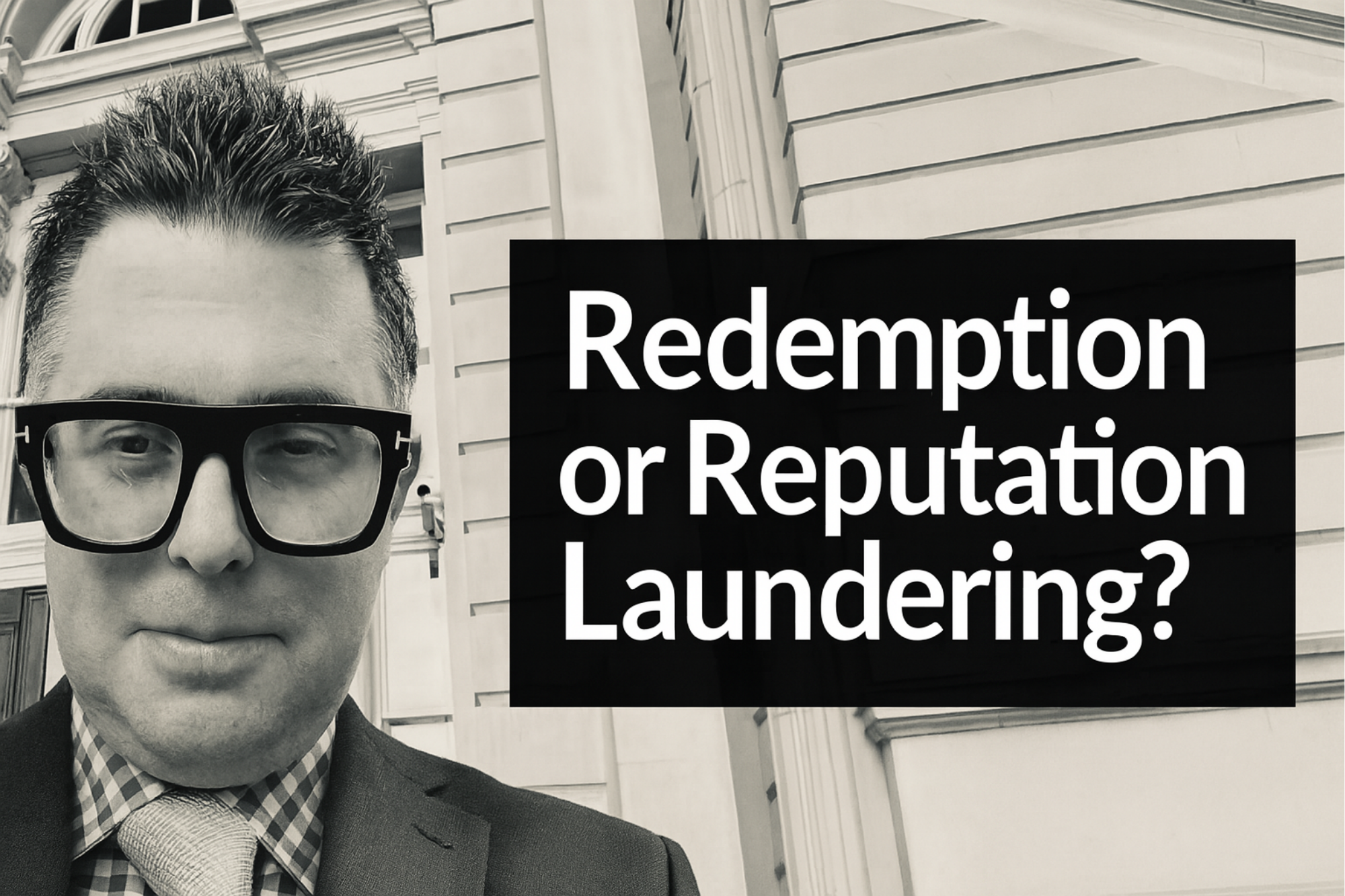
The Curious Case of Alexander Wood, ‘Reformed Fraudster’
“I stole £1.2m in 40 minutes, then blew it all in Harrods.”
That’s the chilling headline from a recent article in The Sunday Times, profiling Alexander Wood—a man who claims to have swindled over £50 million through authorised push payment (APP) scams before reinventing himself as an anti-fraud advisor to banks, the government, and even the BBC.
Wood’s crimes included targeting small businesses, impersonating bank staff, and using spoofed numbers to trick employees into emptying company accounts. One victim, “Sally,” unknowingly transferred her entire firm’s funds under his instruction. The emotional toll, Wood admits, “still haunts” him.
And yet, today he runs “Reform Courses,” advises national institutions, and has just launched a podcast with BBC Radio 4.
Something doesn’t sit right.
✨ From Fraud to Fame?
In theory, there’s merit in learning from former criminals—if it aids prevention, restitution, and accountability. But when that transition involves public platforms, commercial products, and no visible contribution to victim recovery, we must ask: is this truly redemption, or is it reputation laundering?
Has Alexander Wood:
- Offered meaningful restitution to his victims?
- Donated profits from his new ventures to victim support charities?
- Publicly supported campaigns for justice or redress?
Or is he now monetising his past—trading on notoriety, while the people he harmed remain overlooked?
🚨 Red Flags in the Narrative
Wood’s story fits a well-worn arc of carceral redemption—where a convicted individual, post-prison, becomes the “expert” in the very system they once gamed. It’s often compelling. But it’s also ripe for exploitation.
There are linguistic markers worth noting:
- Emotive framing (“The harm I caused still haunts me”) earns sympathy while elevating his unique ‘expertise’.
- Narrative control keeps him centre-stage, not just as the problem, but as the solution.
- Performative remorse becomes a marketing asset, especially when tied to consulting services or media content.
This is not to say people cannot change. But public redemption without public restitution risks turning justice into spectacle—and victims into footnotes.
🤝 Real Reform Starts with the Victims
If Mr Wood is truly reformed, he should be the loudest advocate for those he harmed. He should be:
- Campaigning for tougher sentences and better support for survivors.
- Funding charities that help rebuild lives ruined by fraud.
- Using his platform to give voice to victims, not just his own journey.
But none of this is apparent from his Reform Courses website or BBC podcast.
Instead, we see a trend all too familiar: crime as personal branding.
📣 Institutions Must Do Better
Law enforcement, banks, broadcasters—if they are paying, promoting, or partnering with individuals like Alexander Wood, they have a duty to conduct rigorous due diligence. That includes:
- Consulting victim-led groups.
- Disclosing remuneration and impact.
- Ensuring platforming does not retraumatise survivors.
Education must never come at the cost of ethics.
💡 A Final Thought
Fraud is not a victimless crime. It destroys lives, businesses, and trust. If we are to build a society where justice means more than rehabilitation of the perpetrator, we must start by prioritising truth, transparency, and the needs of those left behind.
If Alexander Wood is genuine, he should welcome scrutiny.
If not, we must ask: who’s really being conned now?
✉️ If you are a fraud survivor or work in financial justice and want to share your views on this issue, feel free to get in touch.
🔗 http://www.aolp.co.uk | @RatBaggery | steve.conley@aolp.co.uk
About Get SAFE
Get SAFE (Support After Financial Exploitation) was born from a simple truth: too many victims of financial abuse are left to suffer in silence.
We exist for people like Ian—for the ones who did everything right, only to be failed by the systems they trusted. We know that behind every vanished pension, every ignored complaint, and every stonewalled letter is a person—frightened, exhausted, and too often alone.
Get SAFE offers more than sympathy. We offer structure, support, and solidarity.
We provide a voice where there’s been silence, and clarity where there’s been confusion.
We stand beside those who have been exploited, not just to help them recover—but to help them reclaim their story and rebuild their future.
Because financial justice is not a luxury.
It’s a human right.
If you or someone you know has been affected by financial exploitation, we are here.
You are not alone.
Learn more at: Get SAFE (Support After Financial Exploitation).
 Academy of Life Planning
One thought on “🕵️♂️ Redemption or Reputation Laundering?”