
By Steve Conley | Academy of Life Planning
A quiet industrial unit on Holme Lane, Bradford became the unlikely stage for a modern morality tale this week—one that exposes not only the hidden costs of cryptocurrency hype, but the systemic values that continue to distort our financial reality.
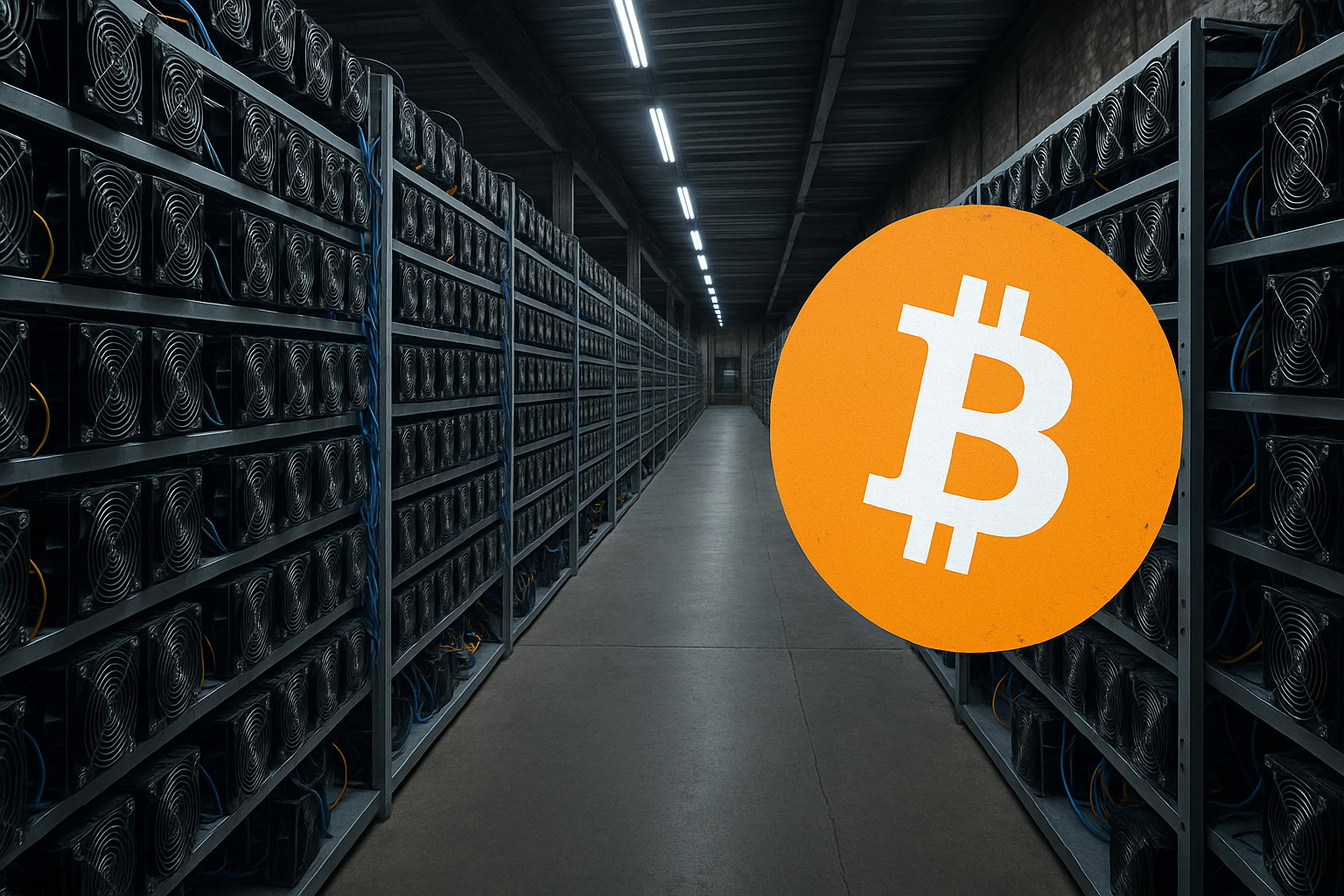
When police entered the site, they found rows of high-powered computer rigs—a so-called “Bitcoin factory”—mining cryptocurrency. Not unusual in itself. But the real twist? The electricity powering the operation had been unlawfully diverted. An offence of illegal abstraction of electricity is now under investigation.
And that gets to the heart of the matter.
A recent incident in Bradford reported on the BBC has brought attention to the the UK cryptocurrency mining scene. On May 21, 2025, West Yorkshire Police uncovered an illegal Bitcoin mining operation at an industrial premises on Holme Lane, Holme Wood. The operation involved several computer terminals mining cryptocurrency using electricity that had been unlawfully diverted from the grid. This unauthorised use of electricity is a criminal offense, and investigations are ongoing .
While cryptocurrency mining itself is legal in the UK, this case highlights the importance of adhering to legal and ethical standards, particularly concerning energy consumption. Mining operations are energy-intensive, and unauthorised access to power sources not only constitutes theft but also poses safety risks.
If you’re considering exploring cryptocurrency mining or wish to understand its implications within the financial planning landscape, it’s crucial to approach it responsibly. This includes ensuring compliance with local regulations, securing legitimate energy sources, and considering the environmental impact.
What Is Bitcoin Mining, Really?
To the uninitiated, the term “mining” sounds benign—like panning for gold in a digital river. The truth is much more obscure.
Mining Bitcoin means running computers at full throttle to solve mathematical puzzles. These aren’t problems that serve society. They’re designed purely to make the system artificially hard to crack. The reward? A fixed payout in new bitcoins—currently 3.125 BTC per block, following the most recent halving in April 2024. That’s over £200,000 at today’s exchange rate.
But here’s the catch: the process requires immense computing power and, more critically, energy. Electricity bills run sky-high. And so, in Bradford, someone allegedly decided to bypass the meter altogether.
A Broken Investment Model?
This incident raises bigger questions. If Bitcoin must be “mined” to create value—and that mining increasingly relies on criminal or exploitative activity—is this truly a sound investment?
One might argue, as many do, that Bitcoin is the “digital gold” of our era. It has a capped supply (21 million coins), and roughly 94.5% have already been mined. It’s scarce. It’s decentralised. But what many investors fail to see is that the value is not created—it’s transferred.
Early adopters acquired Bitcoin at pennies. Today, it trades above £70,000. That price is not based on productivity, dividends, or real-world utility. It’s based on belief—and the hope that someone will come along later, willing to pay even more.
That’s not an investment. That’s a speculative transfer of wealth from the many to the few.
Winners, Losers, and the Greater Fool
The truth is simple but sobering: for one person to become a Bitcoin billionaire, many others must lose. That wealth doesn’t emerge from added value—it comes from others buying at a high price. This is often called the “greater fool” theory: you profit if someone is willing to be the next fool.
Unlike a business that builds goods or employs people, or a home that offers shelter and rental income, Bitcoin produces nothing. It may be a useful experiment in decentralised trust—but it doesn’t create tangible value.
A Scam in All But Name?
Bitcoin isn’t a Ponzi scheme in the legal sense. It promises no guaranteed returns. It’s open-source and decentralised. People enter voluntarily.
But morally? Structurally? It exhibits all the symptoms of a system that benefits the privileged and penalises the hopeful. It appeals to those desperate to escape inflation, injustice, or exclusion—but offers no safety net, no regulation, and often, no redemption.
As I said in my own notes: “Seems like a scam to me. It is just made up. Early adopters got rich. Now it’s a mug’s game. The back end of a Ponzi. Where it has no value.”
A Teachable Moment
At the Academy of Life Planning, we believe in empowering people to build real, sustainable wealth—not speculative illusions. We support ethical innovation, but not at the cost of integrity or societal wellbeing.
This event in Bradford is a warning: don’t confuse digital noise for value. Don’t confuse scarcity with substance. And never forget that real wealth comes from contribution, not complexity.
Want to understand what truly adds value to your life and finances?
Explore human capital strategies that empower you to create, contribute, and thrive—without chasing illusions.
Join the movement at the Academy of Life Planning.
Q&A: Bitcoin Mining: Scam or Innovation?
A Deep Dive Q&A Inspired by the Bradford “Bitcoin Factory” Raid.
By Steve Conley | Academy of Life Planning
Q1: What is Bitcoin mining?
A: Bitcoin mining is the process of verifying and recording transactions on the Bitcoin network using powerful computers. These machines run intensive calculations to solve complex cryptographic puzzles. The first miner to find a correct solution earns the right to add a new block of transactions to the blockchain—a public ledger of all Bitcoin transactions—and receives a reward in newly minted Bitcoin, plus transaction fees.
This process is essential to the functioning of Bitcoin. It decentralises the validation of transactions (no bank or central authority is involved) and ensures the integrity of the network. However, it’s also extremely energy-intensive—requiring vast amounts of electricity and specialised hardware.
In Bradford, this was precisely the issue: mining equipment was discovered at an industrial premises, powered by illegally diverted electricity, underscoring just how energy-hungry and potentially unethical these operations can become.
Q2: How does running computer calculations actually earn you Bitcoin?
A: The process is based on solving a mathematical problem—a kind of digital guessing game. Here’s how it works:
- Miners compete to find a number (called a “nonce”) which, when combined with the current block’s data and passed through a hash function (a digital fingerprint), produces a result that starts with a certain number of zeroes.
- This hash must meet very strict criteria to be valid. It’s not difficult math, but it’s computationally intensive—requiring trillions of guesses per second.
- The first miner to find the correct hash earns the right to add the new block to the blockchain and receives a reward. Currently, that reward is 6.25 BTC per block (worth over £400,000 at today’s exchange rate), plus transaction fees from users.
The difficulty is deliberately high to prevent too many coins from being released too quickly—and to maintain the scarcity that underpins Bitcoin’s value. But this design creates a race that rewards raw computing power and cheap electricity, which in turn incentivises cost-cutting, as we saw in Bradford.
Q3: Doesn’t mining undermine the idea of Bitcoin as a sound investment?
A: That’s a fair and pressing question.
Bitcoin is often marketed as a revolutionary investment—a digital asset immune to inflation and corruption. But when you examine how new bitcoins are actually created, contradictions emerge.
Mining is expensive, energy-consuming, and highly competitive. Rewards go to those with the most computing power and cheapest energy—not necessarily those adding value. And when miners cut corners—by stealing electricity, for example—it raises ethical concerns about the entire ecosystem.
Moreover, the return on investment is speculative. Miners earn coins with no intrinsic value other than what others are willing to pay. If prices fall or rewards halve (as they do every four years), mining can become unprofitable. All of this makes Bitcoin feel less like a stable investment and more like a high-stakes gamble with environmental and legal risks.
Q4: If new blocks are constantly created through mining, how is Bitcoin still limited to 21 million coins?
A: Excellent point—and one that trips up many people.
Yes, mining creates new bitcoins—but it does so on a predetermined schedule. The total supply of Bitcoin is capped at 21 million coins, hard-coded into the protocol by its creator, Satoshi Nakamoto.
Here’s how it works:
- When Bitcoin launched in 2009, miners earned 50 BTC per block.
- Every four years, this reward halves in an event known as a “halving.”
- In 2012, it dropped to 25 BTC, then 12.5 BTC in 2016, and currently (since 2020) it stands at 6.25 BTC.
- The next halving, expected in 2028, will reduce it to 3.125 BTC.
This halving continues until around the year 2140, at which point the final fraction of a bitcoin will be mined, and no more will ever be created. This gradual reduction enforces scarcity, but also ensures that mining gets progressively less rewarding, pushing out smaller players and concentrating rewards in fewer hands.
Q4a: Who’s Satoshi Nakamoto?
Satoshi Nakamoto is the pseudonymous creator of Bitcoin, the world’s first decentralized cryptocurrency. In October 2008, Nakamoto published the white paper “Bitcoin: A Peer-to-Peer Electronic Cash System”, outlining a revolutionary system for digital transactions that eliminated the need for central authorities. This innovation combined cryptographic principles with a decentralised ledger, known as the blockchain, to solve the longstanding problem of double-spending in digital currencies .
On January 3, 2009, Nakamoto mined the first block of the Bitcoin blockchain, known as the “genesis block.” Embedded in this block was the message: “The Times 03/Jan/2009 Chancellor on brink of second bailout for banks,” referencing a headline from The Times newspaper. This has been interpreted as both a timestamp and a commentary on the instability of the traditional banking system.
Nakamoto remained active in the development of Bitcoin until December 2010, after which they gradually withdrew from public involvement. Control of the Bitcoin code repository and network alert key was handed over to developer Gavin Andresen and other members of the Bitcoin community.
The true identity of Satoshi Nakamoto remains unknown. While the name suggests Japanese origin, linguistic analyses of Nakamoto’s writings indicate fluency in British English, leading to speculation that the individual or group may be from the UK or another Commonwealth country. Various individuals have been proposed as potential candidates, including computer scientists and cryptographers, but none have been definitively proven to be Nakamoto.
It is estimated that Nakamoto mined approximately 1.1 million bitcoins in the early days of the network. At current market values, this would place Nakamoto among the wealthiest individuals globally. However, these bitcoins have remained untouched, further deepening the mystery surrounding Nakamoto’s identity and intentions.
Nakamoto’s creation has had a profound impact on the financial world, sparking the development of thousands of cryptocurrencies and inspiring a movement towards decentralised finance. Despite—or perhaps because of—their anonymity, Satoshi Nakamoto has become a symbol of innovation and disruption in the digital age.
For a more in-depth exploration of Satoshi Nakamoto’s identity and the origins of Bitcoin, you might find this documentary insightful.
Q5: How many Bitcoins have been mined so far?
A: As of May 24, 2025, approximately 19.83 million Bitcoins have been mined—around 94.5% of the total supply. That leaves fewer than 1.2 million still to be mined over the next 115 years.
However, not all of these coins are accessible. Estimates suggest 1.8 to 2.9 million Bitcoins may be permanently lost due to forgotten passwords, lost hard drives, or inaccessible wallets. These coins are effectively out of circulation, further increasing scarcity.
So while the fixed supply narrative holds, the real, usable supply may be far lower—compounding the price inflation and speculative behaviour among buyers hoping to own a slice of digital history.
Q6: Doesn’t this mean early Bitcoin buyers got rich at the expense of everyone else?
A: Yes—in many ways, that’s exactly what’s happened.
Bitcoin’s model rewards early adopters exponentially. People who bought Bitcoin in its infancy—when it cost pennies—have made millions or billions. They often now dominate public discourse, investments, and mining infrastructure.
Latecomers, on the other hand, must pay steep prices to enter the market. And with fewer coins available and lower block rewards, the odds of meaningful return diminish over time. For many, this has meant buying in high and selling low—often driven by media hype and fear of missing out.
This wealth transfer dynamic is concerning. It’s not value creation—it’s value extraction, where new participants fund the gains of those who came before.
See: Extent of Crypto Scams and Losses Among UK Retail Investors.
Q7: Does Bitcoin offer any long-term utility?
A: It depends on how you define “utility.”
Yes, it offers some functional use-cases:
- Store of value: In inflation-prone countries like Argentina or Venezuela, Bitcoin is used as a hedge against local currency collapse.
- Decentralised finance: It enables money to exist without banks or governments.
- Censorship resistance: It can be sent across borders or used in restrictive regimes where traditional finance is inaccessible.
But beyond that, its utility is limited:
- It’s too slow and expensive for daily transactions.
- It offers no productive output (like a business or a farm).
- It creates no jobs, no infrastructure, and no tangible goods.
Its primary function today is speculative—a hedge, a protest, or a gamble, depending on your perspective.
Q8: Is Bitcoin a scam?
A: Technically, no—it’s not a scam or a Ponzi scheme in the legal sense.
It doesn’t promise guaranteed returns. It’s open-source, decentralised, and transparent. Nobody is required to buy in.
But morally and structurally? That’s debatable.
It operates in a way that resembles a scam:
- Early players profit when late players buy in.
- Wealth is transferred, not created.
- Much of the promotional ecosystem (influencers, exchanges, evangelists) thrives on hype and fear of missing out (FOMO).
“It seems like a scam to me. It is just made up. Early adopters got rich. Now it’s a mug’s game. The back end of a Ponzi. Where it has no value.”
Q9: So if one person becomes a billionaire from Bitcoin, are there many losers?
A: Yes—and that’s the dark side of this financial experiment.
For every big winner, there must be many who lose. Bitcoin wealth doesn’t emerge from enterprise or invention—it comes from others buying at a higher price. This is the “greater fool” theory: you profit only if someone else is willing to be the next fool.
In contrast, real economic value is created when businesses produce goods, provide services, or generate employment. Bitcoin does none of these things—it simply reassigns capital based on speculation and scarcity.
Q10: Is this simply a mechanism to extract wealth from future generations?
A: In many ways, yes—Bitcoin and similar speculative assets can function as a mechanism for intergenerational wealth extraction. Here’s why:
- Early adopters accumulate cheap assets and drive demand through hype and scarcity.
- Newcomers pay exponentially more for the same asset, hoping it will continue to rise.
- No intrinsic value is created—wealth is simply transferred from those buying late to those cashing out early.
- As younger generations enter the market under financial pressure, they become the “greater fools” sustaining the model.
It’s digital scarcity masquerading as innovation, with a moral sleight of hand. Without productive output or broad societal value, it risks becoming a zero-sum game, where future financial insecurity funds past windfalls.
The question we must ask isn’t just “can we profit from it?” but “should we build on it?” If the answer doesn’t include sustainability, equity, or contribution—it may be time to rethink the foundation.
Final Thoughts:
The Bitcoin factory uncovered in Bradford is not just a crime scene—it’s a metaphor.
It reveals the extremes to which people will go to extract value from a system that promises riches but delivers risk. At the Academy of Life Planning, we teach a different model: one based on human capital, ethical wealth, and purpose-driven planning.
If you want real value, build something. Create. Serve. Educate. That’s where true wealth—and true freedom—reside.
Your Money or Your Life
Unmask the highway robbers – Enjoy wealth in every area of your life!

By Steve Conley. Available on Amazon. Visit www.steve.conley.co.uk to find out more.
 Academy of Life Planning
Steve, so much of this is incorrect. I’m going to debate you, but I don’t believe you paint a fair picture of Bitcoin here at all. And some of this is just factually incorrect. There was a halving in April 2024, and as of 13 months ago we are already in epoch five and only 3.125 Bitcoin are produced with each new block.
Thanks, Dan—I appreciate you taking the time to challenge the piece, and you’re absolutely right to point out the halving. You’re correct: we’re already in epoch five, and the current block reward is indeed 3.125 BTC, following the April 2024 halving. I’ll update that detail—thanks for the heads-up.
That said, while I welcome healthy debate, I’d suggest the broader picture I’m painting isn’t so much about Bitcoin’s technical accuracy, but about its moral and economic architecture—and how it’s experienced by the public. My concern is less with block timings and more with what Bitcoin represents in practice: a speculative, zero-sum game where early adopters have profited enormously, often at the expense of latecomers.
I’m always open to dialogue, though—so feel free to share your perspective. The more open and fact-based the conversation, the better for everyone.
Not going to debate you…**
Perceiving Bitcoin Through The Energy of Money
In The Energy of Money, Maria Nemeth invites us to view money as a neutral form of life energy—something we can align with our purpose, clarity, and integrity to manifest meaningful results in the physical world.
When viewed through this lens, Bitcoin presents a paradox.
On one hand, Bitcoin is hailed as revolutionary—decentralised, borderless, scarce. It promises liberation from corrupted systems and inflationary currencies. To some, it represents a new form of energetic sovereignty: a financial system governed not by banks or states, but by mathematical consensus.
But on the other hand, Bitcoin—like any speculative asset—can pull us out of alignment with our true values. When we pursue it out of fear, greed, or scarcity, it becomes less a tool of purpose and more a distraction of the survival self. It consumes attention, time, and energy—often without creating anything real or of service.
In Nemeth’s terms, the “trouble at the border” arises when we try to move life energy (money) from the metaphysical realm (vision, purpose, dreams) into the physical realm (savings, spending, investing) without clarity or intention. Bitcoin tempts us to believe that wealth can come without contribution, reward without work, gain without growth.
If we don’t consciously use Bitcoin as a means to manifest our values—justice, freedom, sustainability—then it risks becoming an energetic trap: a vortex of speculation that drains more than it gives.
In short:
Seeing Bitcoin Through The Soul of Money
In The Soul of Money, Lynne Twist teaches us that money is not just a means of exchange—it’s a mirror. It reflects our values, our fears, and our deepest assumptions about worth, power, and possibility.
From this perspective, Bitcoin is not inherently good or bad—but it reveals much about the consciousness with which we relate to wealth.
At its best, Bitcoin is seen as a tool of financial autonomy—a challenge to extractive systems that hoard power. It speaks to our longing for fairness, transparency, and decentralisation. It arises from the same hunger Lynne Twist identifies: the yearning to reclaim agency in a world dominated by scarcity narratives.
But at its worst, Bitcoin becomes a symbol of the “myth of more.”
The idea that if we just acquire enough—be it Bitcoin, pounds, or prestige—we will finally feel secure, successful, significant. This myth drives us into comparison, anxiety, and speculation. It disconnects us from the soul of money and seduces us into a game where value is based not on contribution, but on accumulation.
In the language of The Soul of Money:
Ultimately, the question isn’t “Is Bitcoin good or bad?”
The question is: Does our relationship with it deepen our integrity, align with our values, and serve the world we wish to create?
Bitcoin Through the Lens of Your Money or Your Life
In Your Money or Your Life, we confront a simple truth: most modern financial systems have been hijacked by extractive powers—the highway robbers—who siphon wealth from the many to enrich the few. They disguise theft as investment, compliance as security, and dependency as planning.
Viewed this way, Bitcoin is not immune from scrutiny.
It may promise decentralisation, but it’s often just another theatre of financial illusion—where scarcity is engineered, and wealth is transferred rather than created.
Bitcoin appears to challenge the system, but in many cases it simply replicates the same power dynamics in digital form:
Rather than creating true wealth—in relationships, purpose, contribution—it creates phantom riches. Numbers on a screen. Digital gold. But without grounding in sufficiency, generosity, or meaning.
In my model, I define wealth across every area of life:
Not just money, but time, energy, freedom, community, wisdom, and impact.
Bitcoin may have a role in a diversified financial strategy, but only when used with consciousness and care. When it becomes a pursuit of status, escape, or easy gain, it pulls us back into the very trap we seek to escape: a system where worth is measured in accumulation, not contribution.
So the question becomes: