
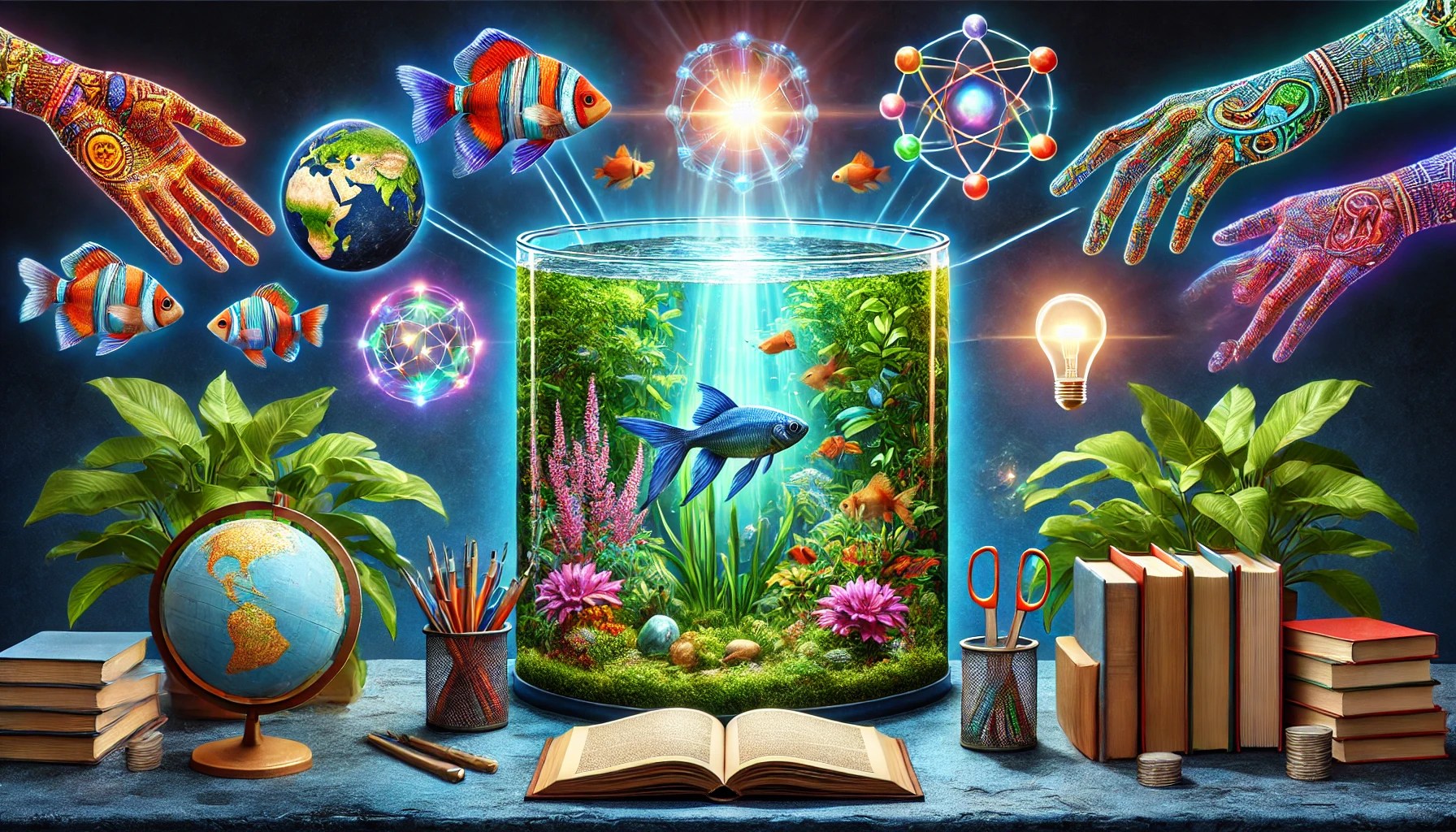
When we think of human capital, education often takes centre stage. But human capital is far more complex and multifaceted. To truly understand its potential for transforming lives and reducing inequality, we need to expand our definition and adopt a holistic approach. Education alone, like maintaining the water temperature in a tropical fish tank, won’t suffice. Every element in the environment must align for the ecosystem—and the individual—to thrive.
The Four Pillars of Human Capital
- Mental Human Capital
This encompasses education, yes, but also a positive mindset, freedom of thought, and the absence of coercive parental, community, or cultural constraints. Empowering individuals to think critically and express themselves freely forms the bedrock of innovation and personal growth. - Physical Human Capital
Skills, economic opportunities linked to location, and access to essential resources play a critical role. Without these, even the best education may not translate into improved living standards. - Social Human Capital
Supportive relationships, networks, and communities enhance resilience and provide a foundation for success. Family, mentors, and community ties can open doors and sustain progress. - Spiritual Capital
The often-overlooked aspect of human capital focuses on aligning one’s values with a purpose-driven life. When people live with a sense of significance and contribution to the betterment of people and the planet, they unlock unparalleled potential.
A Holistic Approach: Lessons from Tropical Fish
Think of a tropical fish tank. Adjusting only one variable, like water temperature, won’t ensure the fish’s survival. You also need to maintain water quality, pH levels, oxygenation, and lighting. Similarly, addressing only one dimension of human capital, such as education, is insufficient to achieve income equality or eradicate poverty. Only by tackling all factors together can we create an environment where individuals and communities can thrive.
The Case for a Systems Approach to Poverty
Research shows that while strides have been made in reducing educational inequality globally, income inequality remains stubbornly persistent. This disconnect highlights the need to go beyond education. Skill-biased technological change, lack of access to resources, and unequal distribution of opportunities can offset the benefits of educational gains. A systems approach that integrates mental, physical, social, and spiritual human capital is essential for sustainable progress.
A Call to Action
Eliminating poverty and reducing inequality requires a collective effort. Policymakers, educators, communities, and individuals must embrace the full spectrum of human capital. This means:
- Fostering inclusive education systems that go beyond rote learning to build critical thinking and emotional resilience.
- Creating economic opportunities that provide equitable access to resources and fair wages.
- Strengthening social networks that act as safety nets and springboards for progress.
- Inspiring purpose-driven living, where individuals contribute meaningfully to society and the environment.
The fish thrive when their tank is balanced. Humanity thrives when every aspect of human capital is nurtured. By taking a holistic approach, we can unlock human potential and pave the way for a fairer, more prosperous world.
 Academy of Life Planning