
Not everyone who loses money loses their life.
But some do.
Not because of the money.
Because they cannot find a way to live as the person they have become.
The Loss No One Sees
When people experience financial harm—especially through betrayal, mis-selling, or institutional failure—the visible loss is measured in pounds.
But beneath that sits something far more profound.
They lose:
- Their sense of safety
- Their trust in systems
- Their belief in fairness
- Their identity as someone capable and in control
- The future they had quietly built in their mind
This is not just financial loss.
It is identity disruption.
And for many, it is THIS—not the money—that becomes unbearable.
Why Justice Becomes Everything
From the outside, it can look like obsession.
Years spent pursuing complaints.
Endless correspondence.
Relentless attempts to “set the record straight.”
But underneath, something deeper is happening.
This is not simply a search for compensation.
It is a search for restoration.
“If I can prove this was wrong…
then I can become who I was again.”
This is what psychologists describe as moral injury—a rupture between what someone believed the world to be, and what they have experienced.
When that rupture is not acknowledged or repaired, the mind cannot settle.
It keeps searching.
Replaying.
Pushing forward.
Not for closure.
But for identity.
The Loop That Traps People
Over time, many people fall into a pattern:
- Revisit the event
- Seek validation
- Take action
- Meet resistance or denial
- Feel re-traumatised
- Try again
This becomes a loop.
And gradually, life narrows.
Relationships weaken.
Energy drains.
The future is postponed.
Everything becomes conditional:
“I can’t move on until this is resolved.”
When Justice Doesn’t Come
This is the moment few are prepared for.
Because sometimes—despite best efforts—justice does not arrive.
Not quickly.
Not fully.
Sometimes not at all.
And when that happens, the internal world can fracture.
People are left facing a question they were never ready to answer:
“If I can’t get my life back… how do I live this one?”
For some, this is where despair deepens.
Not because they want to give up.
But because they cannot yet see a way forward that feels like them.
A Lesson in Survival: Simon Weston
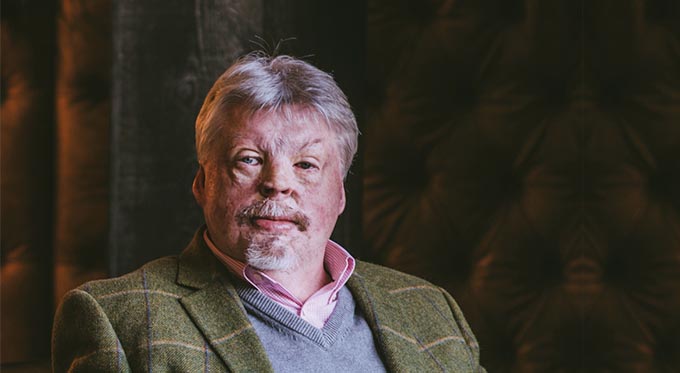
“You either get bitter, or you get better. It’s that simple.” – Simon Weston
After severe injuries during the Falklands War, Simon Weston faced a reality that could not be reversed.
The person he had been—physically and socially—no longer existed.
He later described a turning point in his recovery:
He realised he had to let the old version of himself go.
Not because it didn’t matter.
But because holding onto it was preventing him from living.
This was not “moving on.”
It was something far more difficult:
Building a new identity from the ground up.
The Event That Changed Everything
Simon Weston’s story is one of the most powerful real-world examples of identity transformation under extreme adversity—and it aligns deeply with what you’re building around human capital and personal reinvention.
In 1982, during the Falklands War, Weston was serving aboard the HMS Sir Galahad when it was attacked by Argentine aircraft.
- He suffered 46% burns, including severe facial injuries
- Many of his fellow soldiers were killed
- He endured over 90 surgical operations
But the physical injuries were only part of the story.
The Psychological Turning Point: “Letting the Old Me Die”
What makes Weston’s journey so relevant is not just survival—it’s identity reconstruction.
After the attack, he faced a brutal internal reality:
- The person he was—physically, socially, and psychologically—no longer existed
- Holding onto that identity created suffering, anger, and despair
- He had to make a conscious shift
He has spoken openly about this process:
He realised he had to “kill off the old Simon Weston” in his mind
— not in a destructive way, but as a necessary step to survive emotionally
What that actually meant:
1. Letting go of comparison
The “before vs after” mindset became toxic.
He stopped measuring himself against his past identity.
2. Accepting reality without resignation
Acceptance wasn’t giving up—it was starting from truth.
3. Rebuilding identity from values, not appearance
He shifted from:
- “Who I was” → “Who I can become now”
4. Choosing purpose over pain
He eventually became:
- A motivational speaker
- A charity campaigner
- A public figure advocating resilience and perspective
The Deeper Insight (Relevant to Your Work)
Weston’s transformation reflects a principle you often articulate, even if in a different language:
Identity is not fixed — it’s reconstructed through conscious choice
What he went through is an extreme version of what many people face more quietly:
- Career endings
- Financial collapse
- Betrayal or exploitation
- Loss of role or status
In each case, the challenge is similar:
The old identity no longer works… but the new one hasn’t been built yet.
That “in-between state” is where most people struggle.
Why His Story Matters Now
In an age of AI, disruption, and collapsing traditional roles, Weston’s lesson becomes highly relevant:
- Clinging to outdated identities (job titles, business models, status) creates suffering
- Reinvention requires conscious release before rebuilding
This maps closely to our GAME Plan cycle:
- Goals: redefine who you are becoming
- Actions: accept and act within new reality
- Means: build new capabilities and structures
- Execution: live into the new identity
A Grounded Takeaway
Weston didn’t “bounce back.”
He built forward.
And that required something many people resist:
Not improvement… but replacement of identity
The Bridge No One Talks About
Between the old life and the new one, there is a space.
It is uncertain.
Uncomfortable.
Often lonely.
This is the space where many people become stuck.
They are:
- No longer who they were
- Not yet who they can become
We can think of this as the bridge.
And crossing it requires something that is rarely discussed:
Not closure.
Not justice.
But permission to live without both.
Two Paths, Not One
One of the most helpful shifts is this:
To understand that there are two paths, not one.
The Justice Path (the Goliathon)
You may continue to pursue answers, accountability, or redress.
But it must be structured and contained:
- With clear boundaries
- Defined time and energy limits
- Support around decision-making
The Life Path (Rebuild & Thrive)
At the same time, you begin rebuilding:
- Your sense of agency
- Your daily structure
- Your skills and income
- Your relationships
- Your sense of meaning
These two paths can exist together.
You do not have to wait for justice to begin living again.
Rebuilding Starts Small
The first steps are rarely dramatic.
They are often quiet.
- Getting through the day with structure
- Completing a small task
- Learning something new
- Earning a small amount of income
- Helping someone else
These are not distractions.
They are the foundations of a new identity.
Each small action says:
“I am still here.
And I can still move forward.”
A Different Kind of Strength
There is a belief that strength means persistence at all costs.
But sometimes, strength looks like something else:
- Choosing not to destroy yourself in pursuit of being heard
- Protecting your energy when systems do not respond
- Allowing yourself to evolve, even when it feels unfair
This is not surrender.
It is self-preservation.
If You Are in This Place
If you are reading this and recognising yourself:
You are not broken.
You are not weak.
You are in a deeply human process of transition after something that should not have happened.
And there is something important to know:
You do not need to become who you were again.
That person mattered.
That life mattered.
What happened was real.
But your story is not finished.
The Work Ahead
At the Academy of Life Planning, we see this clearly.
Financial harm is rarely just about money.
It is about:
- Identity
- Agency
- Meaning
- Direction
And rebuilding those things is possible.
Not by going backwards.
But by moving forward—carefully, deliberately, and at your own pace.
A Final Thought
Justice matters.
Accountability matters.
But your life matters more.
You are allowed to continue.
You are allowed to rebuild.
You are allowed to become someone new.
And sometimes, the bravest step is not proving what was lost.
It is beginning to discover what is still possible.
“I realised I had two choices: I could spend the rest of my life feeling sorry for myself, or I could try to make something of the life I had left.” – Simon Weston
If this resonates, you are not alone.
And you do not have to cross the bridge by yourself.
Every year, thousands across the UK lose their savings, pensions, and peace of mind to corporate financial exploitation — and are left to face the aftermath alone.
Get SAFE (Support After Financial Exploitation) exists to change that.
We’re creating a national lifeline for victims — offering free emotional recovery, life-planning, and justice support through our Fellowship, Witnessing Service, and Citizen Investigator training.
We’re now raising £20,000 to:
Register Get SAFE as a Charity (CIO)
Build our website, CRM, and outreach platform
Fund our first year of free support and recovery programmes
Every £50 donation provides a bursary for one survivor — giving access to the tools, training, and community needed to rebuild life and pursue justice with confidence.
Your contribution doesn’t just fund a project — it fuels a movement.
Support the Crowdfunder today and help us rebuild lives and restore justice.
Join us at: http://www.aolp.info/getsafe
steve.conley@aolp.co.uk | +44 (0)7850 102070

 Academy of Life Planning