
Why Britain’s New Tax Era Could Unlock Human Capital Growth
“A nation can tax wealth and still grow — if it grows its people.”
— Steve Conley, Academy of Life Planning
⚖️ The Headlines Mislead
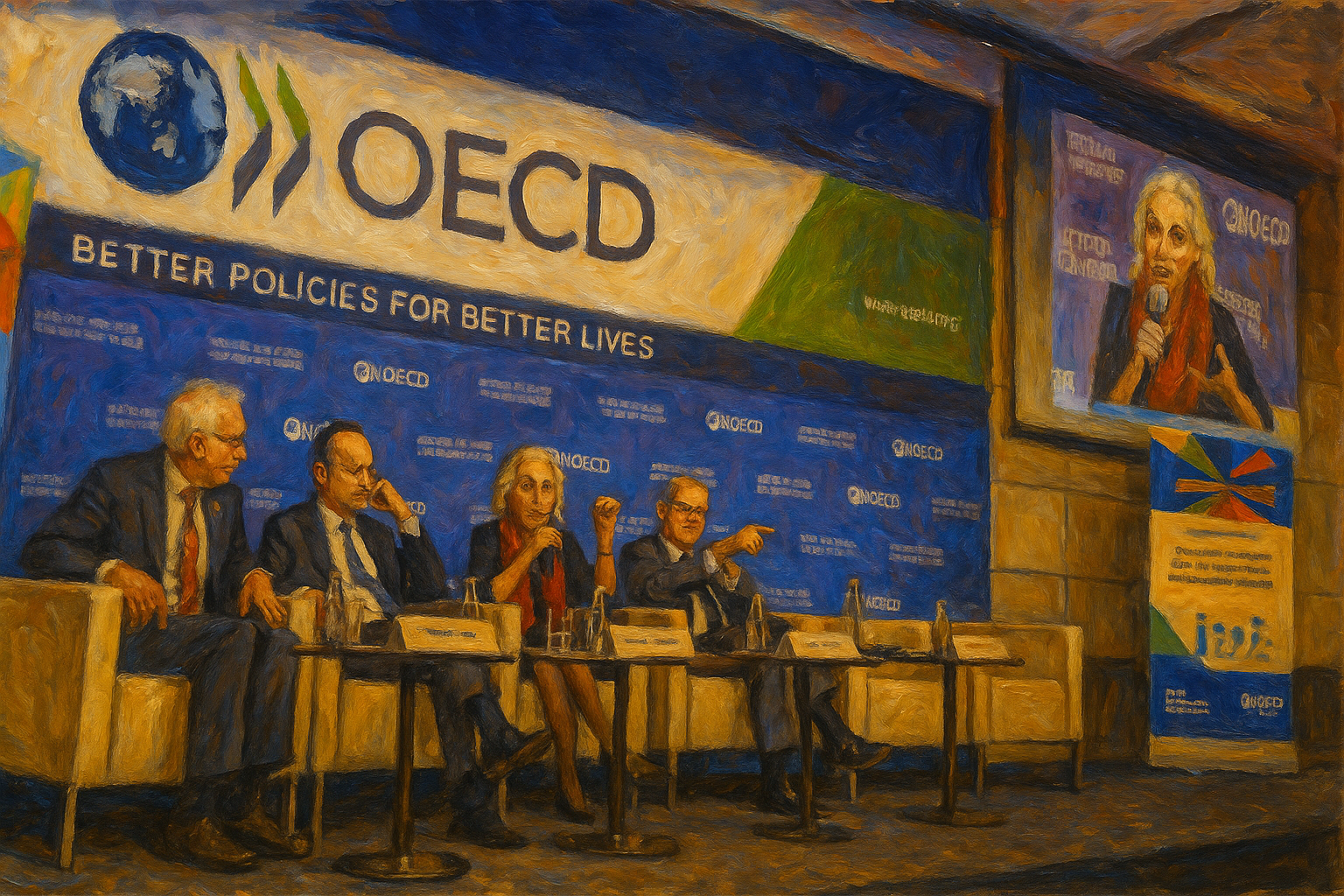
The OECD has warned that Rachel Reeves’s record tax rises will “constrain economic growth for years” and “deter saving.”
Their logic is familiar: higher taxes mean less disposable income, lower investment, and slower GDP.
But that assumes the old economic model still rules — the one that measures value in output, not in outcomes.
At the Academy of Life Planning, we see something different. Reeves’s Budget may squeeze financial capital, but it invests deeply in human capital — the real foundation of national wealth.
🧠 The Old Economy Measures Money.
The New Economy Measures Capability.
While the OECD looks at tax ratios, the 2025 Budget looks at human potential.
For the first time, Treasury analysis ties education, health, and equality directly to long-term productivity.
- £1.5 billion for the Youth Guarantee & Growth and Skills Levy — every young person can learn or earn.
- £50 billion for the NHS and 250 new Health Centres — treating wellbeing as economic infrastructure.
- Ending the two-child limit — freeing 450,000 children from poverty’s compounding trap.
These are not expenses. They are investments with social yield.
🔄 Two Stories, One Truth
| Dimension | OECD Lens | AoLP Lens |
|---|---|---|
| Wealth | Accumulated assets | Activated capability |
| Growth | Measured in GDP | Measured in wellbeing |
| Taxation | A drag on saving | A redistribution of opportunity |
| Outcome | Lower short-term output | Higher long-term resilience |
The OECD sees drag; AoLP sees direction.
Economic slowdown can be the pause before structural renewal — the recalibration of a tired system built on extraction toward one rooted in empowerment.
🧭 The GAME Plan at National Scale
The UK’s fiscal strategy now mirrors our own GAME Plan cycle:
- Goals: Health, education, fairness.
- Actions: Skills funding, community investment, welfare-to-work reform.
- Means: Tax reform and capability infrastructure.
- Execution: Long-term prosperity through empowered people.
GDP may flatten, but GNH — Gross National Happiness — has room to rise.
💡 From Fiscal Drag to Freedom Capital
Higher taxes may temporarily deter saving, but they also invite citizens to rethink what they save for.
When the return on human capital exceeds the return on cash, learning, wellbeing, and purpose become the best investments of all.
Financial planners who grasp this will move from selling products to cultivating potential — the essence of Holistic Wealth Planning.
🔮 Reframing the Narrative
The OECD is right — if you define “growth” by yesterday’s rules.
But by tomorrow’s standards, this Budget is the first to measure prosperity in people, not pounds.
Britain isn’t just tightening its belt.
It’s changing its diet — trading empty consumption for long-term nourishment.
🕊️ Closing Reflection
“The wealth of a nation is not measured by its gold or GDP,
but by the quality and creativity of its people.”
— Steve Conley, Academy of Life Planning
Budget 2025 may not please the markets, but it speaks the language of the new economy — one where growth is measured in capability, trust, and purpose.
The OECD calls it a constraint.
We call it a recalibration — the moment Britain begins to grow from the inside out.
Call to Action
If you feel called to build a values-led practice that plans for capabilities before capital, join us at the Academy of Life Planning.
Discover how the GAME Plan™ can help you redefine wealth — for yourself, your clients, and the world.
I’d love to hear your view.
What do you think your greatest human capital asset is today — and what would it take to leverage it to create a sustainable livelihood?
(If you’d prefer to talk privately, just message me. Many do.)
 Academy of Life Planning