
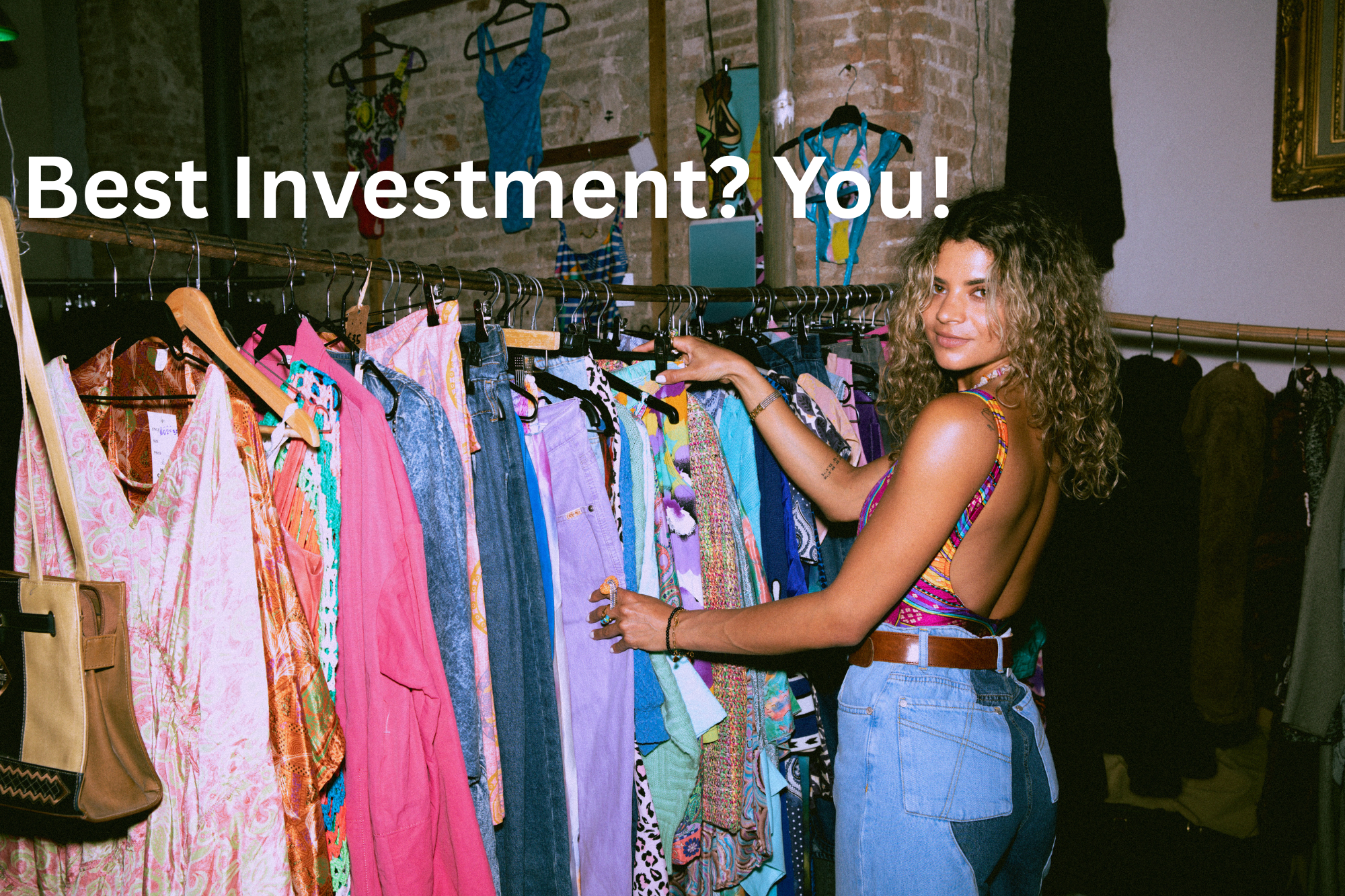
The case of Ella Coombs shows how non-intermediating planning unlocks real wealth creation.
Case Study Summary: Ella Coombs – The 20-Year-Old Entrepreneur Defying Convention
Source: The Telegraph, 8 August 2025
Ella Coombs, aged 20, works three jobs—including managing an RSPCA charity shop—and lives rent-free with her parents. She has earned nearly £10,000 pre-tax in 18 months through a growing side hustle selling second-hand clothes on platforms like Vinted, Depop, and eBay.
Her sales journey began with clearing out her own wardrobe and evolved into a small business sourcing stock from wholesalers. Ella’s dream is to open her own retail shop—not to get on the property ladder or build a pension pot.
She sets aside about £100/month when possible and has kept her business finances separate. While her boyfriend has encouraged her to invest, she prefers to keep her money accessible and avoid risk as she builds toward business ownership.
Banker Recommendations
(Telegraph interview with Laith Khalaf, AJ Bell; Shaz Bishop, RBC Brewin Dolphin)
The investment experts suggest a cautious, conventional path:
- Build an emergency fund: Aim for 3–6 months’ essential outgoings in an easy-access savings account.
- Use cash ISAs: Protect savings from tax, especially if rates are equal to standard accounts.
- Avoid Lifetime ISAs for now: Ella needs flexible access to funds; the Lifetime ISA is too restrictive.
- Contribute to a workplace pension: Take advantage of employer contributions and tax relief.
- Only consider investing after her savings base is strong: Particularly if her business goals are over five years away.
- Eventually explore investing to grow wealth: Gain knowledge, as investing can complement business skills.
Should she invest, or should she double down on her side hustle to build more income?
Here’s the holistic perspective I’d offer her, based on the principles in Stand and Deliver and the GAME Plan for Sovereign Living:
🔷 First, Plan Your Life, Not Just Your Money
Before deciding between investing and hustling harder, Ella needs to visualise her “favourite next chapter.” She wants to open her own shop—that’s the goal. That’s not a retirement dream or an abstract portfolio—it’s tangible, soul-led, and time-sensitive.
That immediately places her strategy in the productive cycle:
GOALS ➝ ACTIONS ➝ MEANS ➝ EXECUTION
Not: Money ➝ Then Decide What Life You Can Afford.
🌀 Ella’s Human Capital Is Her Greatest Asset
Ella already demonstrates the top ingredient in wealth creation: human capital—the ability to generate income from her skills, drive, and creativity.
From a GAME Plan lens:
- She’s already leveraging productive assets (her eye for fashion, sales platforms).
- She’s cultivating vitality assets (energy, relationships, self-belief).
- And she’s developing transformational assets (entrepreneurial mindset, resilience).
These are the real investments that pay exponential dividends when you’re young. Investing money into funds at 5–7% returns is good—but growing a business that could generate £10K–£50K/year or more in a few years? That’s the kind of Ikigai-aligned, soul-fed income that can create lasting autonomy.
“It is income that creates wealth. Savings act as a financial cushion.” – Stand and Deliver
💰 Investing vs Reinvesting in Herself
| Option | Return | Liquidity | Risk | Alignment |
|---|---|---|---|---|
| Stocks/ISAs | 5–7% annually | Low (medium-term) | Low-medium | Disconnected from purpose |
| Side Hustle Scaling | 30–300% ROI | High | Medium | High alignment with her business dreams |
| Learning/Tools | Infinite | Instant | Very low | Long-term impact multiplier |
If she has £500–£2,000 saved, she’d be better off using that to:
- Build inventory intelligently
- Develop an e-commerce site
- Pay for mentorship or business training
- Use AI tools like Notion or HapNav for planning
- Test marketing strategies or branding ideas
That’s investing in her own stock.
“You don’t need someone to do it for you. It would help if you had the tools to do it for yourself.” – Stand and Deliver
🔐 Liquidity Matters—And She’s Right to Be Cautious
Ella doesn’t want to lock her money away because:
- She’s working toward a near-term business launch.
- She values control and visibility over her finances.
- She’s a self-professed “worrier”—meaning psychological safety is as important as return.
That tells us she’s in Phase 1: Wealth Creation, not Phase 2: Wealth Preservation.
🛠 Recommendation: Build a Business Plan Before an Investment Portfolio
- Create a GAME Plan:
- What’s the vision for the shop?
- What are the startup costs?
- How much does she need to save over the next 12–24 months?
- Can she sell more without burning out?
- Use a Lifetime Cash Flow Forecast:
- Use HapNav to model her earnings, side hustle growth, and savings.
- Factor in her current £18K salary + £350 monthly + side hustle sales.
- Set a Savings Target:
- She doesn’t need to save “more”—she needs to save enough to fund that business. That number comes from planning, not guessing.
- Delay Investing Until the Business Is Self-Sustaining:
- Once she’s built a sustainable, scalable income stream that meets her empowerment needs (about £20–25K/year), then she can shift to building financial capital through passive investment.
🎯 Summary
“The banker will try to sell her savings plans. But she already has a wealth plan.”
Ella doesn’t need to “beat the market”—she is the market. Her enterprise is her investment vehicle. At 20, she’s better off being her own venture capitalist—backing herself, her vision, and her velocity.
If she follows the GAME Plan approach:
- Her side hustle becomes a soul hustle.
- Her savings become fuel, not fear.
- And her life becomes her most profitable investment.
This comparison is powerful—and revealing.
- pose-driven value creation (her side hustle), and
- Saving/investing in products manufactured by financial institutions.
This reveals their philosophical bias:
- Human capital (Ella’s skills and business) is risky.
- Financial capital (bank products) is safe and preferred.
But here’s the reality:
Ella’s business is the investment.
The side hustle is already producing returns far beyond any bank account—likely 100–300% annually vs 4–5% from savings.
💠 2. What They Get Right (Technically)
Let’s be fair: there are elements of solid advice in their comments.
✅ Emergency Fund:
Both suggest keeping 3–6 months of expenses in cash. This is fully aligned with a responsible GAME Plan. Liquidity is vital for confidence and resilience.
✅ Workplace Pension:
They rightly point out that free money from employer matching and tax relief is worth taking. Even in a sovereign model, strategic use of mainstream tools is allowed when it aligns with values.
✅ Accessible Accounts:
They understand Ella’s need for easy-access cash and avoid locking it in inflexible vehicles like the Lifetime ISA (which they correctly dismiss).
🧠 3. What They Miss Entirely
Here’s where their advice breaks down:
❌ No Vision-Led Planning
“Review your monthly income and spending…”
“Save into an ISA, and consider investing later…”
There’s no mention of goals, values, purpose, or human potential.
It’s a spreadsheet view of life, not a sacred journey.
Contrast this with the GAME Plan’s starting question:
“What’s your favourite next chapter?”
Ella’s not planning for vague future wealth—she’s building her livelihood now. Advising her to divert energy into low-return savings stalls momentum, saps confidence, and ignores her deeper calling.
❌ Recommending Investments Without a Business Plan
Their talk of “investments in future” or “skills overlap with business” is generic.
But here’s the truth:
Ella’s side hustle is an entrepreneurial learning lab. It’s giving her far more insight into risk, margins, markets, and customer psychology than passive investing ever could at this stage.
Instead of telling her to “learn investing,” a sovereign planner would help her build a business model, test cash flow forecasts, and model “what-if” scenarios in HapNav.
That’s investor mindset applied to life—not just stocks.
❌ Systemic Bias Toward Bank Products
Let’s be clear:
Both voices here come from organisations whose business model depends on assets under management.
Even when giving “neutral” advice, they are structurally biased to:
- Channel money into the system, not into people.
- Encourage savers, not creators.
- Optimise tax and yield within the current system, not question whether the system serves the client.
That’s why their entire strategy hinges on product suitability, not personal empowerment.
“Investments would be considered appropriate… if she can accept market fluctuations.”
(Yet not a word on business volatility, opportunity cost, or soul alignment.)
🌀 Why It’s So Different
Here’s the heart of it:
| GAME Plan Approach | Bankers’ Approach |
|---|---|
| Life before money | Money before life |
| Human capital first | Financial capital first |
| Empowerment, autonomy | Delegation, dependency |
| Reinvest in self and purpose | Invest in passive products |
| Plan whole-person well-being | Plan tax shelters and products |
| Vision-led, cyclical | Linear, extractive |
The GAME Plan isn’t just different advice—
it’s a different paradigm.
It says:
“Plan yourself first. Create wealth. Then save the wealth you’ve created.”
The banker says:
“Stash what little wealth you’ve got, and maybe one day you’ll have enough.”
✨ Final Word to Ella
If Ella follows the bankers’ advice, she’ll:
- Save safely.
- Invest slowly.
- Learn little about her unique power to create.
If Ella follows her intuition, supported by a GAME Plan:
- She’ll build a purpose-driven enterprise.
- Gain confidence, creative insight, and skills.
- Grow income faster, with alignment and meaning.
That’s not riskier. That’s real sovereignty.
Join the Academy: Your Next Chapter Beyond Regulation
You’ve spent years inside the regulated advice world.
Now it’s time to step beyond product sales — and into a role where your skill, experience, and integrity work entirely for the client, not the commission sheet.
The old model kept clients dependent, in the dark, and paying for product services.
The new era is about clarity, confidence, and conscious choice — for both you and the people you serve.
What You’ll Gain
Empowered Planning
Leave the sales pitch behind. Guide clients with flat-fee, jargon-free advice that gives them full control over their decisions and their destiny.
Purpose-Led Practice
Turn your career capital into a values-driven enterprise. Whether you serve as an educator, a mentor, or a sounding board, you’ll create impact without conflict of interest.
Conscious Leadership
Move beyond the compliance treadmill into the Aquarian age of planning — where financial wisdom meets soul purpose and your work becomes a legacy.

How To Begin
Step into the AoLP Community
→ Aaccess to resources, events, and a peer network redefining the future of planning.
→ Community Link
Book a Discovery Call
→ Explore how to align your practice with purpose — 15 minute free chat with Steve Conley.
→ Booking Page
Try The Taster
→ Take a look at a training module they didn’t teach you at adviser school – just £4.99.
→ Try the GAME Plan Taster
The future isn’t built on percentage fees.
It’s built on purpose, participation, and personal agency — for clients and for you.
 Academy of Life Planning