
By Steve Conley | Academy of Life Planning
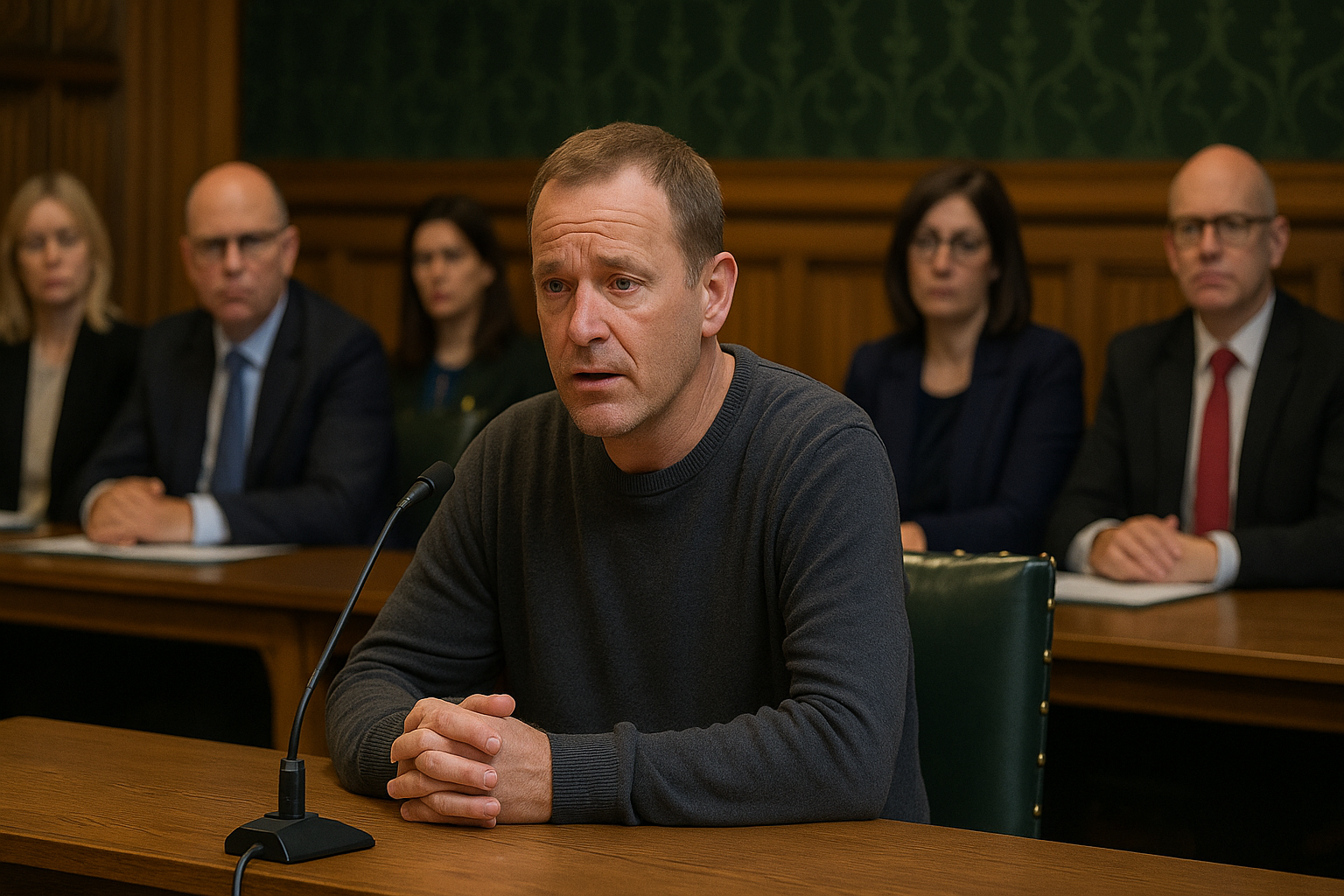
They came in numbers, filling a packed parliamentary committee room. Survivors of investment fraud—no longer silent—stood up to expose a national scandal. These were not reckless speculators. They were miners, footballers, nurses, and families who trusted regulated advice, government-approved investments, and the rule of law. And they were betrayed.
The Landmark Parliamentary Summit of the Investment Fraud Committee, held on 12 May 2025 in a Committee Room at the Palace of Westminster, gave victims a platform—and what they shared was devastating.
Among the speakers was Brian Deane, the former Sheffield United, Leeds, and England striker, and Danny Murphy of Liverpool—both victims of government-backed film investment schemes. Rather than receiving support, they were hounded by HMRC for tax they never benefitted from, simply for following regulated financial advice.
Another powerful voice was Sue Flood, still being pursued by the tax authority 15 years after being conned out of her pension. She stood with many other victims of pension-related fraud, which has left people impoverished, traumatised, and still targeted by a system that refuses to recognise them as victims.
“These people are not trying to dodge tax—they’ve already lost everything,” said one attendee. “They were groomed, misled, and abandoned.”
The System on Trial
The room heard testimony after testimony of financial ruin, emotional breakdown, and suicidal despair. Baroness Newlove spoke movingly about victims struggling to keep their homes—and sometimes even their lives—after being stripped of value, savings, and trust.
Lord John Mann, a long-standing advocate for justice in northern mining communities, delivered what many said was the most powerful speech of the day. With clarity and passion, he condemned the “failure of justice” and the abandonment of victims by those meant to protect them.
It wasn’t just the schemes that were fraudulent—it was the institutional neglect that followed. From the FCA sweeping DB-to-DC pension transfer mis-selling under the rug, to the absence of financial service providers at the summit, the message was clear: those responsible were not in the room.
“Just like the Post Office scandal, these victims are not going away. Nor are the organisations fighting alongside them,” one observer noted.
Lighting a Path Forward
The event wasn’t just a commemoration of harm—it was a call to arms. Andy Agathangelou, founder of the Transparency Task Force, outlined a three-point plan:
- Recognise that HMRC’s treatment of victims is wrong
- Refuse to ignore the injustice—pursue it relentlessly
- Never give up
He was joined by activists Sue Flood and Carly Barnes-Short, who are establishing a new charity to ensure victims can access the financial and legal support they need to fight back.
This is not just a financial issue. It is a moral crisis. One where regulated products, government endorsements, and professional trust were weaponised to destroy lives—and where the state has responded with denial, not justice.
Q&A: The Deeper Crisis of Investment Fraud Victims
❓ Q: Who are the victims of these financial frauds?
A: Victims include former footballers like Brian Deane and Danny Murphy, pensioners like Sue Flood, coal miners, and thousands of everyday citizens. They trusted FCA-regulated advisers and HMRC-approved schemes—only to suffer devastating losses and then be pursued by HMRC for tax they never benefited from.
❓ Q: What happened at the Investment Fraud Committee Summit?
A: On 12 May 2025, Parliament hosted a powerful summit where victims, campaigners, and parliamentarians spoke out. Testimonies highlighted the psychological toll of financial grooming, the systemic failure of regulators, and HMRC’s ongoing persecution of victims.
❓ Q: Why is HMRC pursuing victims instead of perpetrators?
A: HMRC applies a rigid “tax first” approach, treating victims as tax avoiders—even when they were deceived. Many victims, like Sue Flood, are still receiving demands decades after being defrauded. There’s no recognition of grooming, nor protection for those misled by schemes wrapped in regulatory approval.
❓ Q: Were regulators like the FCA present?
A: No. The financial services industry and its regulators were not in the room. Their absence was seen as a powerful symbol of institutional denial and lack of accountability.
❓ Q: What reforms are campaigners demanding?
A:
- Establishment of a Fraud Victims Compensation Fund
- Legal recognition of financial grooming as a mitigating factor in tax liability
- Mandatory trauma-informed response frameworks
- Full investigation into the conduct of HMRC and the FCA
- Action against advisers who exploited grey areas with impunity
❓ Q: What’s being done now?
A: Activists like Andy Agathangelou, Sue Flood, and Carly Barnes-Short are pushing for reform and launching a charity to support victims legally and financially. Cross-party parliamentarians, including Baroness Newlove and Lord Mann, are championing their cause.
❓ Q: How can people help?
A:
- Raise awareness by sharing survivor stories and articles like this
- Write to MPs, urging support for legislative change
- Support grassroots initiatives like Get SAFE and the Transparency Task Force
- Help reframe the public narrative: these are victims, not tax dodgers
The Academy of Life Planning stands in solidarity with all victims of financial abuse. Justice delayed cannot become justice denied.
Appendix: Issues Arising from the APPG Inquiry on Investment Fraud and Fairer Financial Services
1. A Fresh Opportunity Under a New Government
With a new government now in place, the time for decisive action on investment fraud and systemic injustice is now. The incoming administration inherits not only the hopes of victims but also the documented failings of past policies. The APPG on Investment Fraud & Fairer Financial Services urges the new leadership to prioritise reform that restores justice, trust, and dignity to those harmed by financial crime.
2. The Enduring Impact of Investment Fraud
Investment fraud continues to devastate individuals and families across the UK. Victims have lost life savings, retirement funds, homes—and, in the most tragic cases, hope. The consequences are more than financial: emotional trauma, mental health crises, and the erosion of public trust in financial institutions and government bodies.
3. A System That Punishes the Victims
Evidence from the APPG inquiry paints a stark picture: victims not only endure financial and emotional harm from fraud but are then subjected to further distress by HMRC. Many are burdened with unjust tax liabilities on money stolen from them, effectively being taxed on their own victimisation.
4. Institutional Failures and a Lack of Empathy
There remains a worrying deficit in specialist fraud knowledge within both HMRC and the Treasury. Victims report feeling dismissed, misunderstood, and retraumatised by the very institutions meant to support them. This has led to a phenomenon of “double victimisation,” compounding the original crime with bureaucratic cruelty.
5. Regulation and Strategy Shortcomings
Despite the launch of the 2023 Fraud Strategy, the inquiry found it does not adequately address complex investment and pension fraud. Loopholes in regulation and the exploitation of government-backed schemes continue to be exploited by bad actors, with little to no accountability.
Recommendations to the New Government
The APPG calls on the new government to seize this moment and deliver meaningful reform. Key recommendations include:
- Immediate moratorium and amnesty on tax liabilities for historic fraud victims.
- A fully independent public inquiry into HMRC’s handling of investment fraud cases.
- Reform at HMRC to include:
- Specialist training in financial fraud and trauma-informed response.
- Creation of a dedicated fraud victim support unit within HMRC.
- New guidance and operational procedures that reflect compassion and justice.
- New legislation to regulate the tax treatment of fraud victims.
- Establishment of an independent victim advocacy service, supporting those affected through their recovery journey.
A Unified Parliamentary Front for Reform
The APPGs on Investment Fraud and Fairer Financial Services have now joined forces to champion this cause. We are committed to working constructively with the new administration to ensure victims are treated fairly and reforms are implemented without delay.
Alex Sobel MP, Co-Chair, has stated:
“The Government must act now. The system we have inherited is failing victims and causing further harm. New leadership must bring new priorities—starting with justice for those who’ve been doubly wronged.”
Sir Stephen Timms MP, Chair of the Work and Pensions Committee, added:
“There is compelling evidence of harm. Other nations have taken steps to protect victims—now it’s the UK’s turn. A fair system must put victims first, not punish them further.”
Conclusion: Now is the Time to Act
As the government is well into its first year, the APPG calls for immediate engagement on this issue. We offer our full cooperation and cross-party support to deliver reforms that are long overdue.
This is not just about fixing a broken system—it is about restoring faith in our institutions, protecting future victims, and ensuring that no one is punished for being defrauded.
The time for reviews has passed. The time for action is now.
Your Money or Your Life
Unmask the highway robbers – Enjoy wealth in every area of your life!

By Steve Conley. Available on Amazon. Visit www.steve.conley.co.uk to find out more.
 Academy of Life Planning