
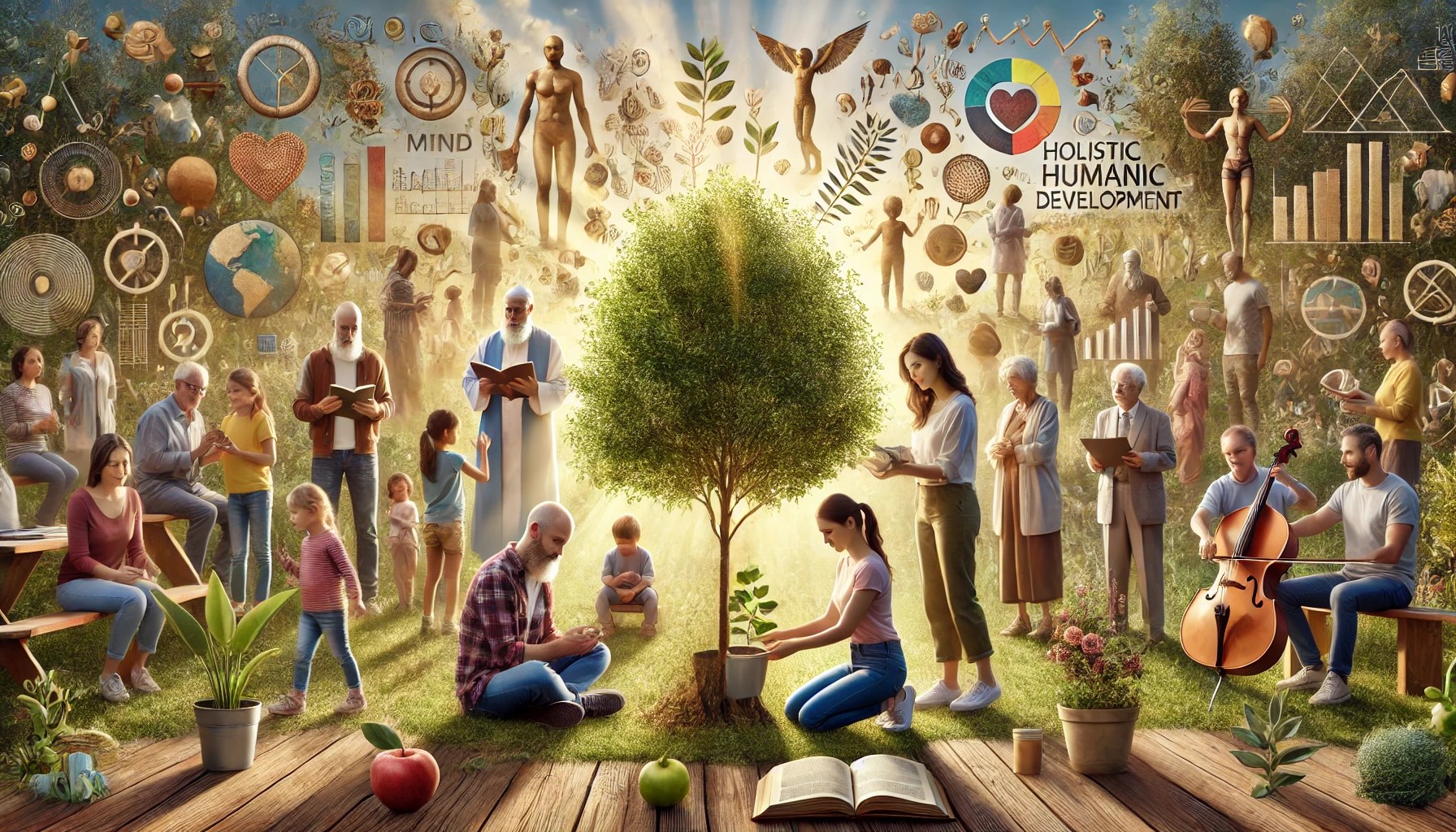
By Steve Conley, Founder – Academy of Life Planning
For decades, policymakers and economists have placed immense faith in a reductive idea: that people are paid what they’re worth, and their “worth” can be measured by their skills, education, and productivity. This is the premise of mainstream human capital theory—a theory that has not only failed to reduce income inequality globally but has, in many ways, served to entrench it.
Human capital theory became dominant in the mid-20th century, arising from the Chicago School of Economics just as eugenics fell out of academic favour. While the latter was discredited for its overt inhumanity, the former retained a subtler, yet still problematic assumption: that personal income is a direct result of individual traits—isolated from society, context, or power dynamics.
Blair Fix’s compelling critique in The Real-World Economics Review uncovers how this theory devalues the social nature of productivity. Just as William Muir’s infamous chicken experiment showed that breeding “productive” hens led to aggression and collapse, our current obsession with individual meritocracy fosters a psychopathic strain of economic thinking—rewarding dominance over collaboration.
Human capital theory, as commonly interpreted, fails to see income as a social trait. It overlooks the role of hierarchical systems, access to opportunity, and the broader human dimensions—emotional, social, and spiritual—that truly contribute to individual and societal flourishing.
It also ignores the lived reality of countless people whose “human capital” is shaped by structural barriers rather than personal deficiency. By implying that the poor are less skilled, less intelligent, or less valuable, it legitimises inequality rather than addressing it.
The remedy is not to discard the idea of human capital, but to radically expand our definition of it.
We need to embrace a whole-person model of human capital—one that values:
- Emotional intelligence as much as cognitive ability.
- Social cohesion and character as much as technical skill.
- Spiritual and moral purpose as much as economic output.
At the Academy of Life Planning, we advocate for such a model. It’s not just about producing more; it’s about becoming more—more fulfilled, more connected, more whole. Wealth is not simply what we earn, but who we are and how we contribute to the collective good.
This is not utopian idealism. It’s a necessary evolution. If we want to eradicate income inequality, we must stop pretending that narrowly-defined skills alone drive value. Policymakers must move beyond economic models that worship productivity metrics and instead invest in building human flourishing—in all its richness and complexity.
It’s time to replace the old equation—human capital = skills + productivity—with a new paradigm:
Human capital = whole-person potential + social contribution.
Only then will we be on the right side of history.
Holistic Human Capital: Mind, Body, Heart, and Spirit
The concept of human capital has indeed evolved beyond the traditional focus on skills and abilities to encompass a more holistic understanding that includes social, emotional, and spiritual dimensions. This broader perspective recognises that an individual’s overall well-being and character significantly contribute to their potential and productivity.
Holistic approaches to development and well-being emphasise the integration of various dimensions:
- Physical (Body): Pertains to health, nutrition, and physical abilities.
- Mental (Mind): Relates to cognitive functions, knowledge, and intellectual capabilities.
- Emotional and Social (Heart): Involves emotional intelligence, social skills, relationships, and empathy.NSW Health+1en.wikipedia.org+1
- Spiritual (Spirit): Encompasses values, purpose, meaning, and character.
This comprehensive view aligns with the principles of holistic education, which seeks to engage all aspects of the learner, including mind, body, and spirit. It posits that each person finds identity, meaning, and purpose through connections to their community, the natural world, and humanitarian values such as compassion and peace. en.wikipedia.org
Social and Emotional Capital
The inclusion of social and emotional capital in the understanding of human capital reflects the importance of interpersonal relationships and emotional well-being:
- Social Capital: Refers to the networks, relationships, and norms that facilitate collective action and provide access to resources and support.
- Emotional Capital: Involves the personal and social emotional competencies that are inherent to the individual, useful for personal, professional, and organisational development, and contribute to social cohesion.en.wikipedia.org
These aspects are recognised as integral components of human capital, acknowledging that individuals’ social bonds and emotional competencies significantly impact their effectiveness and satisfaction in both personal and professional contexts. en.wikipedia.org
Spiritual Capital and Good Character
Spiritual capital extends the concept of human capital to include the ethical and purposeful dimensions of individuals:
- Spiritual Intelligence: Defined as the adaptive use of spiritual information to facilitate everyday problem-solving and goal attainment, it includes capacities such as self-awareness, compassion, and a sense of vocation. en.wikipedia.org
- Fourth Bottom Line: Beyond the traditional triple bottom line of people, planet, and profit, the ‘fourth bottom line’ incorporates spirituality, ethics, purpose, and compassion into organisational performance metrics, recognising the role of good character and ethical practices in sustainable success. en.wikipedia.org
By embracing this holistic definition of human capital, organisations and educational systems can foster environments that nurture not only the intellectual and physical capabilities of individuals but also their emotional well-being, social connections, and ethical grounding, leading to more fulfilled individuals and resilient communities.
 Academy of Life Planning