
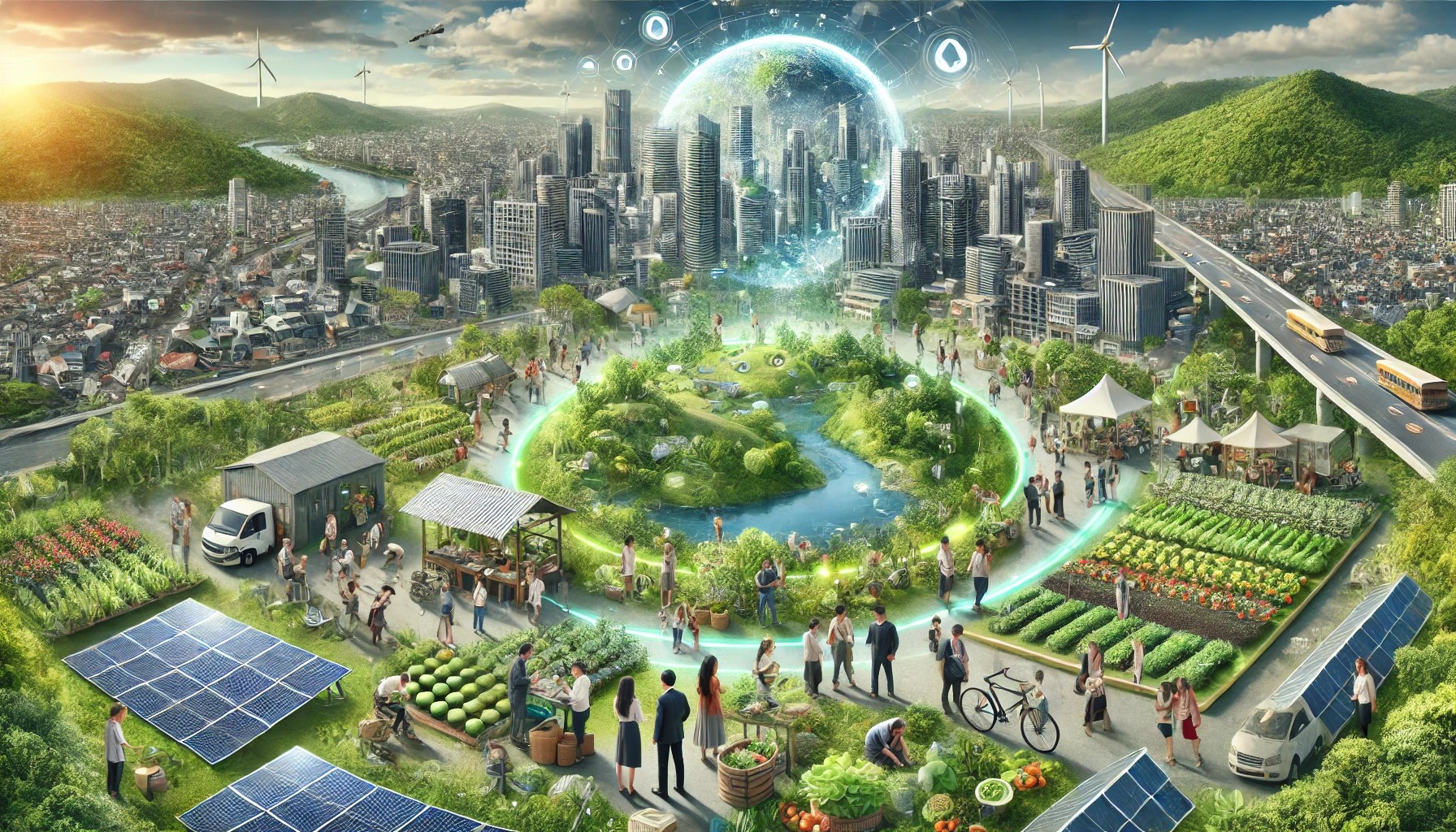
“But what can one person do about it?” said 8.2 billion people.
It’s easy to feel powerless in the face of global overconsumption. But there is a way forward—one that benefits both people and the planet. It starts with personal growth, stepping off the hedonic treadmill, and embracing a life of eudaimonic wellbeing. Here’s why it matters.
The Real Cost of Overconsumption
The numbers don’t lie. If everyone consumed at the rate of the average American, we would need five Earths to sustain us (See note 1). Yet, billions of people live below the empowerment threshold—the point where basic needs, opportunities, and dignity become accessible.
On one end, we have extreme abundance. On the other, extreme scarcity. The answer isn’t to make people feel guilty for what they have but to shift our mindset on what truly brings fulfilment.
The Shift: From Hedonic Treadmill to Eudaimonic Wellbeing
Most of us are caught in a cycle of endless consumption, chasing happiness through material gain—only to find that the next purchase doesn’t fulfil us for long. This is the hedonic treadmill in action. But there’s another way: eudaimonic wellbeing—a life built on purpose, meaningful contribution, and sustainable success.
If we prioritised human capital—our skills, knowledge, and capacity for growth—over material accumulation, those in poverty could leverage entrepreneurial opportunities to create sustainable livelihoods. And those who already have more than enough could use their surplus to serve others. This isn’t charity; it’s empowerment.
A Win-Win for People and the Planet
Imagine a world where:
✅ People in poverty build self-sustaining businesses that lift them above the empowerment threshold.
✅ Wealthier individuals redirect excess resources towards impact-driven solutions instead of wasteful excess.
✅ Consumption levels align with what the planet can sustain.
✅ Everyone experiences deeper wellbeing through purpose and contribution.
This is not utopian thinking. It’s the quadruple bottom line: Purpose, People, Planet, and Profit—all working in harmony.
The GAME Plan: A Blueprint for Change
So, what’s stopping us? For most, it’s not knowing how to make the shift.
That’s where the GAME Plan comes in. It’s a structured approach to align personal growth with financial empowerment, ensuring that people plan their lives before they plan their money. And through the M-POWER Programme, we’re translating this into multiple languages, making it accessible to people across the world.
Join the Movement
This is bigger than any one person—but it starts with each of us. Imagine what would happen if millions (or billions) embraced this shift. We would solve poverty, rebalance wealth, and restore the planet—all while creating more fulfilling lives for ourselves.
Are you ready to step off the treadmill and into a life of real impact?
Join us. Join the movement.
Notes:
- According to Global Footprint Network’s National Footprint and Biocapacity Accounts, if everyone lived like the average American, humanity would require approximately five Earths to sustain its resource consumption.
This estimate is based on ecological footprint analysis, which measures the demand placed on Earth’s ecosystems compared to their capacity to regenerate resources and absorb waste. The ecological footprint accounts for factors such as carbon emissions, cropland, grazing land, forest products, fishing grounds, and built-up land.
The concept of Earth Overshoot Day further illustrates this point. This date marks when humanity’s annual resource consumption exceeds Earth’s capacity to regenerate those resources within that year. In 2024, Earth Overshoot Day fell on 1 August, indicating that humanity is using natural resources 1.7 times faster than Earth can renew them.
These metrics highlight the unsustainable nature of current consumption patterns, particularly in high-consumption countries like the United States.
 Academy of Life Planning