
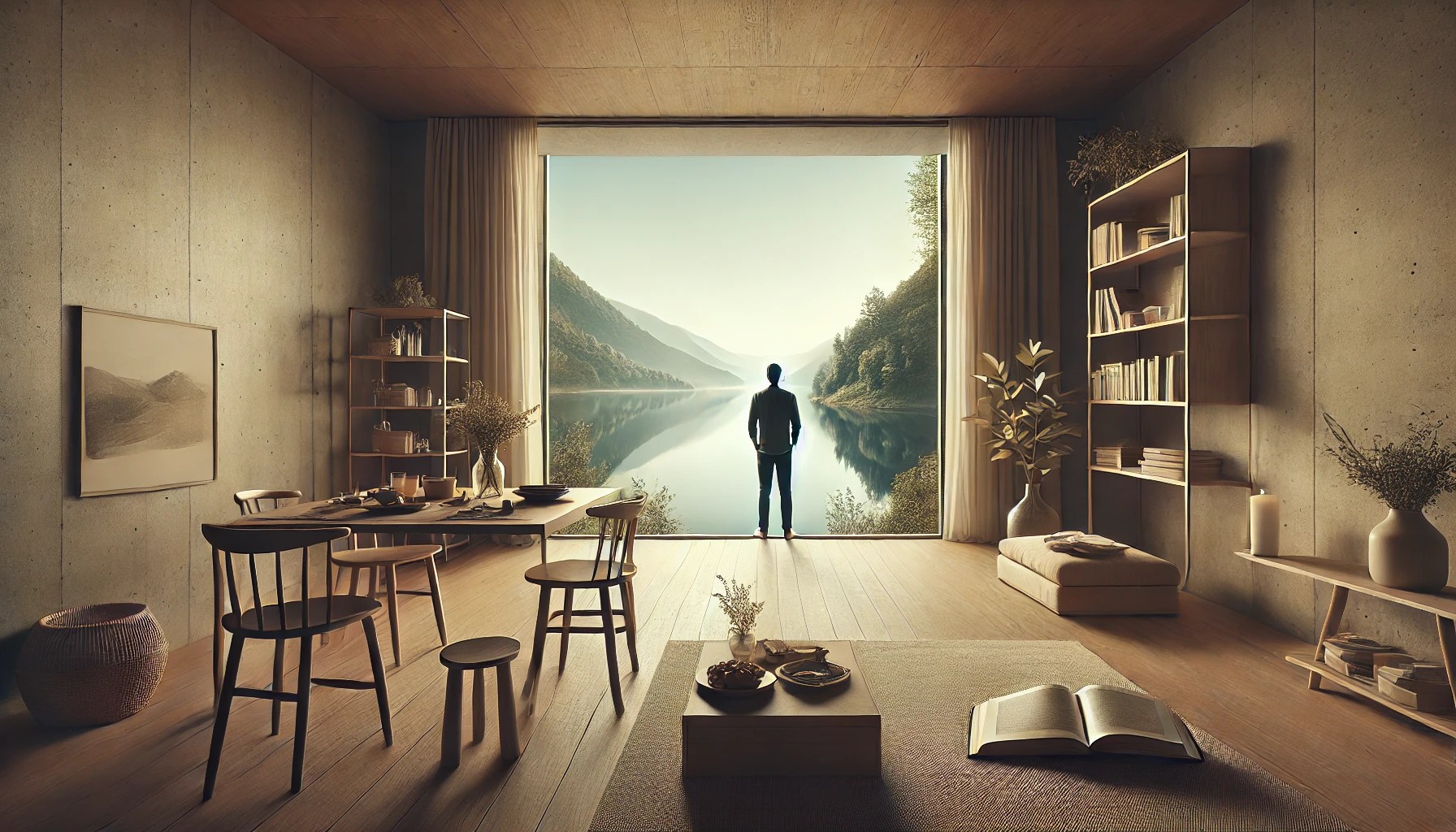
Can buying more and more stuff really make you happier, or is it quietly making life worse? Our modern world pushes the idea that the road to happiness is paved with shopping receipts. Bigger houses, newer phones, more clothes – we’re told these are tickets to a better life. But what if that’s a lie? What if chasing “more” is actually dragging down our well-being and the planet? In this article, we’ll explore why overconsumption isn’t delivering the joy it promises, what ancient wisdom and modern psychology say about true happiness, and how shifting our mindset and habits can lead to a more fulfilling, sustainable life. Let’s dive in.
The Problem with Modern Consumption
We live in an age of overconsumption. In wealthy countries especially, it’s become normal to always want the latest and greatest – from fast fashion to gadgets – even when we don’t truly need them. This culture of “more” comes at a cost. Environmentally, it’s devastating: we are using up our planet’s resources faster than they can regenerate sentientmedia.org.
Mountains of waste, polluted air and water, and a heating climate are the fallout of our shopping habits. Socially and personally, overconsumption takes a toll too. We work longer hours to afford things, yet studies show that becoming richer hasn’t made people happier ipi.org.in. In fact, “our becoming much better off over the last four decades has not been accompanied by one iota of increased subjective well-being,” as psychologist David G. Myers noted ipi.org.in. The illusion that piling up material wealth automatically leads to happiness is just that – an illusion.
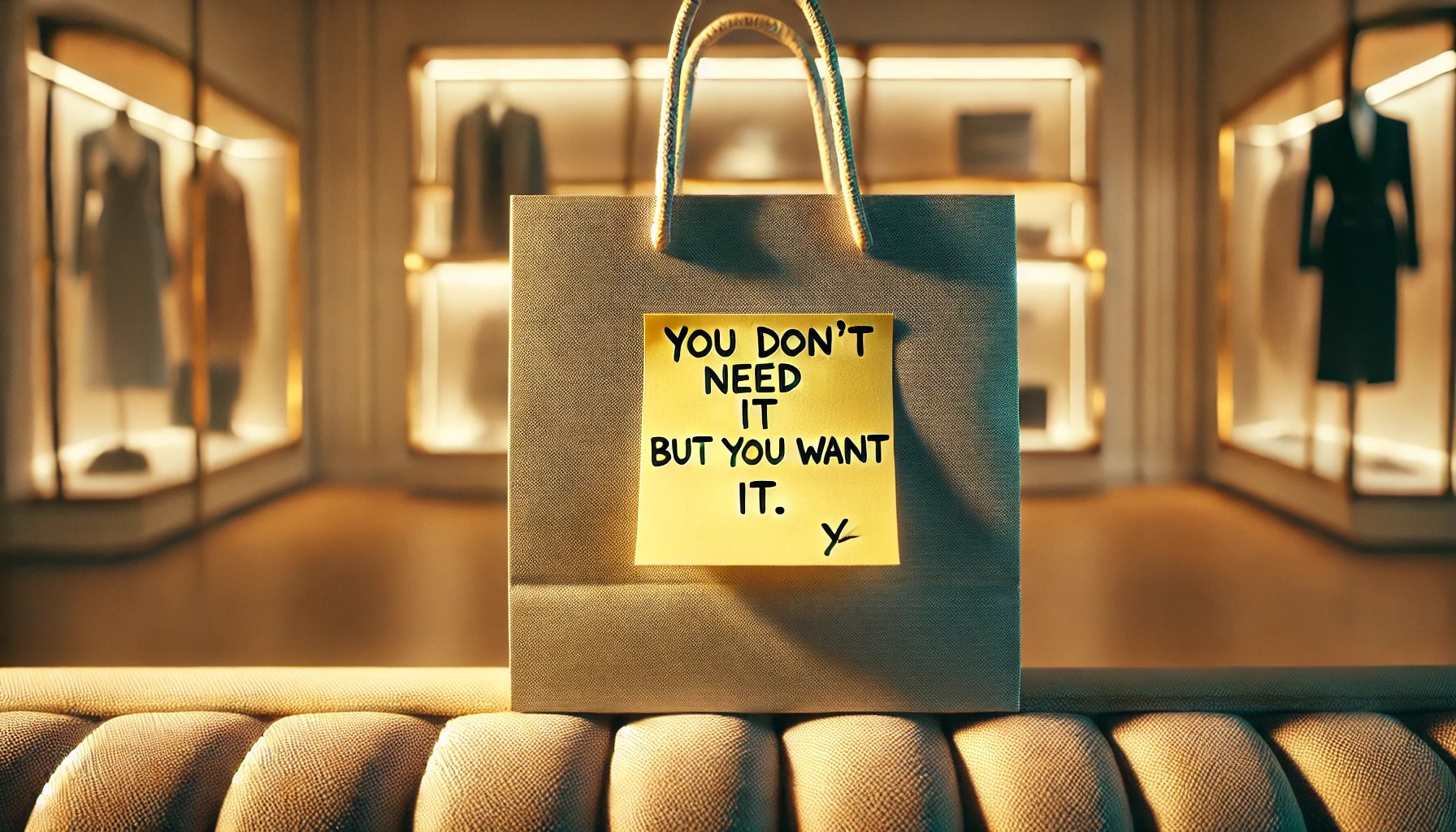
Excess consumption promises happiness but seldom delivers. As one pointed sticker reminds us: “You don’t need it but you want it.” Over decades of rising prosperity, societies grew richer without any rise in overall happiness ipi.org.in. This gap between what we buy and how we feel is at the heart of the overconsumption problem.
The truth is, once our basic needs are met, buying more stuff yields rapidly diminishing returns for our well-being. Sure, a new purchase might give us a quick thrill, but it doesn’t last. Yet, the modern consumerist message keeps shouting that more is always better – more luxury, more convenience, more everything. It’s a message that keeps us spending, but leaves many of us strangely empty. Why do we keep falling for it? To answer that, it helps to look at some ancient wisdom and psychological traps that drive our cravings.
What Ancient Philosophy Teaches Us
Long before Instagram ads and Black Friday sales, thinkers like Epicurus and Aristotle pondered what makes a good life. Their insights, thousands of years old, can feel shockingly relevant today.
Epicurus, often miscast as a hedonist, actually taught that true happiness is simple. He believed we only need a few basic things to be content – like friendship, freedom, and thoughtful reflection. Chasing luxury for its own sake was, in his view, a mistake driven by false beliefs. Epicurus observed that the natural desires of life are limited and easily met, but artificial desires know no bounds newepicurean.com. “The wealth required by nature is limited and easy to procure,” he noted, “but the wealth required by vain ideals extends to infinity.” newepicurean.com In other words, if you think you need a mansion or a fancy car to be happy, you’ll never reach a point of “enough.” There will always be a new want, a new upgrade, an infinite chase. Epicurus went so far as to say that from the perspective of living naturally, having little can feel like having a lot, whereas unlimited wealth can feel like poverty newepicurean.com. Why? Because the person who always needs more is never satisfied. His remedy: pare down your desires, enjoy simple pleasures (a good meal, a talk with a friend, the feel of sunshine), and you’ll suffer less and enjoy life more. It’s a philosophy that sounds anti-consumerist to the core – and indeed, it challenges the modern “more is better” mantra head on.
Aristotle took a different angle. He talked about eudaimonia, often translated as flourishing or fulfilling one’s true potential. For Aristotle, a flourishing life isn’t about accumulating endless goods, but achieving meaningful states of being – developing virtues, nurturing relationships, contributing to your community, and finding purpose. He argued that while people pursue wealth or pleasure thinking it’ll make them happy, those things are just means to an end, not the end itself. Happiness (eudaimonia) is the highest good, he said, and it comes from living a life of excellence, character, and purpose, not from indulging every material desire. In fact, unlike money or status – which are external and fleeting – true flourishing is self-sufficient and long-lasting goodliife.com. The joy from virtue, wisdom, and meaningful work doesn’t fade like the thrill of a new purchase. Aristotle saw a well-lived life as one rich in relationships, moral values, and personal growth. Success, to him, was about who you become, not what you own.
Think about how radical that idea is in today’s context: What if we measured success not by our bank balance or the brand of our clothes, but by our sense of purpose and the quality of our friendships? Ancient philosophy invites us to question the consumerist definition of success. Epicurus would urge us to ask, “How much do I really need for happiness?” Aristotle would add, “Am I living in a way that fulfills my deeper potential?” These are uncomfortable questions in a society that pushes us to buy happiness off the shelf. But they point toward a vision of well-being that doesn’t depend on constant consumption.
The Psychological Barriers to Consuming Less
If buying more stuff doesn’t make us happier, why do we keep doing it? The answer lies in some tricky features of the human mind. Psychology reveals several traps that keep us on the consumption treadmill, even when we suspect it’s not truly satisfying.
One big trap is hedonic adaptation – also known as the hedonic treadmill. This is the tendency for us to quickly get used to improvements in our life, and return to a happiness “set point.” You buy a new phone or car and feel excited for a while, but soon it becomes “normal” and your mood bounces back to where it was. We’re like hamsters on a wheel: running hard after the next treat but ultimately staying in the same emotional place en.wikipedia.org. Psychologists describe it like a treadmill because no matter how much shiny stuff you acquire, you end up no happier than before en.wikipedia.org. Our brains crave novelty, so the first hit of a purchase feels good. But then we adapt, the thrill wears off, and we need another hit – a cycle that marketers are all too happy to fuel. Hedonic adaptation means that material goods give us only short-lived happiness. It’s the reason the joy of a new toy, outfit, or gadget often fades faster than we expect. Yet, without recognizing this, we keep seeking the next purchase, hoping it’ll finally be the one that keeps us happy. Spoiler: it never does for long.
Then there’s status anxiety – the subtle (and not so subtle) pressure we feel to keep up with others. Humans are social creatures, and we constantly (if subconsciously) compare ourselves to those around us. When everyone seems to be upgrading their phone, vacationing in exotic spots, or posting their new car on social media, it creates a fear of missing out and falling behind. We start to worry: “Am I doing as well as they are? Will I still be respected if I don’t have what they have?” This anxiety can drive us to spend on things that aren’t really about personal satisfaction at all, but about social standing. Buying a luxury brand handbag or the latest sneakers might be motivated less by the item itself and more by what it signals to others. Economists and sociologists have long noted this phenomenon. As far back as 1899, Thorstein Veblen talked about “conspicuous consumption” – buying things to show off status. Modern research echoes that status anxiety spurs impulse buying and status-driven consumption en.wikipedia.org gini-research.org. In societies where success is measured by material wealth, people feel pressured to prove their worth through their possessions en.wikipedia.org. It’s a vicious cycle: the more we compare, the more we consume, and the more we reinforce the idea that your value = your stuff. Escaping this trap isn’t easy when advertising and social media constantly rub our noses in curated images of others’ “haves,” making our own “have-nots” feel glaring.
Another psychological barrier is the lure of “pseudo-satisfiers.” These are products that are marketed as if they’ll satisfy deep emotional needs, but in reality they don’t. Advertisers are experts at tapping into our desires for love, acceptance, adventure, or identity – and linking those desires to products globalactionplan.org.uk. Think of a commercial that shows a warm, happy family breakfast – it subtly suggests that a certain brand of cereal creates love and togetherness. Or a sports car ad that implies owning that car will make you feel young, free, and adventurous. The problem is, these are empty promises. Buying the cereal won’t fix a broken family, and the sports car won’t automatically give your life meaning. Economist Manfred Max-Neef pointed out that many goods are sold as solutions to our yearnings for connection, freedom, or esteem, but they only provide a fleeting illusion of fulfillment globalactionplan.org.uk. He calls them pseudo-satisfiers – they appear to satisfy our needs but leave us as hungry as before. For example, a fast-food ad might make you feel momentarily “joyful” seeing people laughing over burgers, but a quick meal on the go can’t replace genuine community or health. Recognizing these false satisfiers can help us see through the marketing tricks. That designer perfume won’t bring lasting love. That luxury watch won’t give you lasting confidence. It’s not that buying things is inherently bad – but expecting them to fill emotional voids is a recipe for disappointment.
Between the hedonic treadmill, status anxiety, and pseudo-satisfiers, it’s no wonder cutting back on consumption is hard. Our own minds, combined with societal pressures, set up a trap: we keep doing what doesn’t work (accumulating stuff) because in the moment it feels like it might work. Breaking out of this cycle requires a conscious shift – redefining what really makes us happy and learning to resist those mental lures. So, what’s the alternative? If more stuff isn’t the answer, what is?
A More Sustainable Path to Well-Being
Imagine a life where you genuinely feel content, and it doesn’t depend on constant shopping or keeping up with the Joneses. That life is possible – and it’s actually better for the planet and society too. A more sustainable path to well-being means aligning our lifestyles with what truly makes us happy and what’s fair for the world.
Firstly, it involves rethinking luxury and excess, especially in wealthy regions. Let’s face it: a small fraction of the world’s population (the wealthiest) consumes a huge chunk of resources. The world’s richest 1% have carbon footprints dozens of times larger than the poorest – roughly 30 times higher than the poorest 50% ethicsandinternationalaffairs.org. All this luxury consumption isn’t making the rich exponentially happier, but it is gobbling up environmental space that could lift others out of poverty. If those of us in affluent societies dialed back the lavish lifestyles – fewer long-haul flights, less throwaway fashion, smaller cars or one car instead of three – it would free up resources and reduce pollution, helping create room for developing communities to meet their needs. In practical terms, consuming less in wealthy regions can foster global equity. It’s about recognizing that beyond a certain comfort level, more luxury adds very little to well-being but can take away a lot in terms of planetary well-being. By choosing to live with a bit less extravagance, we contribute to a fairer distribution of the Earth’s bounty. It’s a win-win: we don’t sacrifice real happiness, and others get a better shot at a decent life.
Secondly – and most importantly on a personal level – we can shift our focus from material accumulation to intrinsic sources of well-being. What does that mean? It means putting our time, energy, and love into things that inherently fulfill us: relationships, personal growth, community involvement, creativity, and health. Decades of research in psychology back this up. People who prioritize family, friendships, learning, and contributing to society report higher life satisfaction than those who prioritize just making money or buying things ipi.org.in. For instance, cultivating close relationships has been shown to be one of the strongest predictors of happiness and even longevity. Engaging in meaningful work or hobbies, where you get “in the zone” and build skills, gives a kind of satisfaction no shopping trip can match. Contributing to others – whether helping a friend or volunteering for a cause – often creates a deep sense of purpose and joy. (In fact, studies even find that altruism can trigger happy brain chemistry and a “helper’s high” better than a new purchase high psychologytoday.com.) When we invest in these intrinsic sources of well-being, we’re essentially beating the hedonic treadmill – because things like love, purpose, and personal growth don’t plateau in the same way gadgets do. They can keep giving satisfaction over time, and even grow stronger.
So, what can you do to consume more mindfully and boost your well-being? Here are some practical steps:
- Pause before you purchase: Next time you’re about to click “Buy Now” or pull out your card, ask yourself: “Do I really need this? How long will this make me happy? Is there something else I could do with this money or time that would bring me more joy?” Simply creating a space between impulse and action helps break the habit loop. Maybe wait 30 days on non-essentials – you might find the urge passes.
- Practice gratitude for what you have: It sounds hokey, but taking stock of the good things already in your life – the comfy couch you relax on, the meals you enjoy, the people you care about – can reduce the itch to always get something new. Gratitude shifts our focus from lack to abundance (in the non-material sense).
- Buy experiences, not just products: If you’re going to spend, consider spending on experiences – a weekend trip, a class to learn a new skill, a fun outing with friends or family. Experiences tend to bring more enduring happiness than objects, because we create memories and often social connections. That cooking class or hiking adventure could give you stories and skills that last a lifetime, whereas this year’s hot gadget might be obsolete by next year.
- Cultivate hobbies and skills: Fill your time with activities that give you a sense of flow or accomplishment. Whether it’s gardening, playing music, painting, or sports, hobbies can provide joy and a sense of progress. When you’re deeply engaged in something, you’re not feeling the void that mindless shopping often tries to fill.
- Connect with others and community: Make time for friends, family, and community activities. Host a potluck instead of going to the mall. Join a club or group that interests you. These connections feed our need for belonging and fun. When your life is rich with social bonds, the latest consumer fads feel less important by comparison.
- Embrace “enough”: This is a mindset shift. Consciously decide what “enough” means for you in various areas – enough clothes, enough gadgets, enough house, enough income. It’s like setting your own finish line so you know when you’ve got sufficient and can focus on other things. Remind yourself that enough is as good as a feast. You don’t have to chase more endlessly.
By consuming more mindfully, you’re likely to find you free up not just money, but time and mental space. Less shopping means less clutter, less to maintain, and often less debt or financial stress – which is a huge well-being booster on its own. And the beauty is, what you do consume can be more sustainable: when you buy less often, you can choose higher-quality, eco-friendly or ethically made items that last, further aligning your lifestyle with your values. ipi.org.in

Prioritizing relationships, personal growth, and contribution over material gain leads to deeper and more lasting well-being than any shopping spree ever could. Genuine laughter with friends or the satisfaction of learning something new provides a happiness that doesn’t fade with the next product cycle. In shifting our focus to these intrinsic joys, we not only feel better, we also tread more lightly on the planet.
Policy and Cultural Shifts
Individual actions are a great start, but let’s be real: we also need systemic change and cultural shifts to support sustainable well-being. It’s hard to swim against the current if the whole society is flowing toward overconsumption. So what would a society look like if it truly valued well-being over wealth for its own sake?
For one, we could rein in the relentless advertising and consumerist messaging that bombards us from morning to night. Think about it: we are exposed to hundreds of ads a day, all engineered to stir desire and dissatisfaction. It’s no coincidence that overconsumption flourishes in this environment. Some policy ideas include: limiting ads that target children (who are especially vulnerable to forming materialistic values), curbing advertising in public spaces (imagine cities where your commute isn’t just one long billboard), or even banning certain types of ads (like how some places ban tobacco ads – perhaps high-carbon luxury goods could be next). Communities could opt to tax or restrict giant roadside billboards or the volume of ads on TV and internet platforms. The goal isn’t to ban all marketing, but to reduce the constant psychological pressure to consume. If people get a bit of a break from “YOU NEED THIS NOW!” messages, it’s easier for contentment and non-material aspirations to take root.
On a higher level, governments and institutions can shift priorities from gross domestic product (GDP) growth to collective well-being. GDP measures all economic activity, but it doesn’t distinguish between activities that make life better and those that don’t (an oil spill boosts GDP because of cleanup costs, for example). Traditionally, nations have chased GDP as the ultimate goal, but a growing chorus of leaders and economists are saying, “Wait, what about happiness, health, and sustainability?” Countries like New Zealand and Bhutan have started experimenting with well-being budgets and happiness indices. Even Scotland’s First Minister, Nicola Sturgeon, declared that “the goal of all economic policy should be collective well-being,” and that well-being should be as fundamental as GDP in judging progress neweconomics.org. What would policy look like if success was measured by well-being? We’d likely invest more in healthcare, education, green spaces, and community programs – things that improve quality of life – and worry less about pumping out consumer goods for the sake of it. We might shorten the workweek, knowing that work-life balance is key to happiness (some countries are already toying with 4-day workweeks). We’d certainly take climate change and resource depletion seriously, because nothing undermines future well-being like a wrecked planet.
Culturally, we need to rewrite the narrative of what “the good life” means. Right now, too often the story is that the good life is a big house with a two-car garage in the suburbs, or an Instagram-perfect lifestyle sipping lattes in designer clothes. What if the celebrated stories in our culture became those of people who live simply yet happily, who contribute to their communities, who pursue passions, who spend time in nature, who create art, who help others? We have subcultures already – minimalists, the “slow living” movement, intentional communities – that promote these values. If their ethos spread into the mainstream, the social pressure could flip: instead of feeling pressure to own a luxury car, people might feel it’s cool to have solar panels and an electric bike and a community garden plot. Instead of reality TV glorifying mansions and excess, maybe we get shows highlighting transforming local neighborhoods or living carbon-neutral. It sounds idealistic, but cultures do evolve. Not long ago, smoking was seen as glamorous; now it’s largely frowned upon. Perhaps one day mindless consumption will carry a similar stigma, and mindful living will be the admired norm.
Importantly, systemic change also means making it easier for individuals to do the right thing. If sustainable products and services are expensive or hard to find, only the most determined will choose them. Policies could ensure eco-friendly options are affordable and accessible. Public transit and walkable cities can reduce the need for owning multiple vehicles. Right to repair laws can extend gadget lifespans so we don’t have to toss our phones every two years. Educational curricula could include financial literacy and media literacy, teaching kids how to resist consumerist manipulation and find self-worth beyond material items. All these shifts create an environment where it’s not such an uphill battle to live in line with true well-being and sustainability.
In sum, imagine an economy where success is measured by health, happiness, equality, and environmental balance. It’s not as far-fetched as it sounds – conversations about a “well-being economy” are happening worldwide. By reducing advertising’s influence, adjusting what we measure and reward, and changing the stories we tell about success, we can support millions of people in living better with less. The result? People free from the hamster wheel of consumption, and a planet given room to heal and thrive. That’s a future worth striving for.
Call to Action: Choosing Well-Being Over More Stuff
After reading all this, take a moment to reflect on your own life and consumption habits. This isn’t about feeling guilty – it’s about empowerment. What are the things you buy or strive for that you suspect aren’t actually making you happier? We all have them. Maybe it’s that closet full of clothes you hardly wear, or the habit of upgrading gadgets even when the old one works fine, or keeping up with friends on expensive nights out when you’d rather do something low-key. Identify one area where you’re consuming out of habit, comparison, or a belief that it will boost your happiness. Then ask yourself honestly: “Is this truly adding to my well-being, or is it a distraction? What if I redirected that time/money/energy into something more fulfilling?”
I encourage you to try a small experiment. Pick one action from the list of mindful steps – perhaps the 30-day no-buy challenge for non-essentials, or committing to weekly gatherings with friends in instead of mall trips, or starting that hobby you’ve been postponing because shopping took up your weekend. See how it feels. Pay attention to your mood and stress levels. You might be surprised that the anxiety of “I need this item” fades, and is replaced by a sense of control and contentment.
Also, consider the bigger picture. Are there ways you can support the cultural shift? It could be as simple as talking about these ideas with friends or family – not in a preachy way, but sharing your own revelations and challenges. Maybe suggest a swap party (exchange items you no longer need instead of buying new). Maybe support businesses that prioritize sustainability and fair practices over hyper-consumerism. Maybe the next time you vote or attend a community meeting, keep an ear out for policies that align with sustainable well-being (like funding parks, libraries, or public transit, or education reforms) and voice your support.
Finally, realize that you’re not alone in feeling that more stuff isn’t scratching the itch. A quiet revolution is already underway, as people from all walks of life realize that happiness isn’t for sale. By making changes in your own life, you’re joining that movement. Each personal choice, each conversation, each vote is a step toward a society that values well-being over wealth, meaning over materialism.
So, the next time you’re tempted by an ad or pressured by what others have, remember this: You have a choice. You can either keep running on the consumption treadmill, or step off and walk your own path toward a more genuine happiness. Choose to spend on what truly matters – and you might find you’ve been rich in the ways that count all along.
It’s your life, and your happiness is in your hands – not in the shopping cart. Isn’t it time we all stopped consuming the lie that more is always better, and started living the truth that better is better? The good life is waiting, and it doesn’t require a credit card – just a change of mindset and a leap of faith towards less but better. Let’s take that leap, one mindful step at a time.
 Academy of Life Planning
One thought on “Why More Stuff Won’t Make You Happy — And What Will”