
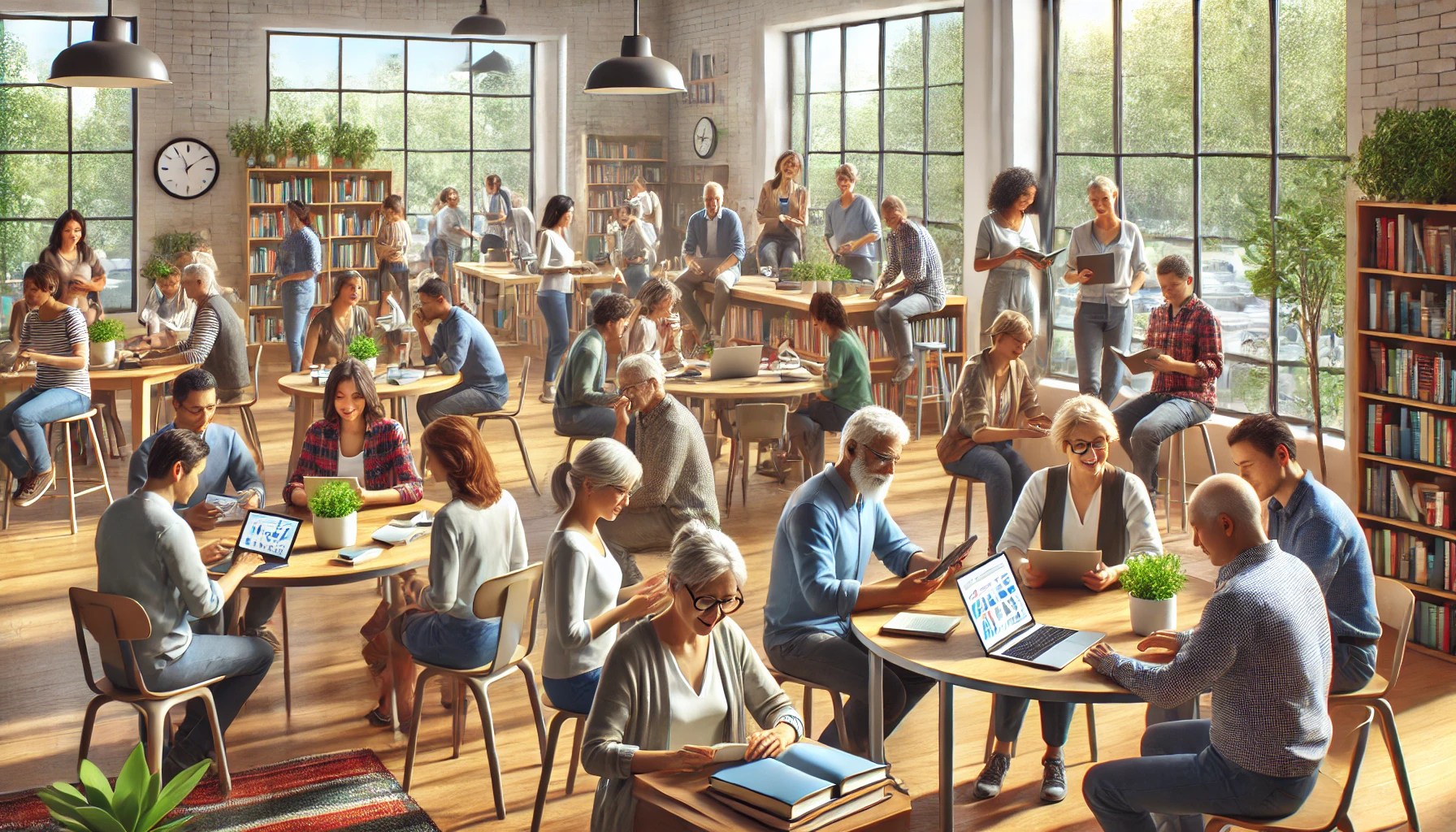
In an ever-changing world, where technology advances rapidly and industries evolve, the ability to adapt is more important than ever. One way to future-proof your career and personal growth is through lifelong learning and skill-building. Let’s explore why this approach is vital and how it can empower you to thrive in the face of change.
Why Lifelong Learning Matters
The days of “one and done” education are over. With industries transforming at lightning speed, the skills that were essential yesterday may no longer be relevant tomorrow. Lifelong learning ensures you stay ahead by continuously updating your knowledge and adapting to new opportunities. But it’s not just about staying competitive—it’s about building resilience for uncertain times.
Imagine being equipped with the confidence to navigate challenges, knowing you have the skills to pivot when needed. That’s the power of ongoing learning.
The Benefits of Skill-Building
- Boosts Employability
Employers value individuals who demonstrate a commitment to personal and professional development. Acquiring new skills signals your adaptability and initiative—qualities highly prized in any field. - Enhances Economic Security
Learning new skills can open doors to better opportunities, whether through promotions, career changes, or entrepreneurial ventures. It’s an investment in yourself that pays dividends in financial stability and personal satisfaction. - Encourages Personal Growth
Beyond careers, learning fosters curiosity and keeps your mind sharp. It broadens perspectives and builds confidence, enriching every area of life. - Creates a Sense of Fulfilment
Mastering a new skill or understanding a complex topic brings a sense of achievement that can boost your mental well-being. It’s a reminder that growth is always possible.
How to Embrace Lifelong Learning
The beauty of lifelong learning lies in its accessibility. It’s not confined to classrooms or formal qualifications. Here are a few simple steps to get started:
- Identify Your Goals
What interests you? What skills would help you in your career or personal life? Start with areas that excite or inspire you. - Make Use of Free Resources
Online platforms, webinars, podcasts, and community groups offer a wealth of learning opportunities. Many are free or low-cost, making education accessible for everyone. - Set Small, Achievable Goals
Commit to learning something new regularly, whether it’s daily, weekly, or monthly. Even 15 minutes a day can lead to significant progress over time. - Engage in Community Learning
Join groups, attend workshops, or collaborate with others. Learning alongside peers can enhance motivation and create valuable connections. - Celebrate Your Progress
Each step forward is a win. Recognise and reward yourself for your commitment to growth.
A Call to Action
The journey of lifelong learning is one of empowerment. It’s about giving yourself the tools to adapt, grow, and succeed, no matter what life throws your way. Start small. Explore a subject you’ve always been curious about. Or take a step to enhance your career skills. Every action brings you closer to a future filled with opportunities and resilience.
Remember, learning isn’t just a means to an end—it’s a way of life. So, let’s embrace it together. The possibilities are endless, and your potential is boundless. Let’s make today the day you take that first step toward lifelong learning!
Human Capital Formation, Income Inequality, and Growth
Here are the key findings from the report on “Human Capital Formation, Income Inequality, and Growth,” by By Itzhak Zilcha.
1. Human Capital and Economic Growth:
Education and skills development are powerful drivers of economic growth. The report highlights that investments in both private (home-based) and public (school-based) education significantly influence an economy’s growth trajectory.
2. Technology’s Role in Education:
Technological advancements can enhance either home or public education. When public education benefits from technology, both growth and income equality improve. However, technological improvements in home education may increase growth but widen income inequality.
3. Equality Through Public Education:
Public education promotes income equality by providing uniform learning opportunities. This is particularly impactful for individuals from less advantaged backgrounds, as it reduces disparities in access to quality education.
4. Parental Influence Matters:
Parents’ contributions to their children’s education, both in time and resources, are crucial. The level of parental involvement can either narrow or widen income gaps depending on broader social and economic contexts.
5. Policy Implications for Taxation and Education:
Fair tax policies that fund public education play a critical role in fostering equality. A balanced approach that supports public education without overburdening families is essential for sustainable growth.
6. Income Inequality and Growth Relationship:
The link between income inequality and growth is nuanced. While inequality can sometimes spur growth in the short term, more equitable income distribution tends to support long-term stability and prosperity.
7. Initial Conditions Matter:
Economies with higher initial levels of human capital are better positioned for equitable growth. Early investments in education yield compounding benefits over generations.
What This Means for Action:
- For policymakers: Prioritise investments in public education and leverage technology to reduce inequalities.
- For communities: Encourage parental involvement in education, recognising its long-term benefits.
- For individuals: Lifelong learning and skill-building are key to staying competitive and fostering economic resilience.
This report reassures that with thoughtful policies and collective efforts, it’s possible to achieve a future where growth and equality go hand in hand. Let’s take action today to build an inclusive and prosperous tomorrow!
Lifelong learning and skill-building are key to staying competitive and fostering economic resilience.
This paper delves into what influences income distribution and economic growth in a society made up of households with varied circumstances. At its heart, the framework focuses on two key aspects: first, how households differ in their wealth and the level of education provided by parents; and second, how investments in children’s education act as a bridge to transfer opportunities between generations.
The diversity in income stems from differences in individuals’ educational achievements, shaped by both ‘home education’ provided by parents and ‘public education’ offered equally to all young people. These factors together drive what we call an “endogenous growth model,” where growth is nurtured from within through investment in human capital.
The study explores three main areas:
- Technological Advancements in Education: How improvements in the education process affect income distribution over time.
- Growth and Inequality: The connection between technological progress, overall growth, and shifts in income inequality.
- Model Simulations: Using data simulations, the study quantifies the effects of these changes, including specific measures like Gini coefficients (a common way to assess income inequality) and tax rates determined through majority voting.
By focusing on these elements, the paper provides clear insights into how education and policy can shape a fairer and more prosperous future, making the findings not just informative but a valuable tool for driving positive change.
 Academy of Life Planning