
By Steve Conley | Academy of Life Planning
The pensions industry has crossed a line.
Quietly. Decisively. Irreversibly.
According to the latest Society of Pension Professionals survey, 100% of pension professionals are now using AI.
Not experimenting.
Not piloting.
Using.
Let that land.
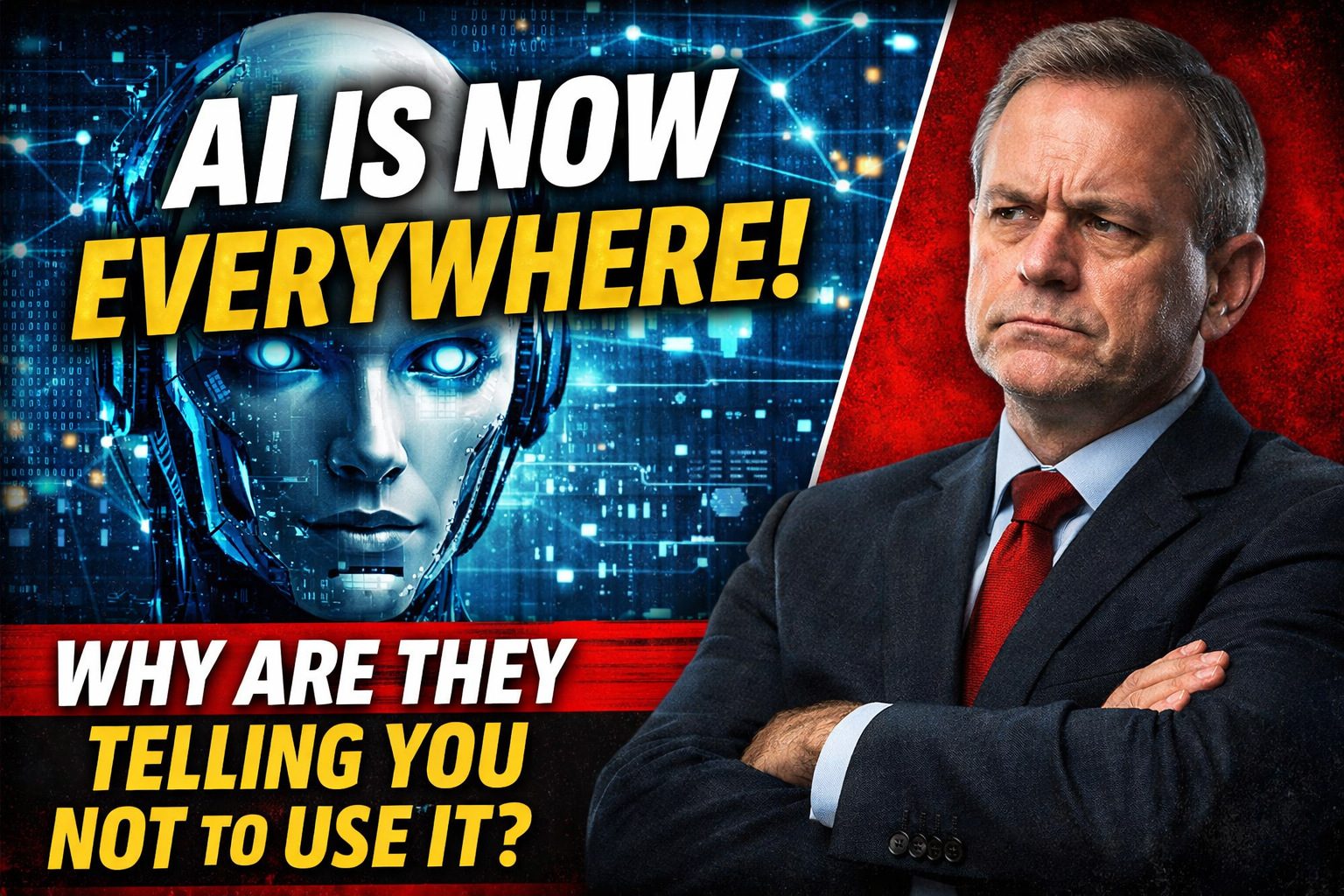
At the very same time, scroll through LinkedIn and you will still find advisers warning consumers:
- “Don’t trust AI.”
- “It hallucinates.”
- “It can’t replace professional advice.”
So we have a contradiction.
Inside the system: universal adoption.
Outside the system: public hesitation messaging.
That tension tells us something important.
We Are Not Debating AI Anymore—We Are Competing With It
The survey data is clear:
- AI is being embedded into workflows
- Up to 50% of services are expected to be AI-supported
- Speed, efficiency, and personalisation are the dominant benefits
This is no longer about whether AI works.
It is about who controls its use.
Because once a tool becomes universal inside a profession, two things happen:
- It stops being a differentiator
- It starts reshaping power dynamics
And that’s where the real story begins.
The Real Risk Isn’t AI Hallucination—It’s Human Gatekeeping
The industry still cites “hallucination risk” as the biggest concern.
But notice the trend:
- Concern is falling
- Confidence is rising
- Adoption is accelerating
In other words, the people closest to the technology are becoming more comfortable with it—not less.
So why the disconnect in public messaging?
Because AI doesn’t just improve efficiency.
It reduces dependency.
For the first time in modern financial history, individuals can:
- Interrogate assumptions
- Compare strategies
- Translate complex documents
- Surface risks at the point of decision
Without needing permission.
That is not a marginal shift.
That is a transfer of agency.
From Advice to Agency
For decades, financial planning has operated on a simple premise:
The professional interprets. The client relies.
AI breaks that model.
Now the client can:
- Ask better questions
- Challenge recommendations
- Explore alternatives in real time
Not after the fact.
Not through complaints.
But before decisions are made.
This is where the Academy of Life Planning has been pointing for years:
The future is not better advice.
It is restored agency.
The LinkedIn Paradox
So who are the voices telling people not to use AI?
They are not wrong about the risks.
AI can:
- Misinterpret context
- Over-optimise unrealistic scenarios
- Miss practical constraints
But here’s the critical distinction:
👉 The answer is not avoidance. It is literacy.
Telling people not to use AI in a world where professionals are using it universally is not protection.
It is disempowerment.
It keeps the asymmetry intact.
The New Role of the Planner
If AI handles:
- Modelling
- Scenario analysis
- Document interpretation
- Information synthesis
Then what remains valuable?
Not control.
Not gatekeeping.
Not intermediation.
What remains is:
- Judgement
- Context
- Behavioural insight
- Ethical framing
- Human accountability
In AoLP terms:
👉 The planner becomes a thinking partner, not a decision-maker.
A Better Question
Instead of asking:
“Should clients use AI?”
We should be asking:
“How do we equip clients to use AI well—before harm happens?”
Because that is where the real opportunity sits:
- AI as a pre-decision safeguard
- AI as a personal regulator upstream of harm
- AI as a decision capital amplifier
Where This Leads
We are moving rapidly from:
90/10 (professional-led)
to
99/1 (self-directed with minimal human support)
Not because advisers disappear.
But because information asymmetry disappears.
And when that happens:
- Trust must be earned differently
- Value must be redefined
- Control must be relinquished
Final Thought
If every professional in the pensions industry is already using AI…
Then the real question is not whether clients should use it.
It is this:
Who benefits if they don’t?
Invitation
The Academy of Life Planning exists for this exact transition:
- From advice → to agency
- From dependency → to decision capital
- From opaque systems → to transparent, client-led planning
This is not about replacing professionals.
It is about restoring balance.
Curious how others see this.
 Academy of Life Planning