
What human capital theory gets right — and what it misses
For many financial planners, the early years of practice are shaped by a simple equation:
More qualifications → better outcomes → better lives
That logic feels solid. It is rooted in decades of human capital theory, where education, skills, and credentials are treated as investments expected to yield predictable financial returns.
But as many experienced planners quietly discover, real lives rarely behave like spreadsheets.
The longer you sit with clients—especially through disruption, loss, career change, health shocks, or systemic failure—the clearer it becomes: human capital is not linear, not reliably monetisable, and not always rewarded by the system it is meant to serve.
A comprehensive academic review of human capital theory highlights why this matters—not just for policymakers, but for planners rethinking their role in a changing world.
[Ref: Human Capital: State of the Field and Ways to Extend the Concept Trofimov, Ivan D. and Baawi, Nurulhana A. Kolej Yayasan Saad (KYS) Business School, Malaysia February 2020.]
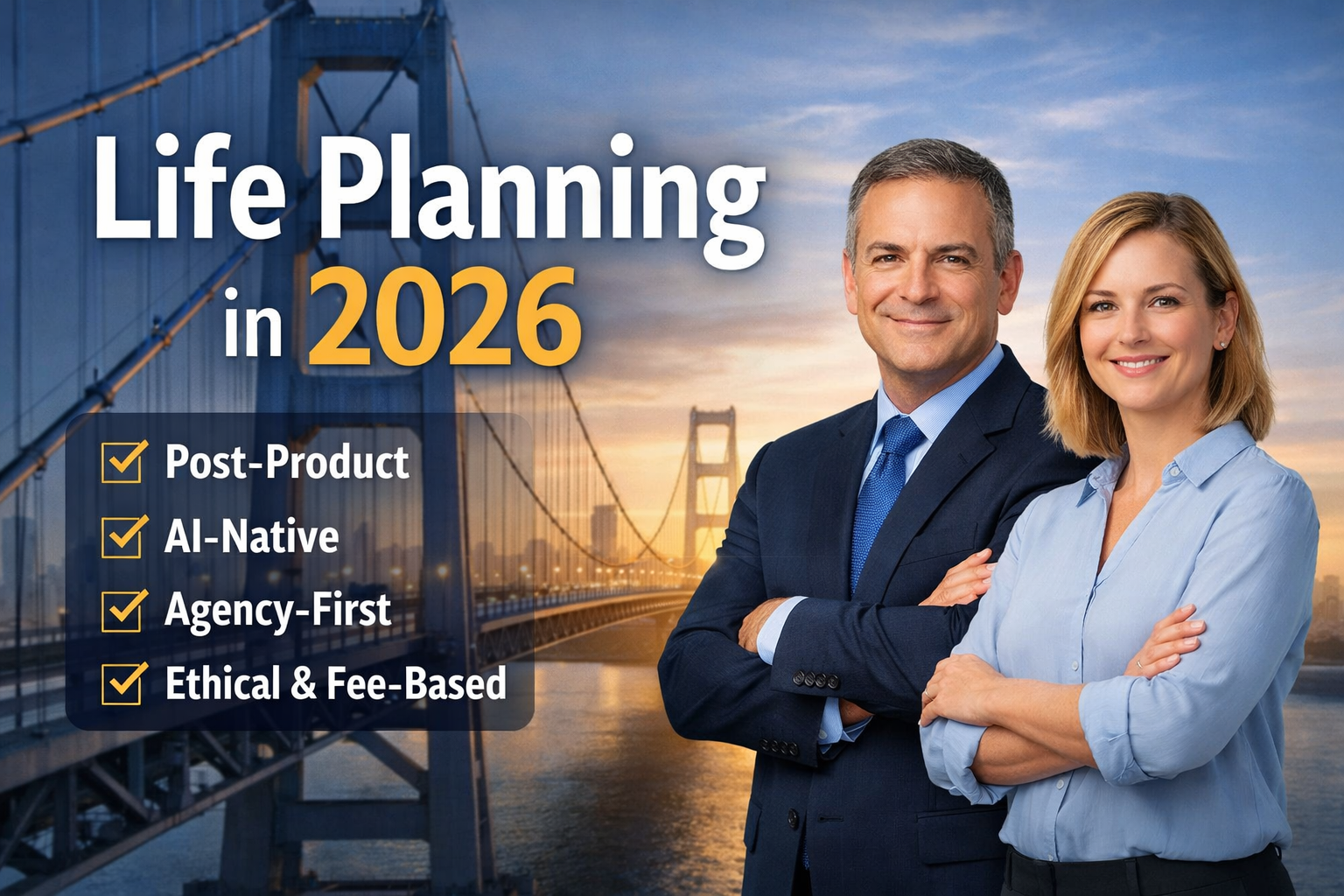
What follows are some of the most important lessons planners tend to learn when they cross the bridge into Total Wealth Planning.
1. Education does not guarantee outcomes — context does
Traditional human capital models assume that education and skills naturally translate into higher earnings and stability.
The evidence is far more mixed.
The study shows that returns on education vary wildly depending on context—economic cycles, institutional quality, labour market structures, and even geography. In many cases, people accumulate “human capital” yet experience stagnation, precarity, or declining wellbeing.
Total Wealth Planners stop assuming outcomes.
They start designing resilience.
They help clients build adaptable life architectures—diverse income capacity, social capital, health, optionality—rather than betting everything on a single career trajectory.
2. Human capital is multi-dimensional, not just economic
The research is explicit: reducing human capital to earnings strips it of its most important dimensions.
Human capital also includes:
- Health and energy
- Emotional and psychological capacity
- Social and relational capability
- Purpose, meaning, and agency
- Ability to adapt to uncertainty
Traditional advice systems rarely plan for these because they are difficult to commoditise.
Total Wealth Planning places them at the centre—because when any one of these collapses, financial plans often collapse with them.
3. Returns are uncertain — and sometimes negative
One of the most uncomfortable findings in the study is that human capital can depreciate.
Skills become obsolete.
Industries disappear.
Burnout erodes performance.
Systemic shocks wipe out expected returns.
Conventional planning frameworks struggle here because they rely on projection, optimisation, and historical continuity.
Total Wealth Planners plan differently:
- They assume uncertainty.
- They build margin, not precision.
- They treat learning, reinvention, and recovery as lifelong processes—not early-career phases.
4. People don’t invest in life purely for money
The study confirms something planners see every day but rarely say out loud:
People pursue education, careers, and change for many reasons beyond income.
Identity.
Dignity.
Contribution.
Belonging.
Freedom.
When planning ignores these drivers, it often produces technically “sound” plans that feel hollow—or quietly unbearable—to live with.
Total Wealth Planning integrates values, life goals, and human development into the planning process, not as soft extras but as structural inputs.
5. Systems matter more than individual effort
A recurring theme in the research is that human capital outcomes are shaped as much by systems as by personal effort.
Institutional trust.
Fair governance.
Access to opportunity.
Quality of education and work environments.
Traditional advice models often individualise failure: “save more”, “work harder”, “upskill again”.
Total Wealth Planners recognise when clients are navigating structurally untrustworthy systems—and help them regain agency, clarity, and footing rather than blaming them for outcomes they could not control.
6. Planning becomes a partnership, not a prescription
Once you accept that:
- outcomes are uncertain,
- capital is multi-dimensional,
- and life is non-linear,
the role of the planner inevitably changes.
You are no longer a product intermediary or projection technician.
You become:
- a guide,
- a coach,
- a thinking partner,
- a steward of agency.
This is the quiet but profound shift at the heart of Total Wealth Planning.
Crossing the bridge
Many planners feel this shift long before they can articulate it.
They sense that:
- traditional advice models are narrowing, not deepening,
- clients need more than optimisation,
- and the future demands planners who can work with complexity, not just compliance.
The Academy of Life Planning exists to support that transition—carefully, ethically, and without asking you to abandon your professionalism or identity.
Crossing the bridge is not about rejecting finance.
It’s about placing it back in service of life.
If you’re exploring what that transition could look like—at your pace—there are structured pathways, peer support, and practical tools designed specifically for planners standing where you are now.
 Academy of Life Planning