
“Wealth is not just what you own. It is who you become.”
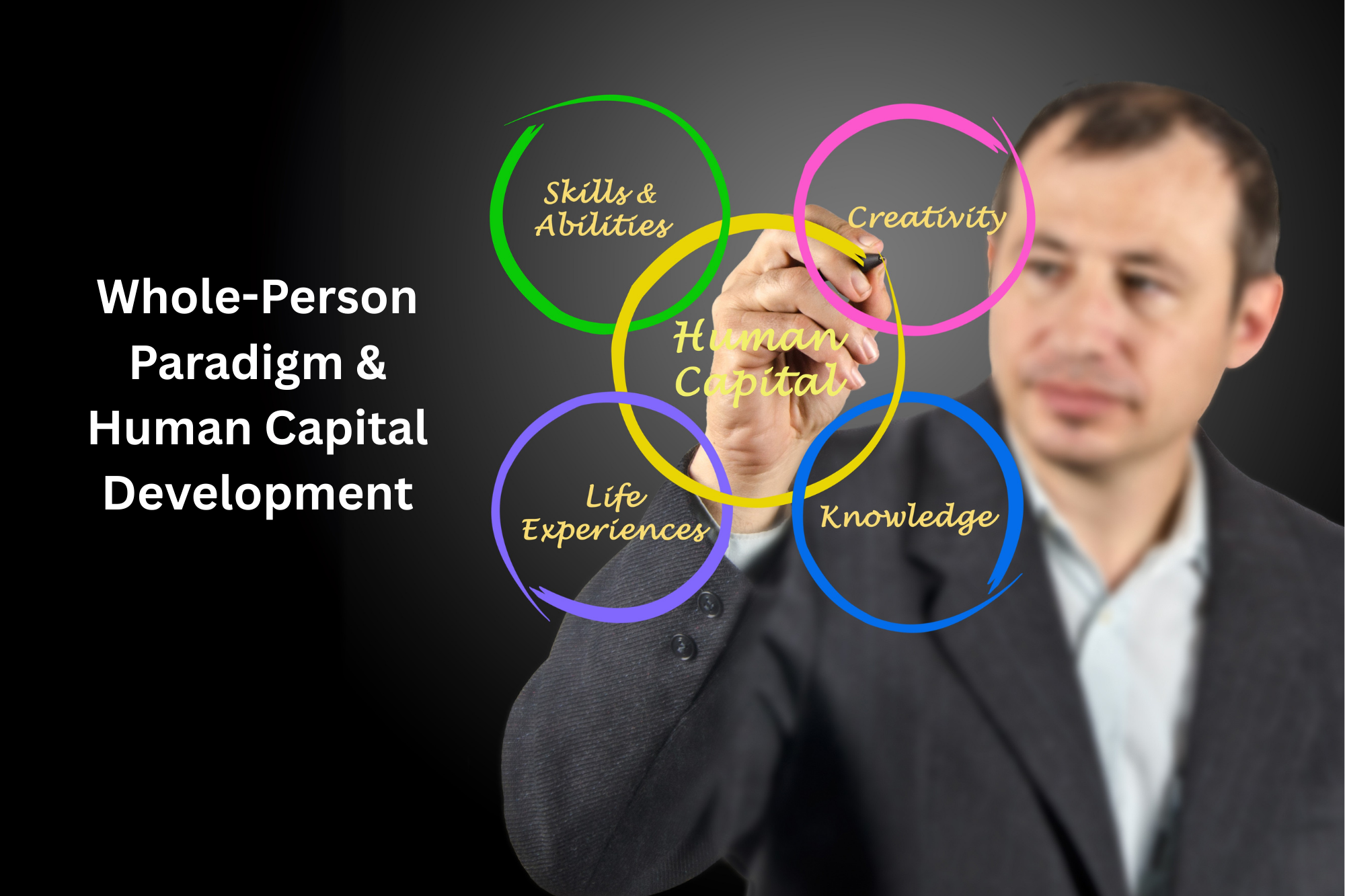
For decades, mainstream economics measured growth in narrow terms: GDP, output, financial assets. Yet research consistently shows that these traditional factors—capital, land, labour—cannot alone explain the drivers of prosperity. What’s missing is human capital—the knowledge, health, relationships, and inner strengths that enable people to thrive.
A recent study on human capital and economic development highlights a profound truth for planners: investing in human beings is more impactful than investing in money. But to unlock its full potential, we must think in whole-person terms—mind, body, heart, and spirit.
[“Human Capital and its Influence on Economic Development: The Case of Romania”
Published in the Annals of the Constantin Brâncuşi University of Târgu Jiu, Economy Series (Issue 4/2015) by Andra Miculescu and Monica Boldea, West University of Timisoara.]
1. Mind – Knowledge, Skills, and Lifelong Learning
Evidence from the OECD and EU shows that higher education and ongoing learning significantly raise productivity and resilience. Investment in training, literacy, and adaptability pays higher long-term dividends than financial speculation.
For planners: Encourage clients to see education—whether a degree, digital skill, or personal development course—as part of their portfolio. Learning compounds like interest.
2. Body – Health as an Economic Asset
Health services, life expectancy, and wellbeing are explicitly identified as foundations of human capital. Without physical vitality, individuals cannot contribute productively or enjoy the fruits of their labour.
For planners: Position health spend (nutrition, preventive care, exercise) not as costs but as capital investments. A strong body sustains earning power and reduces financial vulnerability.
3. Heart – Relationships and Social Capital
Social trust, networks, and reciprocity reduce transaction costs, improve education and health, and enable long-term planning. High-trust societies flourish; low-trust environments stagnate.
For planners: Wealth strategies must include cultivating strong families, communities, and professional networks. Social capital multiplies human capital. Without heart, wealth becomes brittle.
4. Spirit – Meaning, Resilience, and Psychological Capital
Optimism, hope, perseverance, emotional intelligence, and gratitude—what researchers call psychological capital—prove decisive in navigating uncertainty and sustaining growth. Spirit fuels resilience.
For planners: Support clients in connecting money with meaning. Align financial goals with values, purpose, and legacy. A spirit-aligned plan transforms wealth into wellbeing.
From Assets to Alignment
The research is clear: human capital is not just about skills—it’s about the integration of mind, body, heart, and spirit. Economic growth, personal resilience, and family prosperity all flow from this alignment.
Holistic Wealth Planners are uniquely positioned to guide clients beyond products and portfolios, toward whole-person strategies for wealth. This means:
- Framing education and health as investments.
- Recognising relationships and trust as assets.
- Valuing mindset and spirit as multipliers of prosperity.
In short, a paradigm shift: from managing money in isolation to nurturing the whole person as the true engine of sustainable wealth.
🔑 Takeaway:
If financial planning remains product-driven, it will fail to meet the challenges of the 21st century. But when we see wealth as human flourishing—mind, body, heart, and spirit together—we unlock the real potential of human capital and create plans that endure.
Find out more, join our tribe at the Academy of Life Planning for free.
 Academy of Life Planning