
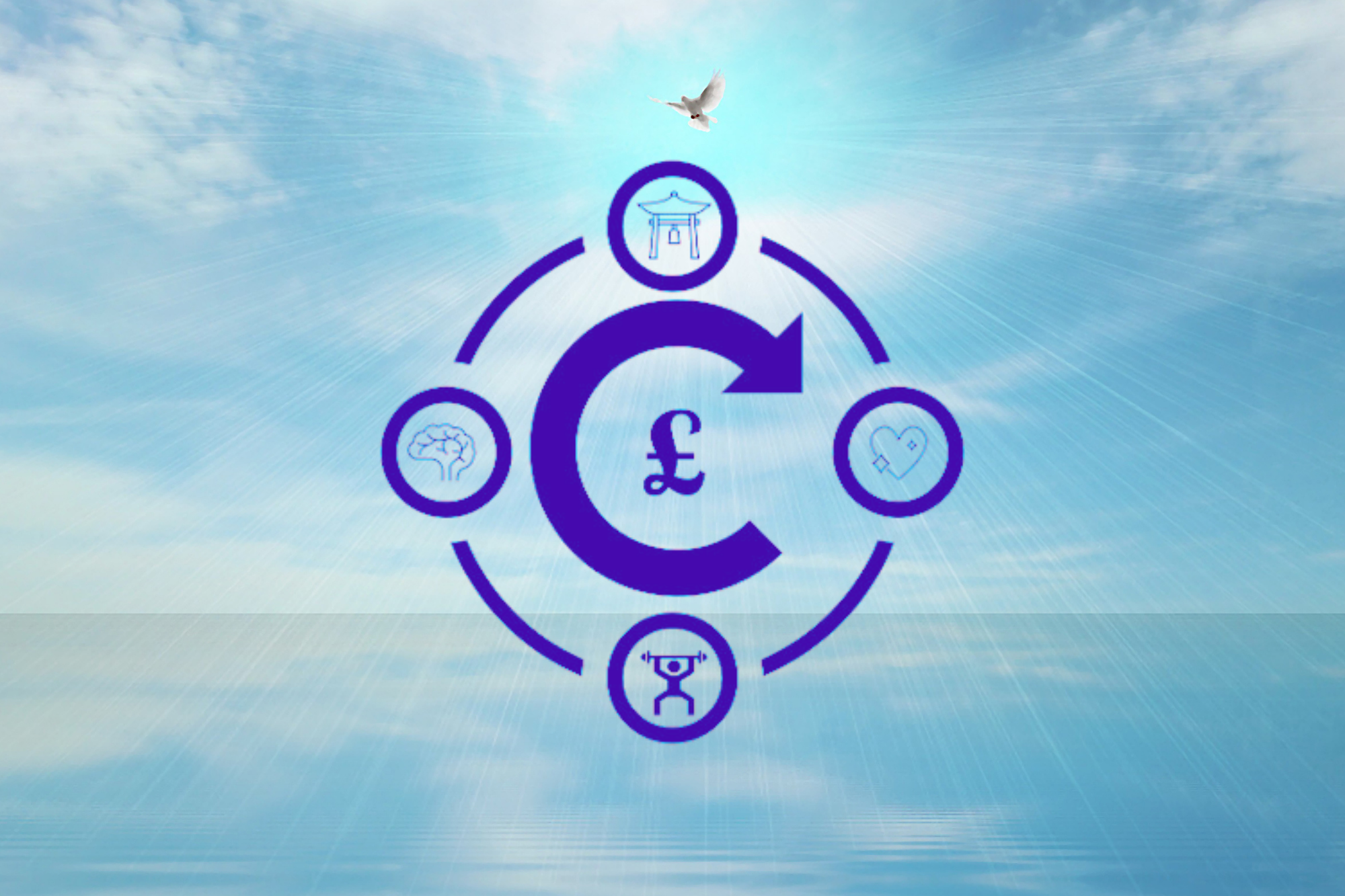
“Wealth is more than money. It is the sum of who you are, what you can do, and how you contribute to the world.”
For decades, mainstream economics treated human capital narrowly: education, skills, and health that could be measured in financial returns. Useful, yes—but partial.
A recent study by Paula England and Nancy Folbre (Reconceptualizing Human Capital) widens this view dramatically. They argue that human flourishing depends on more than earnings potential. It rests on four interdependent sets of capabilities:
- Physical capabilities: health, strength, and motor skills.
- Cognitive capabilities: reasoning, problem-solving, education.
- Self-regulation: discipline, emotional intelligence, impulse control.
- Caring: empathy, nurturing, and supportive relationships.
This broader framework mirrors what we at the Academy of Life Planning have long championed: that true wealth planning must consider the whole person—not just their financial assets, but their human, emotional, social, and spiritual capital.
The GAME Plan™ and Human Capital
Our GAME Plan™ framework begins with values and talents. Before planning money, we help people answer:
- What am I good at?
- What do I love to do?
- What does the world need?
- What will people pay me for?
This is your Ikigai—your reason for being. From there, we look at the four dimensions of human capital:
- Physical capital – health, vitality, location, community, environment.
- Mental capital – skills, education, mindset, preferences.
- Emotional capital – resilience, discipline, access to support, relationships.
- Spiritual capital – purpose, character, empathy, reputation, brand appeal.
Together, these create the foundation for building a sustainable livelihood—one that supports not only your financial security but also your sense of meaning, fulfilment, and contribution.
Why This Matters Now
The England & Folbre study reinforces what our practice has shown in real lives:
- Capabilities are socially embedded. Family, community, and networks shape who we become just as much as personal effort.
- Skills and preferences grow together. We don’t just learn skills—we learn to love (or dislike) exercising them.
- Caring is undervalued but essential. Society runs on empathy, kindness, and support, even if markets don’t pay for them.
The implication? If you plan only around financial capital, you plan half a life. To thrive, individuals—and societies—must invest in whole-person capital.
The Future of Financial Life Planning
The Academy’s mission has always been to replace extraction with empowerment. We see planning as more than balancing a spreadsheet—it’s about balancing a life.
- Your Ikigai points to opportunity.
- Your human capital provides the leverage.
- Your GAME Plan™ aligns these with entrepreneurial pathways that create sustainable livelihoods.
This isn’t just financial planning. It’s life planning for the Aquarian Age—a holistic framework where purpose drives profit, caring is recognised as capital, and wealth is measured in more than money.
Final Thought
The study confirms what we at the Academy have always known: when you plan your life first and your money second, you unlock the true power of your human capital.
💡 Ready to discover your Ikigai and build a future you love? Explore the GAME Plan™ framework with us at http://www.aolp.info.
Key conclusions from Reconceptualizing Human Capital by Paula England and Nancy Folbre:
1. Shift from “Human Capital” to “Capabilities”
- Traditional human capital theory is too narrow, focusing mainly on skills and health that increase earnings.
- The authors propose “capabilities” (after Amartya Sen) to capture a broader range of human development that contributes to individual and collective well-being, not just market productivity.
2. Four Fundamental Capabilities
They identify four overlapping categories of basic capabilities essential for human flourishing:
- Physical functioning – health, strength, and motor skills.
- Cognitive functioning – reasoning, problem-solving, and education.
- Self-regulation – self-discipline, impulse control, and emotional intelligence.
- Caring – skills and attitudes needed to nurture, empathize, and provide support.
3. Capabilities Are Socially Embedded
- Development is not just about self-investment (as in neoclassical theory) but also about inputs and externalities:
- Family, peers, schools, neighborhoods, and broader social networks shape capabilities.
- Many crucial inputs (like language use at home, parental warmth, or peer influence) are unintended externalities, not deliberate investments.
- Capability development is deeply influenced by political, social, and economic structures (e.g., housing segregation, school funding, access to health care).
4. Skills and Preferences Are Intertwined
- Capabilities are not just about skills, but also about developing preferences and tastes for exercising those skills.
- Example: self-regulation is both a “muscle” (skill) and a “taste” (valuing delayed gratification).
- This challenges the neoclassical view that skills and preferences are separate and that preferences are fixed/exogenous.
5. Caring as a Core Capability
- Caring labor is undervalued economically but essential socially:
- Everyone depends on care at some life stage (childhood, illness, old age).
- Yet caring work (mostly done by women) is poorly paid or unpaid.
- The authors argue caring should be recognized as a fundamental capability and public good, requiring collective solutions (e.g., state support, pay equity, or comparable worth policies).
6. Critique of Neoclassical Assumptions
- Rationality assumption: Rational choice theory assumes agents already have well-developed cognitive skills, but in reality, rationality itself is a capability developed unequally across people.
- Investment model: Overemphasis on deliberate investment ignores externalities, collective influences, and early-life constraints.
- Market valuation: Explaining low wages for caring labor as a “preference” outcome misses the intertwined nature of skills and altruism.
7. Policy Implications
- Recognize and support capabilities beyond earnings (e.g., care, self-regulation, social well-being).
- Treat caring as a public good, with policies to redistribute its costs and rewards more fairly.
- Develop education and social policy that address capability formation as a socially embedded process, not just individual choice.
✅ In essence: The study calls for abandoning the narrow economic lens of “human capital” and replacing it with a richer, socially aware framework of “capabilities” that integrates health, cognition, self-discipline, and care. This reconceptualization exposes blind spots in neoclassical economics, highlights structural inequalities, and opens pathways for more just and sustainable policy.
Join the M-Power Movement
What’s in it for you?
- Empowerment: Learn how to manage your money and grow your wealth with confidence.
- Entrepreneurship: Discover tools and support to turn your ideas into thriving businesses.
- Community: Connect with like-minded individuals and organisations dedicated to financial freedom for all.
How to Get Started:
- Join Our Community: Access free resources, workshops, and networking opportunities.
- Book a Call: Speak with an expert to explore how we can support your journey to financial independence.
- Spread the Word: Help us build a global movement by sharing this vision with your network.
Together, we can redefine what financial planning means, transforming it from a service of dependency into a tool of empowerment. The M-Power Movement is not just about creating wealth; it’s about creating a fairer society where everyone has the opportunity to thrive.
Are you ready to take control of your financial future?
Join us today and be part of this transformative journey.
Visit www.PlanningMy.Life.
 Academy of Life Planning