
By Steve Conley,
Founder, Academy of Life Planning
“You cannot heal what you refuse to name.”
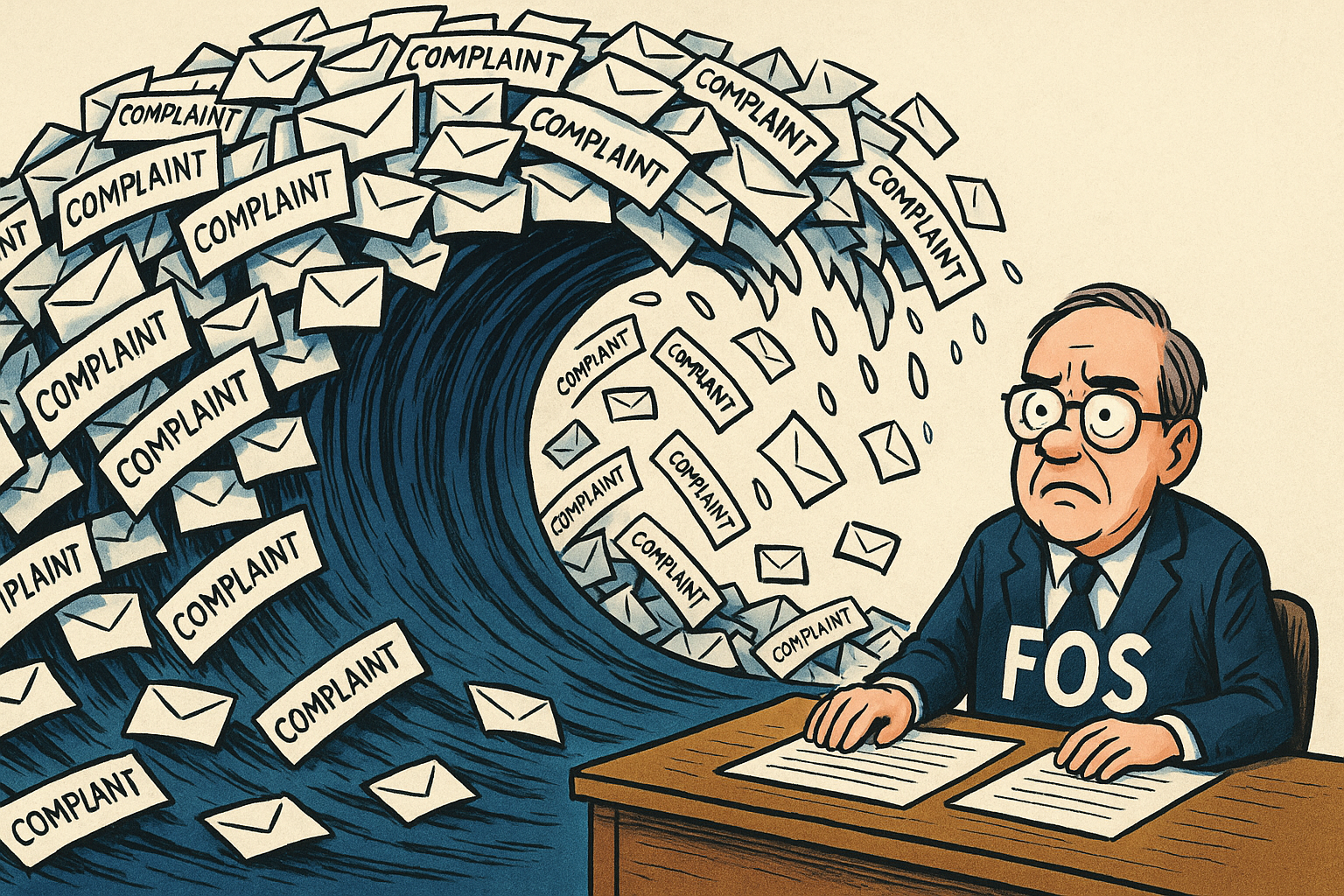
The Financial Ombudsman Service (FOS) has just reported a staggering 305,726 complaints for the financial year 2024/25 — a 50% increase year-on-year and the highest volume since the PPI redress scandal.
But this isn’t just about statistics. This is a red flag. A siren. A systemic warning.
The Real Issue Isn’t the Complaints. It’s Why They’re Happening.
The FOS is designed as a dispute resolution service — the last resort when regulated firms refuse to uphold valid consumer complaints. That over 305,000 people had to escalate their cases to this level is not a sign of a functioning system. It’s an indictment of one that’s failing — failing to address harm when it occurs, failing to resolve disputes early, and most importantly, failing to act in the public interest.
The majority of these cases relate to mass redress events — motor finance commissions, unaffordable lending, and fraud. These aren’t isolated incidents. They are systemic breaches with widespread impact.
Yet the Financial Conduct Authority (FCA) — the body responsible for prevention — continues to delay decisions and avoid clarity. This failure to proactively set out redress schemes and legal determinations means more cases fall unnecessarily into the lap of the FOS, driving up both cost and consumer frustration.
The Hidden Cost of Delay
Every delay escalates harm:
- Firms remain unaccountable.
- Consumers suffer longer.
- Legal clarity is postponed.
- Case volumes overwhelm the ombudsman.
- Resources are diverted to resolve what should’ve been fixed upstream.
Let’s be clear: redress should happen at first contact — or better still, proactively. Waiting for consumers to exhaust themselves through dispute resolution is both unjust and inefficient.
This is not just a regulatory failure. It is a consequence of a political agenda.
Deregulation Disguised as Growth
The Government’s current deregulatory playbook, aimed at making the UK the financial capital of the world, is fuelling this crisis. In prioritising institutional “growth,” it has created a fertile ground for mis-selling, misconduct, and corporate impunity — while quietly shifting the cost of justice onto the consumer.
Blaming Claims Management Companies (CMCs) for the surge is a distraction. Yes, professional representatives bring half the cases — but the new £250 FOS charge for represented complaints is designed to weed out the frivolous. The real risk now is that vulnerable people with genuine claims will be priced out of justice.
The Fix: Clarity, Accountability, and Early Redress
To reverse this trend, we must demand:
- Earlier regulatory intervention, with legal clarity on mass harm events.
- Mandatory redress schemes for systemic issues, fast-tracked through firm-level action.
- An empowered ombudsman, not burdened by volume, but backed by policy.
- Access to justice, regardless of representation or income level.
Conclusion: Listen to the Signals
This explosion in FOS complaints is not a mark of success — it’s a cry for help. For every complaint recorded, many more go unspoken. Behind the numbers lie real people, real losses, and a system that too often turns away.
If we want a financial system that earns public trust, we must stop patching leaks downstream — and start fixing the pipework at the source.
About Get SAFE
Get SAFE (Support After Financial Exploitation) was born from a simple truth: too many victims of financial abuse are left to suffer in silence.
We exist in memory of Ian Davis—for the ones who did everything right, only to be failed by the systems they trusted. We know that behind every vanished pension, every ignored complaint, and every stonewalled letter is a person—frightened, exhausted, and too often alone.
Get SAFE offers more than sympathy. We offer structure, support, and solidarity.
We provide a voice where there’s been silence, and clarity where there’s been confusion.
We stand beside those who have been exploited, not just to help them recover—but to help them reclaim their story and rebuild their future.
Because financial justice is not a luxury.
It’s a human right.
If you or someone you know has been affected by financial exploitation, we are here.
You are not alone.
Learn more at: Get SAFE (Support After Financial Exploitation).
 Academy of Life Planning