

“Trust is not what you say. It’s what you build — and what remains when you’re gone.”
In the financial advice profession, we spend years building relationships based on trust. We listen deeply, guide carefully, and strive to be the dependable presence our clients rely on through life’s transitions.
But what happens when we step away?
What happens when the most trusted adviser retires, becomes unavailable, or passes on?
For clients who have reached the highest levels of emotional engagement — what Gallup calls Passion in its CE11 framework — this absence can feel like a betrayal. If the relationship was built around one person, then its loss risks breaking more than rapport. It risks breaking continuity, security, and peace of mind.
This is where Structural Permanence comes in.
💡 What Is Structural Permanence?
Structural Permanence is the practice of designing your financial planning firm in a way that ensures the client relationship outlives the individual adviser.
It’s not just succession planning.
It’s a deeper commitment to preserving the emotional, ethical, and practical integrity of the client experience — no matter who’s in the chair.
Because if a client says, “I can’t imagine life without this adviser,” then the firm must ensure they never have to.
🔍 Why It Matters
Too often, financial planning is built on the strength of one adviser’s charisma or care. That’s a fragile system. As we’ve seen across the industry, without proper continuity, even the most beloved client relationships can unravel in the absence of a trusted figurehead.
Structural Permanence resolves this risk by embedding trust not in the individual — but in the system.
It protects:
- Client confidence in continuity
- The emotional bond built over years
- A values-aligned legacy beyond a single planner
🧱 Pillars of Structural Permanence
To embed permanence in practice, planners must move beyond good intentions and implement real structures:
1. Continuity Systems
- Documented succession plans that prioritise the client’s experience, not just internal operations.
- Team-based delivery models that introduce secondary advisers early — not as a backup, but as a collaborative presence.
- Client life-mapping and story-keeping tools, ensuring context isn’t lost across handovers.
2. Cultural Embedding
- A shared planning philosophy and language across the entire team.
- A values-based firm culture where trust is generated by the system, not charisma.
- Training that aligns every team member with your emotional engagement ethos.
3. Trust Transfer Protocols
- Triadic meetings to introduce clients to successors before any transition is imminent.
- “Continuity Conversations” as part of annual reviews.
- Client-facing commitments (like Continuity Pledges or Legacy Letters) reinforcing that their trust is not person-dependent.
🧭 A Planning Philosophy Built to Last
We call this shift from personality to principle Structural Permanence. It’s a way to future-proof trust.
It sends a powerful message to clients:
“This relationship isn’t just with me — it’s with a system that’s designed to honour your journey, your values, and your legacy for life.”
It transforms the final stage of emotional engagement — Passion — into something sustainable. No longer a point of vulnerability, but a source of strength.
🛠 Tools You Can Use
To support this shift, we’ve developed a toolkit as part of The Trustworthy Adviser Experience™, including:
- A Client Continuity Commitment: A document outlining what Structural Permanence looks like in practice
- A Continuity Conversation Script: For use during reviews or life transitions
- A Trust Transfer Checklist: To ensure smooth, ethical, and emotionally intelligent adviser transitions
- A Legacy Logbook: A client-facing tool to capture values, stories, and preferences for future advisers
- Optional: Continuity-Certified Practice™ Accreditation (coming soon)
Genius Model: The Trustworthy Engagement Framework™
Below is a Genius Model for the Trustworthy Engagement Framework™, integrating Gallup’s CE11 emotional engagement levels with structural independence and fiduciary alignment.
“Where Emotional Resonance Meets Ethical Structure”
This model is structured as a 3-circle Venn diagram with a central sweet spot labeled “The Trustworthy Adviser Experience™” — the convergence of emotional engagement, structural alignment, and life-centered discovery.
CIRCLE 1: EMOTIONAL ENGAGEMENT
Based on Gallup’s CE11 Hierarchy
Confidence – “I trust you.”
Integrity – “You treat me fairly.”
Pride – “I feel good working with you.”
Passion – “I can’t imagine life without this partnership.”
Client Experience Result:
Emotional Attachment → Advocacy, Loyalty, Lifetime Value
CIRCLE 2: STRUCTURAL TRUSTWORTHINESS
Powered by Fiduciary and Independent Standards
No Commissions / No Conflicts
Transparent Fees & Service Models
Planning-First, Advice-First, Not Sales-Driven
Institutional Independence / No Agency Ties
Practice Outcome:
Ethical Security → Consistent Delivery, Client Protection, Long-Term Credibility
CIRCLE 3: LIFE-CENTERED DISCOVERY
Driven by Strengths-Based, Values-Aligned Conversations
Discovery Questions Rewritten for Emotional Alignment
Goals, Fears, Dreams, Legacy & Vision at the Core
Custom Journey Based on What Matters Most to the Client
Planning that reflects Identity and Aspirations
Planning Outcome:
Personal Relevance → High Trust, Engagement, Client Empowerment
CENTER: THE TRUSTWORTHY ADVISER EXPERIENCE™
The Genius Zone = Emotional + Structural + Life-Centered
Clients feel deeply understood, ethically protected, and emotionally committed
Planners operate from a system of values, independence, and human connection
The relationship becomes irreplaceable — and built for life
“Not just trusted. Structurally trustworthy. Emotionally essential.”

🎓 Become a Certified GAME Plan Practitioner
Ready to transform lives — starting with your own?
Join our online GAME Plan Practitioner Training Course and gain the tools to deliver purpose-led, human-centred financial planning. Whether you’re starting out or transitioning from traditional advice, this course empowers you to guide others toward true wealth — built on values, not just assets.
✅ Learn the GAME Plan framework
✅ Align planning with human capital, not product sales
✅ Get accredited and join a global network of ethical planners
Start your journey today.
👉 Enroll Now and lead the future of financial planning.
📎 Addendum: Operationalising Structural Permanence — A Toolkit for Continuity of Trust
“Trust isn’t transferred through succession plans — it’s transferred through systems that remember, relate, and reassure.”
Building structural permanence means designing a firm where client relationships are protected by design. It’s not enough to promise continuity — we must operationalise it.
That’s why we’ve expanded the Structural Permanence model to include a comprehensive Continuity Toolkit, co-developed as part of The Trustworthy Adviser Experience™. This suite of tools ensures that clients experience lasting emotional and structural confidence — even as team members change.
🔧 Continuity Toolkit Overview
These are the five core tools to embed structural permanence into your firm:
1. Client Continuity Card
A quick-reference document capturing the human side of the relationship — from values and emotional anchors to life events and communication preferences.
Purpose:
Ensure any team member or successor can step in with empathy and context, not just data.
Includes:
- Core values
- Key milestones
- Emotional triggers
- Relationship summary
2. Continuity Match Matrix
A planning grid used to align clients with successor advisers or support team members proactively, based on relational fit.
Purpose:
Avoid emotional disruption by building comfort before transitions occur.
Tracks:
- Primary & successor advisers
- Introduction status
- Client feedback
- Match rationale
3. Continuity Pledge
A written, values-based promise from the firm that care, clarity, and consistency will remain intact — no matter who’s in the chair.
Purpose:
Give clients confidence that their trust is protected by structure, not just personal rapport.
Usage:
- Onboarding
- Succession discussions
- Client service charters
4. Quarterly Trust Check
An internal process to assess continuity readiness and emotional stability across the client base.
Questions include:
- Have successor introductions occurred?
- Has the Continuity Card been updated?
- Is CE11 engagement steady or improving?
Purpose:
Track emotional and operational indicators of trust health over time.
5. Continuity Conversation Script
A structured, conversational tool to help planners naturally introduce continuity principles during reviews or key transitions.
Sample Lead-In:
“We want you to feel secure not just today, but always — and that means making sure our promise to you lives on, no matter what changes.”
🧭 How to Implement
We recommend firms roll this out in three tiers:
| Tier | Focus | Tools |
|---|---|---|
| Essential | Reassurance & Visibility | Pledge, Matrix |
| Proactive | Emotional Engagement Maintenance | Continuity Card, Script |
| Transformational | System-Wide Trust Transfer | Quarterly Checks, CE11 Feedback, Legacy Summaries |
Assign a Continuity Champion within your team, embed toolkit items into CRM workflows, and use CE11 indicators to monitor emotional resilience post-transition.
💬 Final Reflection
Clients don’t want to feel like they’re starting over. They want to know that their story, values, and goals are remembered — and honoured — no matter what.
Structural Permanence is the architecture that makes this possible.
When we stop treating trust as a personal asset and start treating it as a structural outcome, we elevate our profession — from adviser-dependence to firm-wide integrity.
The result?
Unbreakable relationships.
Continuity without compromise.
And a client experience that lasts a lifetime.
Explore the full Continuity Toolkit at [www.aolp.co.uk] or reach out to implement it within your practice through The Trustworthy Adviser Experience™.
Your Money or Your Life
Unmask the highway robbers – Enjoy wealth in every area of your life!
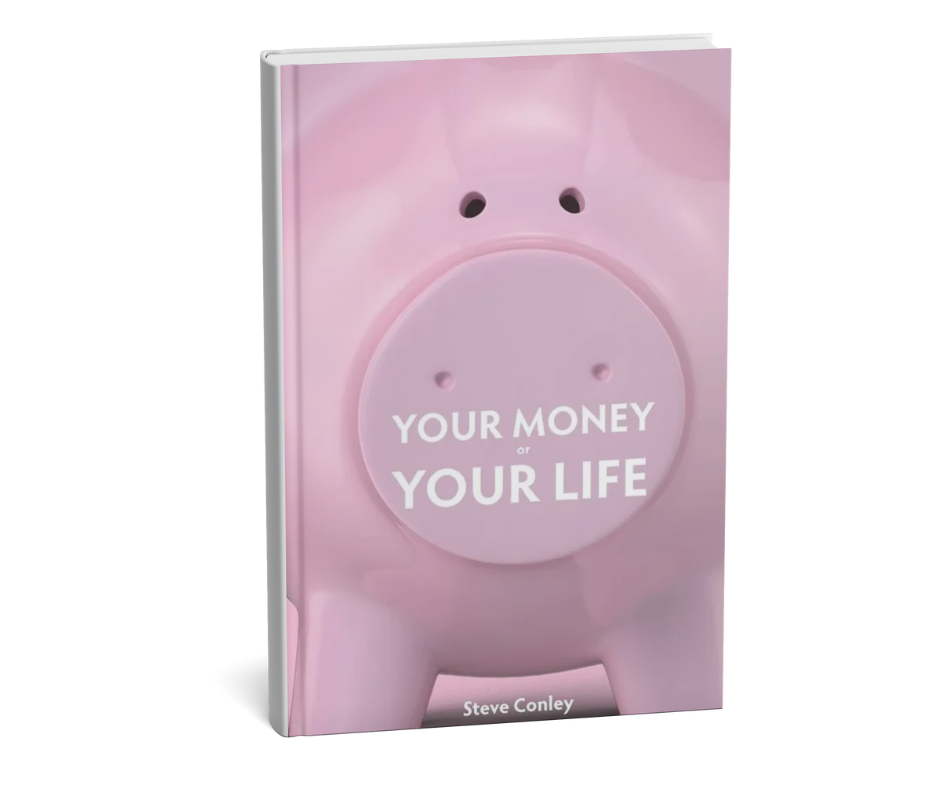
By Steve Conley. Available on Amazon. Visit www.steve.conley.co.uk to find out more.
 Academy of Life Planning