

Fifteen years ago, as Head of Investments at HSBC, I had already delivered six market firsts and six market leader positions. But none of that mattered when I entered the next “season” of my career. The slate was wiped clean.
“We want bigger and better,” they said.
It was clear: results didn’t matter if they challenged the status quo. In my search for meaningful value, I turned again to Stephen R. Covey’s Fourth Habit — Think Win-Win. I sought a proposition that served both bank and customer. That had been my formula for sustainable success. So, I asked: what matters most to customers?
The answer was unequivocal: trust.
Trust — the Elusive Currency
Edelman’s Trust Barometer confirmed the bitter truth: financial services was the least trusted industry globally. Not just once — but every year, in every market. Fast-forward to today, and national “violation trackers” show the financial sector receives 60% more fines than any other industry.
Customers value trust above all else. Yet the system values it least.
The system is not just untrustworthy. The system is rigged.
And who pays the price?
Everyone.
Take the Mastercard scandal: every UK consumer financially harmed — without consent, without justice. This is not failure. This is design.
The Trusted Adviser Project
Back at HSBC, I proposed a fix — the Trusted Adviser Project. Research revealed that globally, life planners were the most trusted. George Kinder and I ran a successful pilot. The model worked. It put the customer first. But I was naïve.
Two insights changed everything:
- There’s a difference between being trusted and being trustworthy.
Untrustworthy advisers can learn to be trusted through grooming tactics. Trust becomes a tool of manipulation. - Advisers are only one part of the ecosystem.
The entire financial architecture — from providers to regulators — is designed around personal profit, not principles.
When the Retail Distribution Review landed in 2013, senior executives across the UK banking sector colluded — without consulting professionals or reviewing the success of the Trusted Adviser Project — and decided bancassurance was a zero-sum game. They saw no profit in doing the right thing.
I was the most senior qualified wealth expert in marketing for HSBC Retail, chairing the BBA Bancassurance Steering Group. Yet I was kept in the dark. The bean counters had won.
So I walked away.
Building the Trustworthy System
On April 2, 2012, I founded the Academy of Life Planning. A decade on, it has become a sanctuary — a community-led rebellion against the extractive system. In May 2015, I joined the Transparency Task Force to campaign for top-down change. But I quickly realised: true transformation begins from the bottom up.
Thus, my focus turned to what makes an adviser truly trustworthy.
This is where I lose friends — because when you’re inside the rigged system, you often don’t realise it. The truth can sound like heresy. But the evidence is irrefutable, and growing. What I’ve uncovered is simple, yet radical:
The Five Truths of Trustworthy Advice:
- The client is the customer — not their money.
- You plan the client before you plan the money.
- You model total wealth — human and financial capital — against lifetime liabilities.
- The goal is not wealth, but whole-person well-being — mind, body, heart, and spirit.
- Advice is separated from product.
Trustworthy advisers do not sell products, hold agency with providers, or take commissions. They sell plans, not products. They sit on the same side of the table as the client — allies against a rigged machine.
Yes, the System Is Rigged
If this offends, so be it. The entire edifice — providers, professional bodies, regulators, judiciary, and government — is beholden to power. Party colours are irrelevant when they’re all funded by City lobbyists.
Yet still, we rise.
At the Academy, we provide the trustworthy system — to clients, to planners, and to victims of financial abuse. We’re translating our flagship GAME Plan into Spanish and expanding it across LATAM. For those who’ve lost life-changing sums of money, we offer support free of charge.
But be warned: in this system, the trustworthy are often penniless. The untrustworthy are wealthy.
Why? Because trust cannot be monetised in a rigged game. But that doesn’t stop us. We work from love. They work from fear. And life’s journey — the soul’s evolution — is from fear to love.
That’s why life planning matters.
The Vision Ahead
I dream of a future where the trustworthy adviser is part of a trustworthy system — one that identifies sustainable, regenerative futures for all of humanity and builds the financial architecture to support them.
It’s not just about money.
It’s about meaning.
It’s not just advice.
It’s alignment.
It’s not just a job.
It’s a calling.
To those who feel this — deep in your bones — I say: welcome. You’re not alone.
The stars have been waiting.
Your Money or Your Life
Unmask the highway robbers – Enjoy wealth in every area of your life!
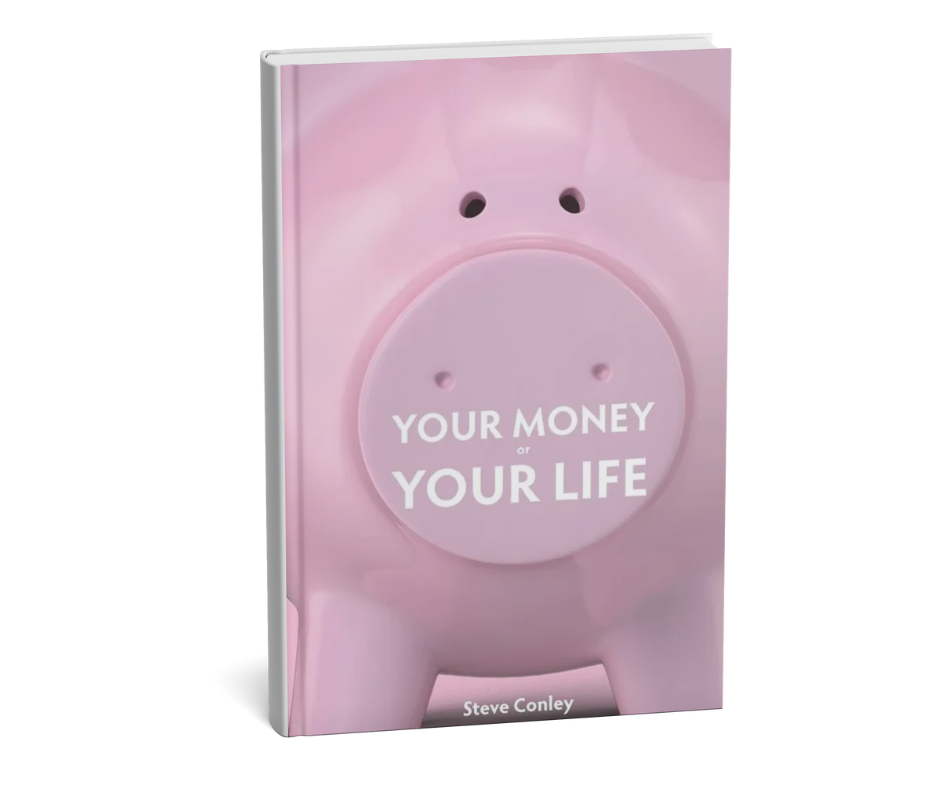
By Steve Conley. Available on Amazon. Visit www.steve.conley.co.uk to find out more.
 Academy of Life Planning
Thank you, Johan, for sharing the Gallup Customer Engagement Hierarchy — it’s a valuable framework for understanding emotional connection in client relationships. The levels of confidence, integrity, pride, and passion offer a solid structure for building loyalty.
Where I’d like to go deeper is on the distinction between being trusted and being trustworthy. The former can be groomed; the latter must be structurally grounded. True trustworthiness in financial planning requires systemic independence — no commissions, no conflicted agency, no product-based remuneration. It’s about being firmly on the client’s side of the table, not the industry’s.
Gallup’s model is powerful, but I see trustworthiness as the bedrock beneath emotional engagement. Without it, engagement risks becoming just another performance metric — rather than a true reflection of alignment and service.
I’d welcome further conversation on how we might evolve these ideas together. Thanks again for the thoughtful contribution.