
While neighbouring banks were busy rigging Libor during the Global Banking Crisis, my team at HSBC was working on something altogether different — something that showed what finance could achieve when directed by purpose, not greed.
As Head of Investments at HSBC, I had the privilege to lead the launch of the HSBC Vaccine Bond — an innovative, AAA-rated medium-term note that was ultimately voted the best product in the world by MTN-i. But more importantly, it helped save an estimated five million lives.
At a time when confidence in financial institutions was collapsing, this programme stood as a rare example of financial engineering done right — a win-win for investors and humanity.
The Vaccine Bond: How It Worked
The Vaccine Bond was created in partnership with the International Finance Facility for Immunisation (IFFIm), the GAVI Alliance, and the World Bank. It allowed governments’ future aid commitments to be securitised, bringing vital funding forward to accelerate global immunisation efforts.
Every £1,000 invested was equivalent to immunising 130 of the world’s poorest children.
This wasn’t philanthropy dressed up as finance. Investors received a competitive, sub-Libor return on a AAA-rated bond. But alongside the financial return came a social return: real, measurable human impact.
- USD 2.3 billion was raised through the IFFIm MTN programme.
- Funds contributed directly to doubling GAVI’s immunisation efforts.
- According to the World Health Organisation, over 5 million children’s lives were saved.
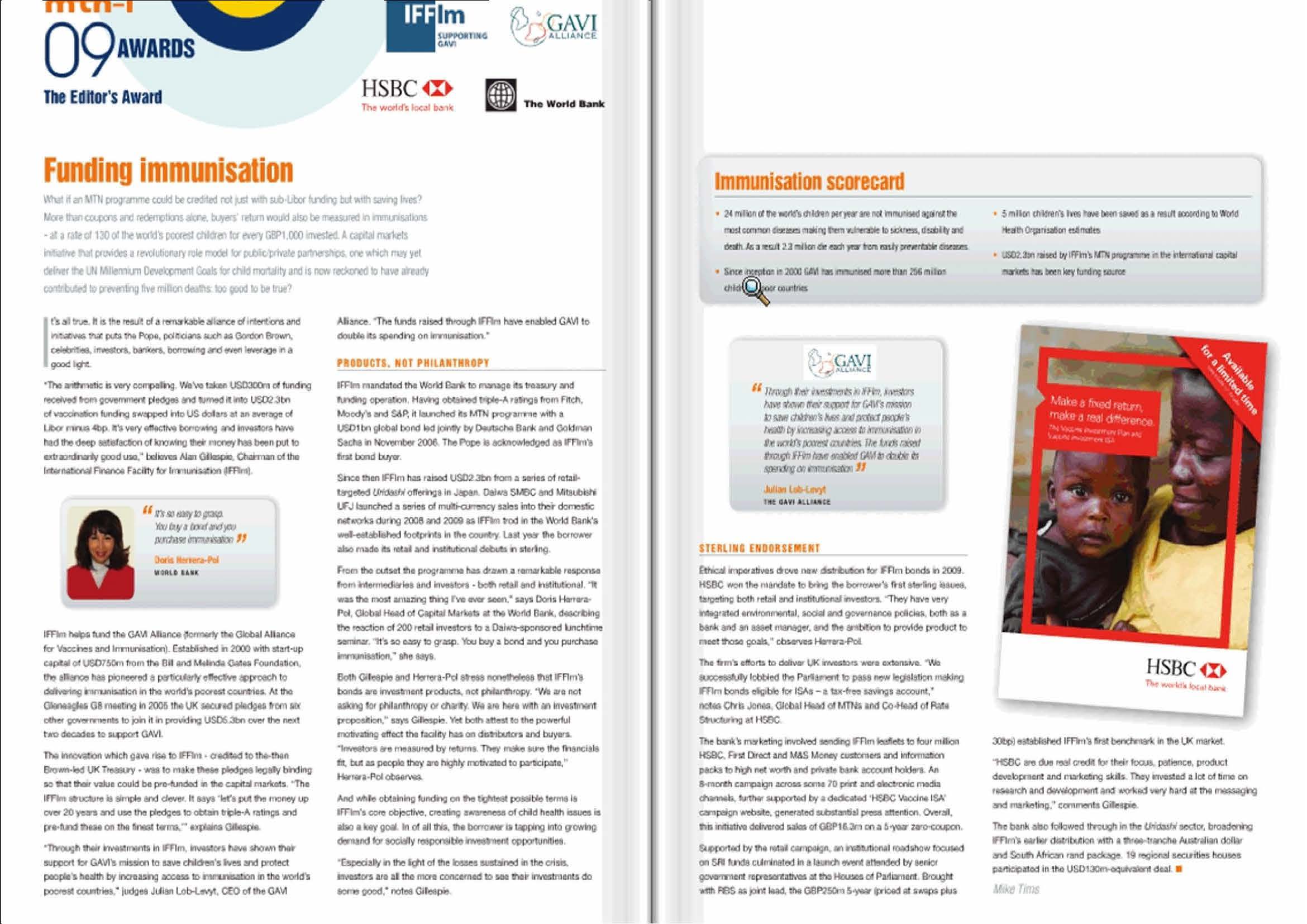
- The bond’s first investor? The Pope himself.
A True Public-Private Partnership
The innovation stemmed from the Gordon Brown-led UK Treasury, which secured binding pledges from governments. By making those pledges legally enforceable, we could leverage the highest credit ratings, ensuring access to global capital markets on the best terms.
HSBC played a pivotal role:
- We successfully lobbied Parliament to make Vaccine Bonds eligible for ISA inclusion.
- We launched extensive retail and institutional marketing campaigns across the UK.
- We organised a landmark launch event at Westminster, attended by senior MPs and government ministers.
- We created targeted campaigns reaching millions of HSBC customers through multiple media channels.
As a result, we opened up an entirely new, ethical investment option for retail and institutional investors alike.
Proof That Finance Can Serve Humanity
While others sought to profit at society’s expense, we proved that structured finance could deliver social returns without sacrificing financial ones. Investors weren’t asked to donate — they were offered a well-structured product that just happened to change the world.
In a time of crisis, this project was a beacon of hope — showing that the right people, with the right intentions, could use the tools of finance to serve a far higher purpose.
In all my years in the sector, it remains one of my proudest achievements.
Here is a reproduction of the copy from the featured document above.
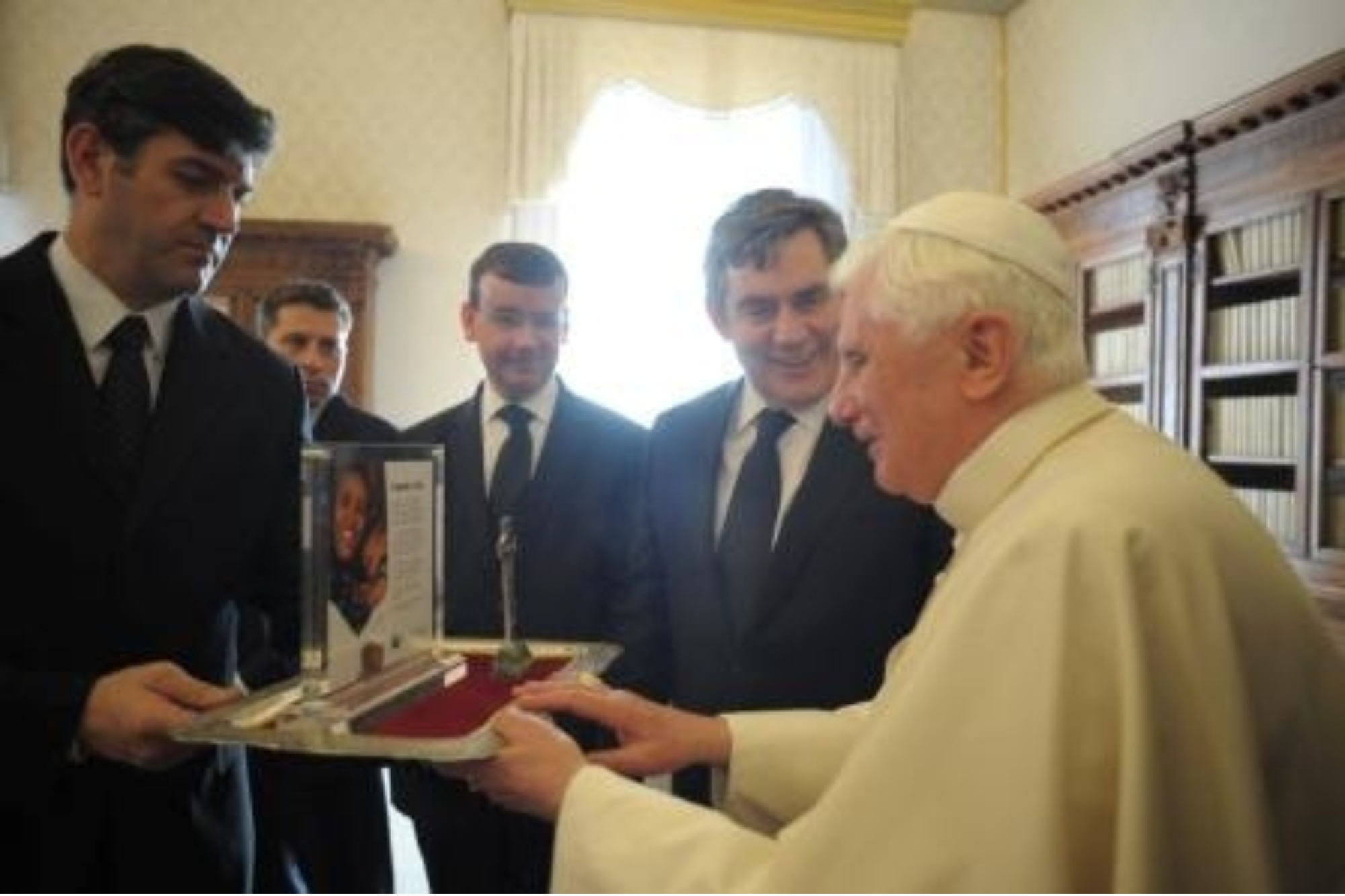
09AWARDS
The Editor’s Award
IFFIm
SUPPORTING GAVI
GAVI ALLIANCE
HSBC
The world’s local bank
The World Bank
Funding immunisation
What if an MTN programme could be credited not just with sub-Libor funding but with saving lives? More than coupons and redemptions alone, buyers’ return would also be measured in immunisations – at a rate of 130 of the world’s poorest children for every GBP1,000 invested. A capital markets initiative that provides a revolutionary role model for public private partnerships, one which may yet deliver the UN Millennium Development Goals for child mortality and is now reckoned to have already contributed to preventing five million deaths: too good to be true?
It’s all true. It is the result of a remarkable alliance of intentions and Initiatives that puts the Pope, politicians such as Gordon Brown, celebrities, investors, bankers, borrowing and even leverage in a good light.
“The arithmetic is very compelling. We’ve taken USD300m of funding received from government pledges and turned it into USD2.3bn of vaccination funding swapped into US dollars at an average of Libor minus 4bp. It’s very effective borrowing and investors have had the deep satisfaction of knowing their money has been put to extraordinarily good use,” believes Alan Gillespie, Chairman of the International Finance Facility for Immunisation (IFFIm).
“It’s so easy to grasp. You buy a bond and you purchase Immunisation!”
Doris Herrera-Pol
WORLD BANK
IFFim helps fund the GAVI Alliance (formerly the Global Alliance for Vaccines and Immunisation). Established in 2000 with start-up capital of USD750m from the Bill and Melinda Gates Foundation, the alliance has pioneered a particularly effective approach to delivering immunisation in the world’s poorest countries. At the Gleneagles G8 meeting in 2005 the UK secured pledges from six other governments to join it in providing USD6.3bn over the next two decades to support GAVI.
The innovation which gave rise to IFFIm credited to the then Brown-led UK Treasury was to make these pledges legally binding so that their value could be pre-funded in the capital markets. “The IFFIm structure is simple and clever. It says ‘let’s put the money up over 20 years and use the pledges to obtain triple-A ratings and pre-fund these on the finest terms,” explains Gillespie.
“Through their investments in IFFIm, investors have shown their support for GAVI’s mission to save children’s lives and protect people’s health by increasing access to immunisation in the world’s poorest countries,” judges Julian Lob-Levyt, CEO of the GAVI Alliance. “The funds raised through IFFim have enabled GAVI to double its spending on immunisation.”
PRODUCTS, NOT PHILANTHROPY
IFFim mandated the World Bank to manage its treasury and funding operation. Having obtained triple-A ratings from Fitch, Moody’s and S&P, it launched its MTN programme with a USD1bn global bond led jointly by Deutsche Bank and Goldman Sachs in November 2006. The Pope is acknowledged as IFFIm’s first bond buyer.
Since then IFFIm has raised USD2.3bn from a series of retail-targeted Unidashi offerings in Japan. Daiwa SMBC and Mitsubishi UFJ launched a series of multi-currency sales into their domestic networks during 2008 and 2009 as IFFIm trod in the World Bank’s well-established footprints in the country. Last year the borrower also made its retail and institutional debuts in sterling.
From the outset the programme has drawn a remarkable response from intermediaries and investors both retail and institutional. “It was the most amazing thing I’ve ever seen,” says Doris Herrera-Pol, Global Head of Capital Markets at the World Bank, describing the reaction of 200 retail investors to a Daiwa-sponsored lunchtime seminar. “It’s so easy to grasp. You buy a bond and you purchase Immunisation,” she says.
Both Gillespie and Herrera-Pol stress nonetheless that IFFIm’s bonds are investment products, not philanthropy. “We are not asking for philanthropy or charity. We are here with an investment proposition,” says Gillespie. Yet both attest to the powerful motivating effect the facility has on distributors and buyers. “Investors are measured by returns. They make sure the financials fit, but as people they are highly motivated to participate,” Herrera-Pol observes.
And while obtaining funding on the tightest possible terms is IFFIm’s core objective, creating awareness of child health issues is also a key goal. In of all this, the borrower is tapping into growing demand for socially responsible investment opportunities.
“Especially in the light of the losses sustained in the crisis, investors are all the more concerned to see their investments do some good,” notes Gillespie.
Immunisation scorecard
24 million of the world’s children per year are not immunised against the most common diseases making them vulnerable to sickness, disability and death. As a result 2.2 million die each year from easily preventable diseases.
Since inception in 2000 GAVI has immunised more than 256 million children in poor countries.
5 million children’s lives have been saved as a result according to World Health Organisation estimates.
USD2.3bn raised by IFFIm’s MTN programme in the international capital markets has been key funding source.
GAVI ALLIANCE
“Through their investments in IFFIm, investors have shown their support for GAVI’s mission to save children’s lives and protect people’s health by increasing access to immunisation in the world’s poorest countries. The funds raised through IFFim have enabled GAVI to double its spending on immunisation.”
Julian Lob-Levyt
THE GAVI ALLIANCE
STERLING ENDORSEMENT
Ethical imperatives drove new distribution for IFFIm bonds in 2009. HSBC won the mandate to bring the borrower’s first sterling issues, targeting both retail and institutional investors. “They have very integrated environmental, social and governance policies, both as a bank and an asset manager, and the ambition to provide product to meet those goals,” observes Herrera-Pol.
The firm’s efforts to deliver UK investors were extensive. “We successfully lobbied the Parliament to pass new legislation making IFFIm bonds eligible for ISAs – a tax-free savings account,” notes Chris Jones, Global Head of MTNs and Co-Head of Rate Structuring at HSBC.
The bank’s marketing involved sending IFFIm leaflets to four million HSBC, First Direct and M&S Money customers and information packs to high net worth and private bank account holders. An 8-month campaign across some 70 print and electronic media channels, further supported by a dedicated ‘HSBC Vaccine ISA’ campaign website, generated substantial press attention. Overall, this initiative delivered sales of GBP16.3m on a 5-year zero-coupon.
Supported by the retail campaign, an institutional roadshow focused on SRI funds culminated in a launch event attended by senior government representatives at the Houses of Parliament. Brought with RBS as joint lead, the GBP250m 5-year (priced at swaps plus 30bp) established IFFIm’s first benchmark in the UK market.
“HSBC are due real credit for their focus, patience, product development and marketing skills. They invested a lot of time on research and development and worked very hard at the messaging and marketing,” comments Gillespie.
The bank also followed through in the Uridashi sector, broadening IFFIm’s earlier distribution with a three-tranche Australian dollar and South African rand package. 19 regional securities houses participated in the USD130m-equivalent deal.
Mike Tims, Editor, MTN-i 2009.
Your Money or Your Life
Unmask the highway robbers – Enjoy wealth in every area of your life!
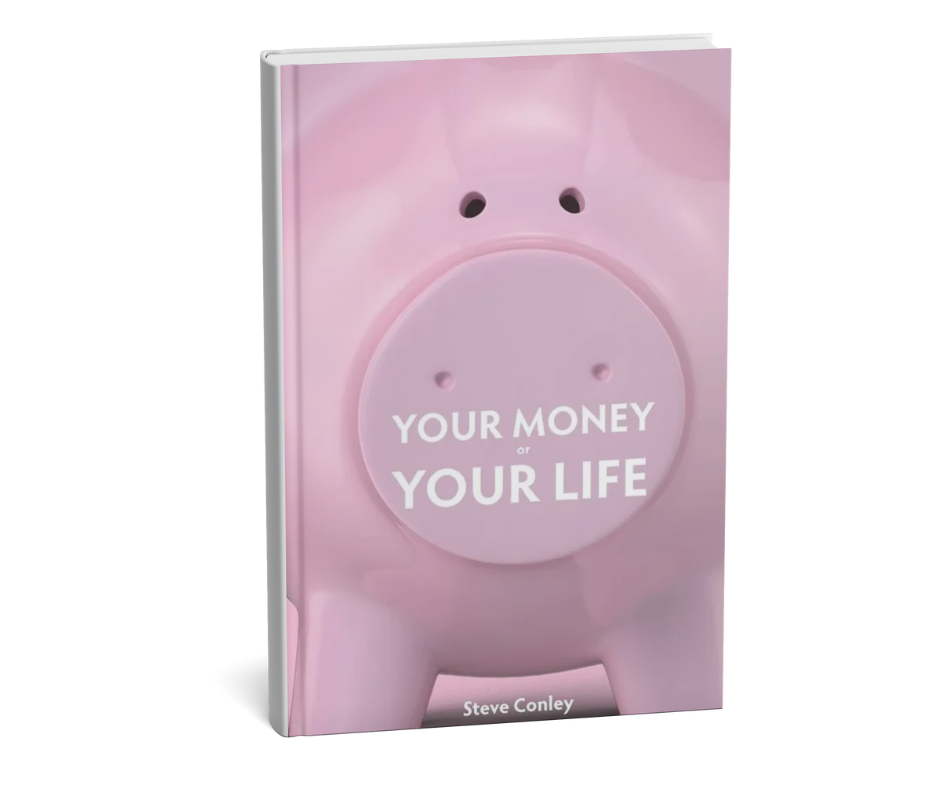
By Steve Conley. Available on Amazon. Visit www.steve.conley.co.uk to find out more.
 Academy of Life Planning