
Inequality is one of the most persistent challenges in developed societies. Despite economic growth and technological advancements, income disparities continue to widen. The idea that wealth will naturally trickle down to those with fewer resources has not materialised as hoped. Instead, we are witnessing the consequences of a system where access to opportunities is unequal. If we want to break this cycle, we need to focus on the most effective solution: investing in human capital.
The Power of Human Capital
At its core, human capital refers to the knowledge, skills, and abilities that individuals acquire through education, training, and experience. It is one of the most critical factors in determining lifetime income and economic mobility. When people have access to quality education and the right opportunities to develop their skills, they can secure better jobs, earn higher wages, and improve their quality of life. However, when access to education and skill development is unevenly distributed, income inequality grows and becomes entrenched across generations.
In many developed countries, income inequality is largely a reflection of disparities in human capital investment. Those born into wealthier families often receive better education, training, and support, giving them a significant advantage. Meanwhile, individuals from lower-income backgrounds face barriers that prevent them from reaching their full potential. Addressing this imbalance requires targeted interventions that provide equal access to education and skill-building opportunities.
Why Early Intervention Matters
Research has consistently shown that the earlier we invest in human capital, the greater the returns. Nobel Laureate James Heckman has demonstrated that early childhood education is one of the most critical determinants of future income and social mobility. Children who receive high-quality early education develop stronger cognitive and social skills, setting them on a trajectory for success. Conversely, those who miss out on early learning opportunities often struggle to catch up, leading to lower lifetime earnings and reduced economic mobility.
By prioritising early childhood education and parental support, we can break the cycle of disadvantage before it takes hold. Policies that focus on early interventions—such as affordable childcare, parental education programs, and access to quality preschool—are crucial for ensuring that every child, regardless of their background, has an equal start in life.
Supporting Lifelong Learning
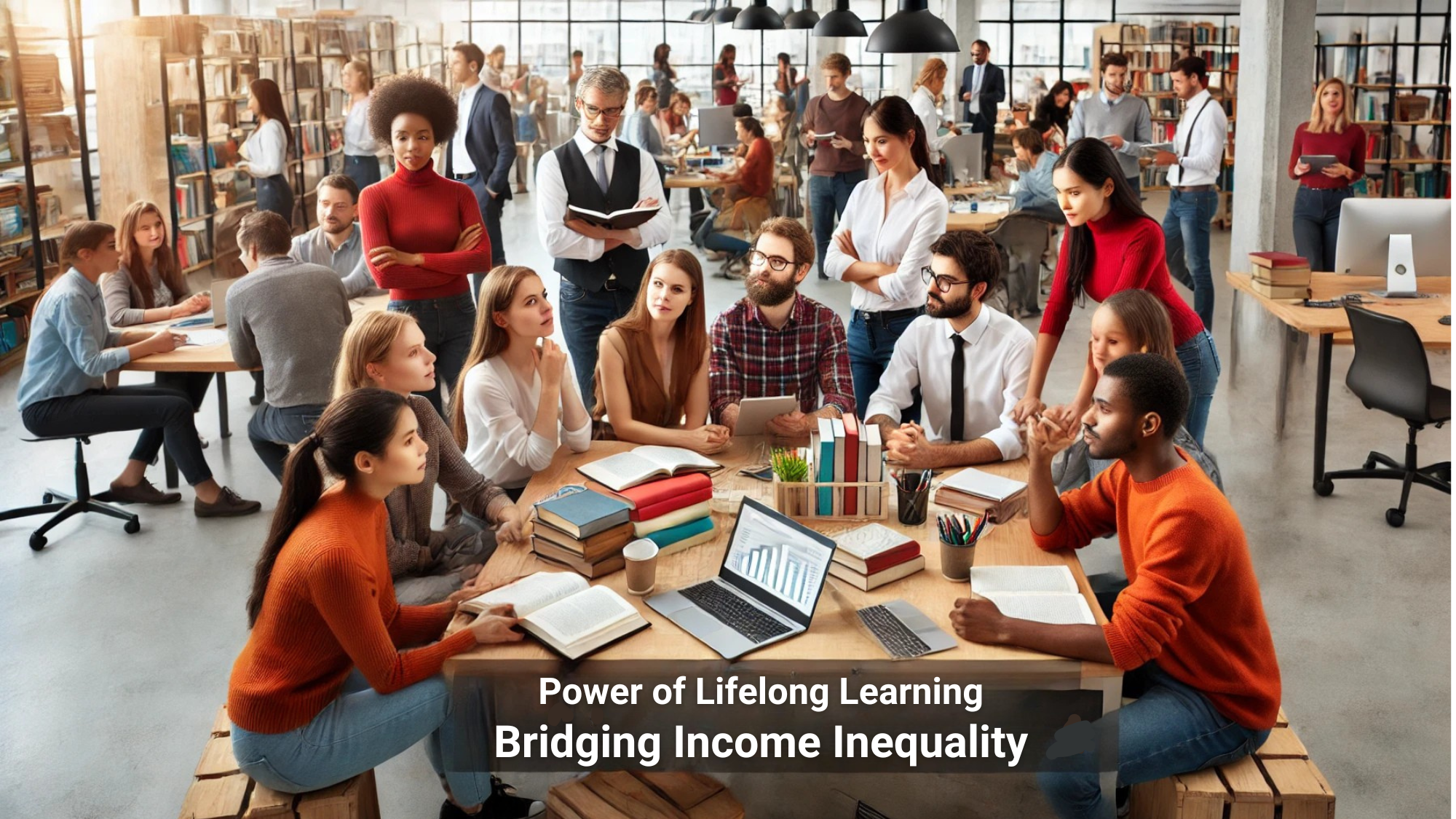
While early intervention is vital, investment in human capital should not stop there. The modern economy is evolving rapidly, with technological advancements reshaping industries and job markets. Workers must continuously develop new skills to remain competitive. Without access to ongoing education and training, individuals risk falling behind, widening the income gap even further.
Governments, businesses, and educational institutions must work together to create a culture of lifelong learning. This includes making higher education more accessible, providing financial support for vocational training, and encouraging businesses to invest in employee development. Initiatives such as merit-based scholarships and reskilling programs can ensure that individuals from all income levels have the opportunity to advance their careers and improve their financial well-being.
The Role of Policy and Private Sector Support
Addressing income inequality through human capital investment requires a multi-faceted approach. While government policies play a crucial role in funding education and training programs, the private sector also has a significant part to play. Businesses can contribute by offering apprenticeships, mentorship programs, and in-house training opportunities. Philanthropic initiatives, such as private scholarships and grants, can also help bridge the gap for those who need additional support.
Furthermore, financial barriers must be addressed to ensure that individuals can afford to invest in their education. Many people from disadvantaged backgrounds struggle with the indirect costs of education, such as lost income from taking time off work to study. Policies that provide financial assistance, such as subsidised student loans and income-based repayment plans, can help make education more accessible and encourage individuals to invest in their future.
A Call to Action
Reducing income inequality in developed countries is not just a moral imperative—it is also essential for economic stability and social cohesion. When individuals have the opportunity to develop their skills and contribute meaningfully to society, the entire economy benefits. Investing in human capital is the most effective way to create a fairer, more prosperous future for all.
To make meaningful progress, we must prioritise early education, promote lifelong learning, and remove financial barriers that prevent people from investing in their skills. Whether through government policies, private sector initiatives, or community-driven efforts, we all have a role to play in ensuring that everyone has the opportunity to reach their full potential.
By making human capital investment a priority, we can build a society where success is determined by ability and effort, not by the circumstances of one’s birth. The time for action is now. Let’s invest in people, because when individuals thrive, society as a whole prospers.
 Academy of Life Planning