
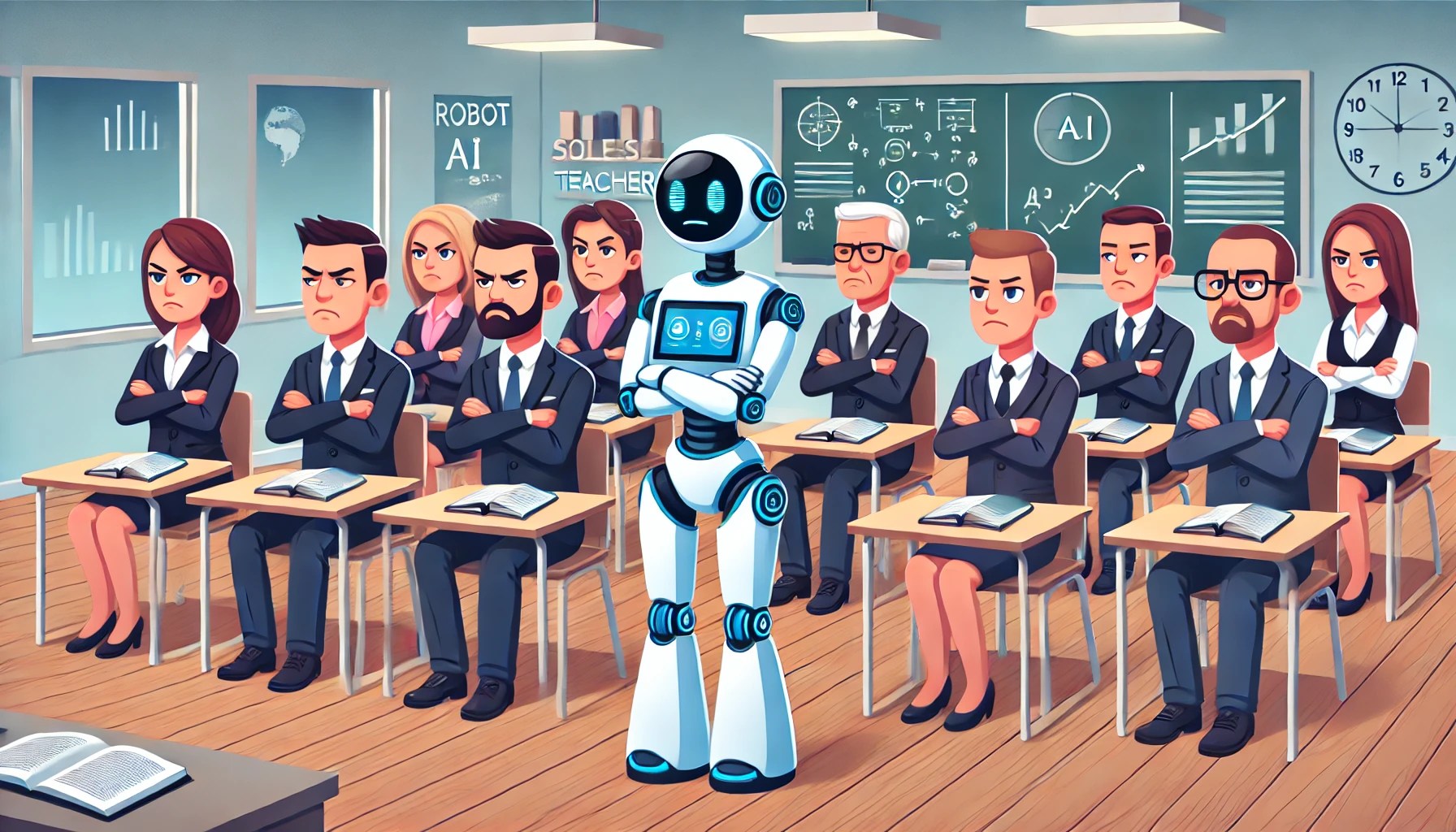
Oh, the sheer joy of trying to convince a room full of financial advisers that AI isn’t some fluffy unicorn fairy tale. Picture this: a classroom full of cross-armed, grumpy salesmen, glaring at a robot teacher like it’s just suggested they trade their prized sports cars for bicycles. “I’m doing fine, thank you,” they grumble. “I don’t need your fancy, unrealistic tech. I’ll always do what I’ve always done, and I’ll be just fine.” Sure, buddy. You keep telling yourself that while the rest of the world moves on.
As Charles Darwin so kindly reminded us, “It is not the strongest of the species that survives, nor the most intelligent; it is the one most adaptable to change.” And guess what? Change is knocking at your door, wearing a shiny AI badge.
The Big, Bad Challenge of AI
AI isn’t just a buzzword. It’s here to shake things up. Our friends in graphic design, accounting, law, and journalism are already feeling the heat. Financial advisers? Well, you’re next. But don’t panic just yet—there’s gold in them thar hills for those willing to dig.
Ian McKenna, bless his soul, recently laid it out in his article: AI in financial advice is not just coming—it’s already here. Despite the grumbling, there are some solid reasons to hop on the AI train.
The AI Edge
Let’s talk numbers. Tools like Destination Retirement from Hub Financial Solutions and Conquest Financial Planning are already making waves. These babies can run millions of calculations to tailor advice for clients. Three to seven million calculations, to be exact. Meanwhile, a human adviser can probably manage… a few dozen? Maybe?
Here’s the kicker: these systems are doing the heavy lifting. They crunch the numbers, analyse the data, and spit out tailored advice faster than you can say “compound interest.”
Why AI Rocks
- Reaching the Masses: Right now, only about 5% of the UK population gets professional financial advice. That leaves a huge chunk of folks who either can’t afford it or think they don’t need it. Enter AI. Affordable, accessible advice for the masses. What’s better—no advice or advice from a super-smart robot?
- Heavy Lifting: Let the machines handle the grunt work. You, dear adviser, can focus on what you do best: schmoozing with clients, strategising, and generally being the human touch that a robot just can’t replicate.
- Human Touch: Speaking of which, let’s be real. The highest standards of advice won’t come from a machine. They’ll come from advisers who get their clients, understand their quirks, and can navigate the messy, human side of finance. AI can’t (yet) replicate empathy or the personal touch. So why not use AI to handle the numbers while you handle the people?
The Resistance
But oh, the resistance. “AI can’t keep secrets,” they say. “Clients want the personal touch,” they say. And my personal favorite: “How do we insure against AI screw-ups?” Look, valid points all, but let’s not throw the baby out with the bathwater. AI is a tool. Use it wisely, and it will enhance your practice, not replace it.
Conclusion
So, what’s the bottom line? Adapt or get left behind. AI isn’t here to replace you; it’s here to make you better, faster, stronger. Embrace the tech, focus on your strengths, and watch your practice thrive. Or, you know, keep doing what you’ve always done. Just don’t be surprised when your clients start flocking to the adviser who’s riding the AI wave. Change is coming, whether you like it or not.
For details of an AI driven solution for the mass underserved, check out Planning My Life.
 Academy of Life Planning