
I want to explore what makes each of us unique in our talents, how we can combine these talents with our passions and market opportunities to craft an exceptional life. Allow me to illustrate this with an example from one of my secret guilty pleasures.
Firstly, we all possess skills that we excel in. Although we Brits tend to be humble when asked, often modestly claiming there’s nothing special about us, discovering our talents requires some digging. However, if you can identify several skills that place your abilities in the top 10% of society, you’ve unlocked the secret to success. When you merge these skills into one vocation, you distinguish yourself from the crowd. You face no competition. You possess a Unique Selling Proposition (USP).
Personally, I am a Registered Life Planner (RLP) with the Kinder Institute of Life Planning, a multi-award-winning Chartered Insurer, and a Chartered Financial Planner. I’m also an experienced Proposition Architect with some of the biggest brands in the financial services industry. I have amalgamated these skillsets to develop the GAME Plan (Goals, Actions, Means, Execution), which integrates life, financial, and business planning.
It’s somewhat reminiscent of that Ben & Jerry’s “Cookie Dough” advert—perhaps we should have named it “Cookie, Cookie, Cookie Dough.”
We might as well have named the GAME Plan the Life Financial Business Plan!
Next, let me introduce you to your Ikigai, or purpose for living, for those who have not yet discovered this wonderful concept. Ikigai is a Japanese philosophy for successful living, and a personal development framework recently tailored for the coaching market.
Your Ikigai represents the convergence of four critical areas: what you excel at, what you love, what the world needs, and what it will pay for.
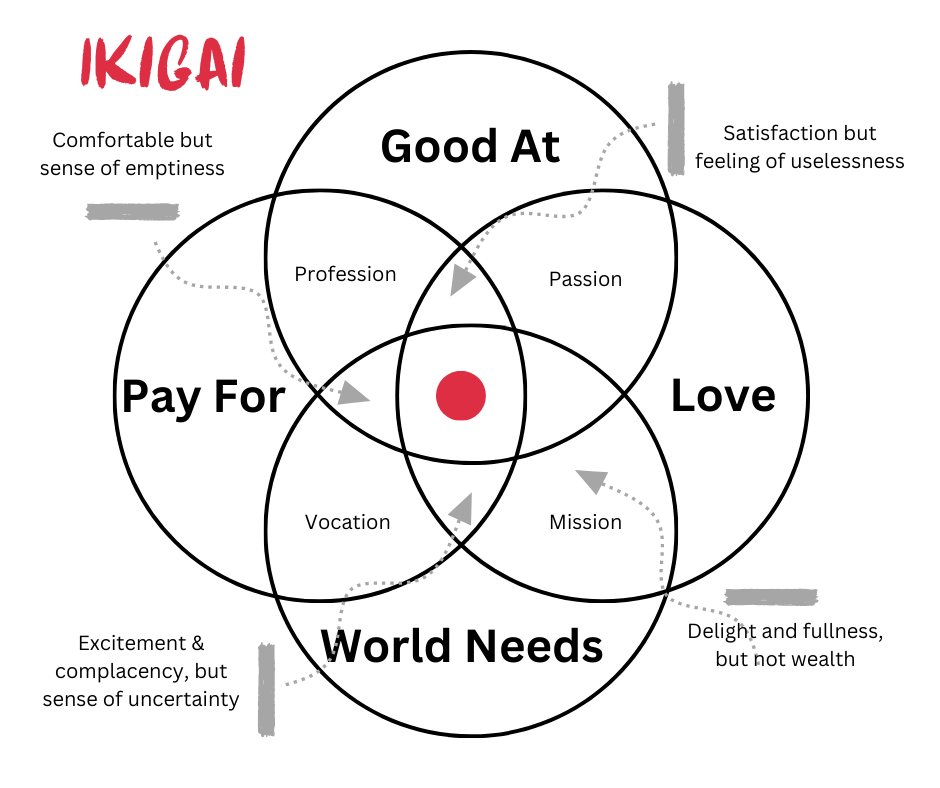
Identifying your Ikigai means recognising a productive asset. It presents an opportunity to leverage entrepreneurial prospects to create a sustainable livelihood. You craft work that doesn’t feel like work, from which you never wish to retire, aspiring to live to a ripe old age—much like the Okinawans, known for their high population of centenarians.
Now, onto my secret guilty pleasure.
Do you have a TV show you secretly enjoy but wouldn’t dare admit? Perhaps when the kids walk in, you find yourself engrossed in it, hastily explaining, “Oh, this old show? It just happened to be on. I wasn’t really watching.”
For me, it’s ‘The Repair Shop.’
I am captivated by the process of restoring treasured family heirlooms. Then comes the poignant moment of the unveiling, reconnecting the owner with cherished memories of loved ones. It’s truly a classic.
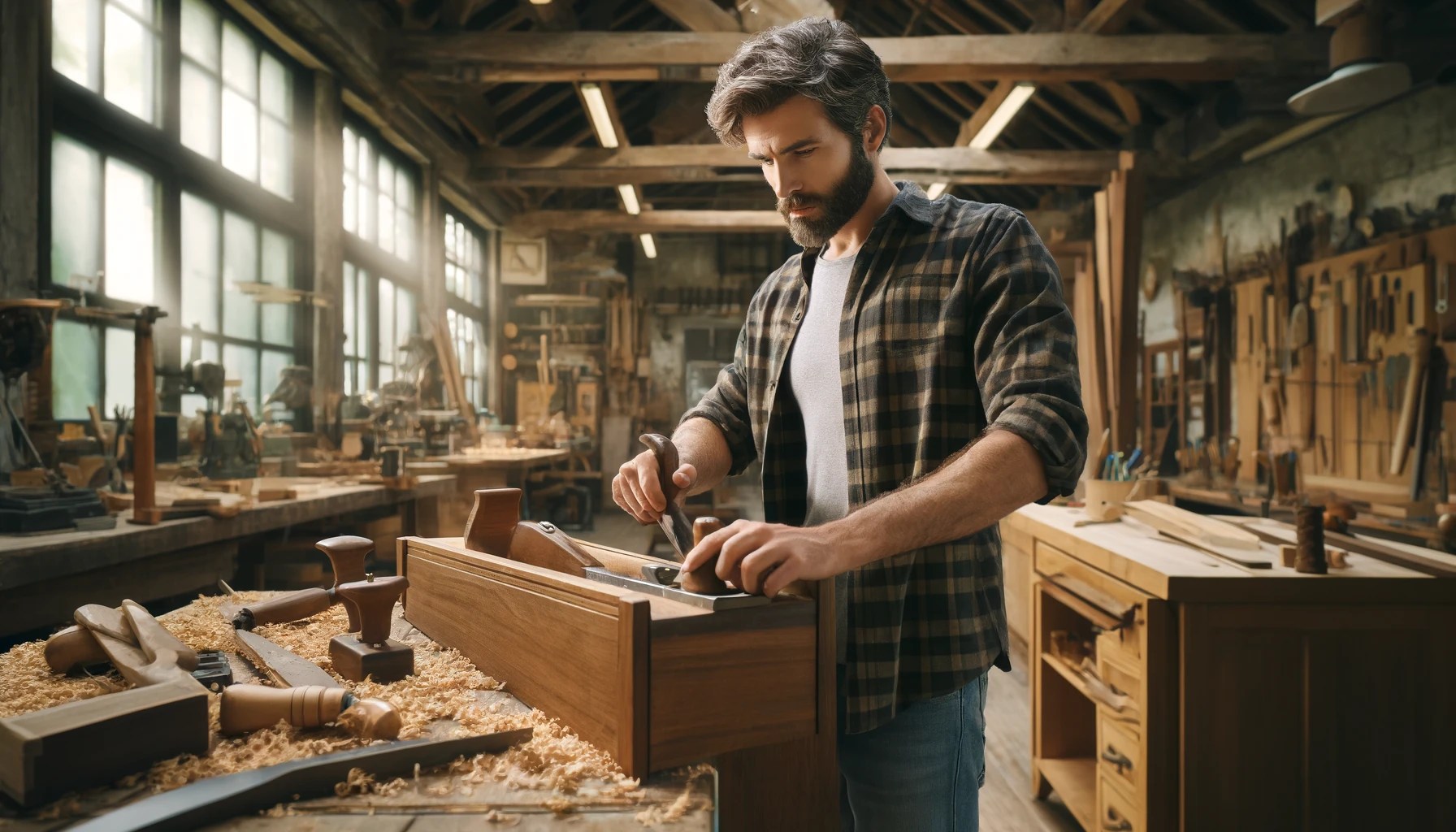
It is in ‘The Repair Shop’ that I discovered a classic example of how uncovering a talent and passion, combined with a positive mindset, can transform someone from poverty to a successful business owner. This story is a testament to the transformative power of finding a purpose that aligns with one’s passion.
The Repair Shop Connection: A Journey of Restoration and Renewal
Jay Blades, the face of the BBC’s cherished ‘The Repair Shop’, and Steve Wyatt, a former vendor of ‘The Big Issue’, share more than just a friendship; they share a passion for breathing new life into worn furniture. Their collaboration is more than a business venture; it’s a symbol of personal redemption and mutual growth.
Steve Wyatt’s journey from struggling with addiction and homelessness in Bristol to becoming a master furniture restorer is nothing short of inspiring. Selling ‘The Big Issue’ was not just a job for Wyatt; it was a stepping stone to a new life, helping him develop valuable business skills that he applies to this day. His story is a testament to the transformative power of finding a purpose that aligns with one’s passion.
In Poole, Dorset, Wyatt and Blades opened a new shop last year that marked a milestone in their remarkable journeys. This venture wasn’t just about restoring furniture—it’s about restoring lives. Blades, who has openly discussed his struggles with dyslexia and homelessness, sees furniture restoration as a metaphor for personal restoration: a process that both mends the external and heals the internal.
Their shared ethos—moving forward with a passion for furniture—hds not only brought out the best in old furniture but in each other. About 18 months after leaving rehab, Wyatt reached out to Blades for advice. Blades, already a seasoned furniture restorer and mentor, offered guidance that helped Wyatt carve out his own path in the restoration industry. Their relationship, cemented before Blades’ rise to fame, highlights the importance of genuine connections in life’s journey.
Their new shop, Restored Retro, located in Poole, is set to be a beacon of transformation. Supported initially by incentives from local stakeholders like Legal & General and the Dolphin Centre, Wyatt’s venture has already seen significant success. It stands as a testament to what can be achieved with determination and the right support. The shop not only serves as a business but as a place of learning and healing, where former addicts can work towards a new life through the art of furniture restoration.
This new chapter is not just about commercial success; it’s about continuing a journey of personal and communal healing. Blades and Wyatt are not just restoring furniture; they are creating a space where lost souls can find their spark again.
As they opened the doors to their new venture in March last year, their story served as a beacon of hope, not just for those in recovery, but for anyone seeking to overcome personal adversity. It’s a reminder from Wyatt to all, especially Big Issue vendors and anyone facing their own battles: perseverance pays off. Embrace your passions, nurture them, and never underestimate the power of a small step forward.
For more on this inspiring venture, updates are available on Steve’s and Jay’s respective websites. Their journey is more than a story of personal success; it’s a blueprint for what can be achieved when passion meets purpose, proving once again that from the ashes of hardship, new beginnings can indeed be forged.
Check out the Big Issue’s article for details.
 Academy of Life Planning